
Makeup
7 Best First Aid Kits of 2024
Jun
A good first aid kit is one of those things you hope will sit quietly in a closet forever. Then one day someone slices a thumb while opening a package, a kid treats the sidewalk like a cheese grater, or a camping buddy discovers that “short hike” was code for “blister convention.” Suddenly, the best first aid kit is not the prettiest box or the one with the biggest piece count. It is the one you can open fast, understand instantly, and actually use.
For 2024, the best first aid kits combine three things: useful supplies, smart organization, and the right size for the job. A tiny travel kit is perfect for a backpack but underpowered for a busy family garage. A workplace-style hard case may be excellent for a home workshop but ridiculous in a carry-on bag. The trick is matching the kit to real life, not buying the medical equivalent of a junk drawer with a zipper.
This guide reviews seven standout options for home, car, travel, office, hiking, camping, and emergency preparedness. The selections are based on practical criteria: wound-care supplies, gloves, gauze, antiseptic wipes, cold packs, medications where appropriate, durability, refillability, portability, labeling, and how quickly an average person can find what they need while mildly panicking. Because yes, panic has terrible organizational skills.
How We Chose the Best First Aid Kits of 2024
The best first aid kits were compared against widely recommended emergency supply basics, including adhesive bandages, sterile gauze, medical tape, disposable gloves, antiseptic wipes, tweezers, scissors, cold packs, and a first aid guide. Extra credit went to kits with labeled compartments, rugged cases, waterproof or water-resistant storage, blister care for outdoor use, and enough variety to handle common minor injuries.
We also considered use case. A first aid kit for a car should tolerate heat, movement, and being shoved behind jumper cables. A hiking kit should be lightweight but include blister care, wound closure items, and trail-friendly tools. A home kit should be simple enough for the whole family to use. A workplace kit should be larger, wall-mountable, and easy to restock.
One important reminder before we get into the rankings: a first aid kit is not a substitute for medical care or first aid training. For severe bleeding, chest pain, breathing trouble, major burns, suspected broken bones, head injuries, allergic reactions, or anything that makes your inner alarm bell sound like a fire truck, call emergency services. Bandages are great. Heroic improvisation is not a medical degree.
Quick Comparison: Best First Aid Kits of 2024
| Rank | First Aid Kit | Best For | Why It Stands Out |
|---|---|---|---|
| 1 | Surviveware Small Comprehensive Premium First Aid Kit | Best Overall | Excellent organization, durable case, strong everyday versatility |
| 2 | BAND-AID Brand / Johnson & Johnson All-Purpose First Aid Kit | Best for Home and Travel | Trusted household brands, useful medicines, easy storage |
| 3 | Adventure Medical Kits Mountain Series Hiker | Best for Hiking | Trail-focused supplies, blister care, compact design |
| 4 | MyMedic MyFAK Mini | Best Premium Kit | Highly organized, rugged, customizable, strong supply variety |
| 5 | First Aid Only / American Red Cross Deluxe All Purpose First Aid Kit | Best for Car and Office | Large piece count, soft case, practical everyday supplies |
| 6 | Be Smart Get Prepared 326-Piece First Aid Kit | Best Large Hard-Case Kit | Workplace-friendly, high capacity, organized hard case |
| 7 | EVERLIT 250-Piece Survival First Aid Kit | Best for Camping and Survival | Combines first aid supplies with outdoor emergency tools |
1. Surviveware Small Comprehensive Premium First Aid Kit Best Overall
The Surviveware Small Comprehensive Premium First Aid Kit earns the top spot because it understands the golden rule of first aid: supplies are only useful if you can find them quickly. Instead of stuffing items into mystery pockets like a medical piñata, Surviveware uses clearly labeled compartments. That matters when someone is bleeding, crying, or asking why the tweezers are not magically appearing.
This kit is a smart fit for families, road trips, camping weekends, boats, and general home emergency preparedness. It usually includes the basics most people need for minor injuries: adhesive bandages, gauze, antiseptic wipes, gloves, tape, shears, tweezers, and other wound-care essentials. The case is compact enough to carry but tough enough to survive outdoor use, which makes it more versatile than many budget kits.
Why We Like It
The organization is the star. Labeled pockets reduce guesswork, and the rugged case feels more intentional than a flimsy plastic box. It is also a good “one kit to start with” option for people who want something better than a drugstore bandage box but do not need a professional trauma bag.
What Could Be Better
Like most compact first aid kits, it benefits from personalization. Add any personal medications, extra gloves, a CPR face shield, more trauma pads, and extra blister treatment if you hike often. No prebuilt kit knows your family’s allergy history, camping habits, or talent for getting splinters from objects that should not produce splinters.
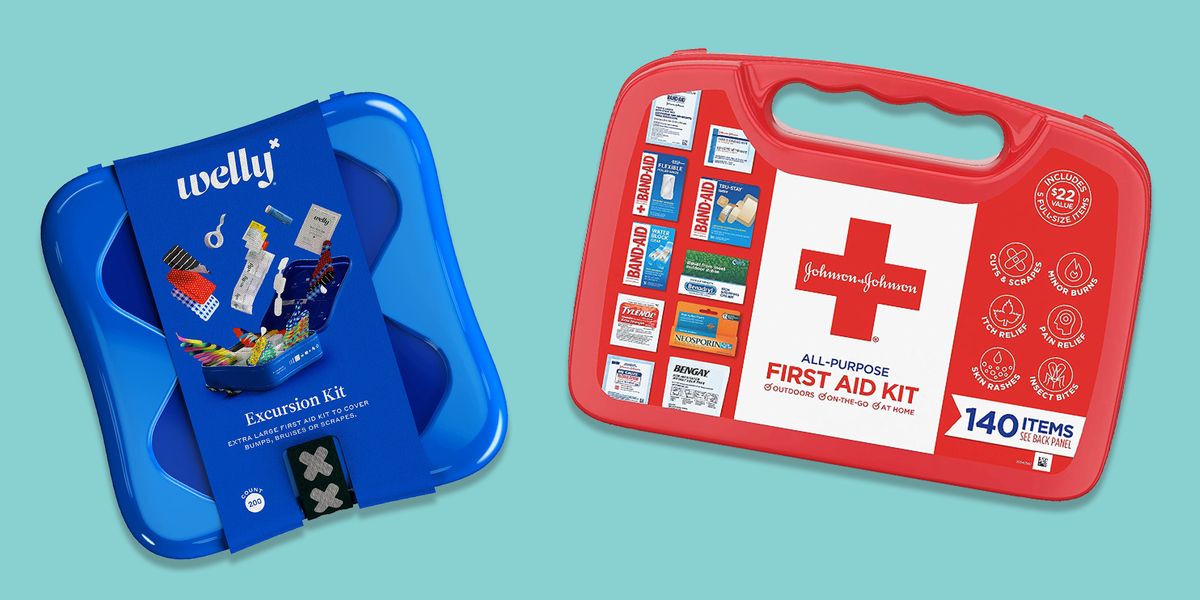
2. BAND-AID Brand / Johnson & Johnson All-Purpose First Aid Kit Best for Home and Travel
The BAND-AID Brand All-Purpose First Aid Kit, commonly associated with Johnson & Johnson’s familiar household names, is ideal for people who want simple, recognizable supplies. It is the kind of kit that belongs in a bathroom cabinet, dorm room, suitcase, minivan, or kitchen drawer that has not yet been conquered by expired soy sauce packets.
This kit typically includes adhesive bandages, cleansing wipes, gauze pads, rolled gauze, antibiotic cream, itch relief cream, acetaminophen, an instant cold pack, and other practical items. The big advantage is familiarity. Most users know BAND-AID, NEOSPORIN, TYLENOL, BENADRYL, and similar household names, which makes the kit feel approachable for everyday cuts, scrapes, bug bites, minor burns, and aches.
Why We Like It
It is easy to understand, easy to store, and built around common family needs. For homes with children, frequent travelers, or anyone who wants a dependable basic kit without turning the hallway closet into a tactical supply depot, this is a strong choice.
What Could Be Better
It is not the most rugged outdoor kit. The case is fine for indoor and light travel use, but serious hikers, boaters, and campers may want something more water-resistant and better organized for harsh conditions. Add extra gloves, tweezers, medical tape, and a small first aid manual if your version lacks them.
3. Adventure Medical Kits Mountain Series Hiker Best for Hiking
The Adventure Medical Kits Mountain Series Hiker is built for people who believe a nice Saturday includes elevation gain, questionable trail snacks, and at least one person saying, “It’s only another mile.” This kit is designed for short backcountry outings and is especially useful for hikers, mountain bikers, day-trippers, and weekend adventurers.
Unlike general home kits, the Mountain Series Hiker focuses on common trail problems. That means blister care, wound cleaning, bandages, gauze, tape, trauma dressing, elastic bandage, medications, EMT shears, and a splinter or tick remover. It also includes organized injury-specific sections, which helps when you are treating a hot spot on a heel before it turns into a full dramatic subplot.
Why We Like It
It balances weight and usefulness better than many outdoor kits. The contents are chosen for trail realities: blisters, cuts, scrapes, insect issues, sprains, and small wounds. The included guide is also valuable for people who may be farther from immediate help.
What Could Be Better
It is not meant for large groups or extended expeditions. If you are leading a scout trip, multi-day backpacking group, or remote hunt, step up to a larger Adventure Medical kit or add more wound-care supplies, emergency blankets, electrolyte packets, and trauma supplies.
4. MyMedic MyFAK Mini Best Premium First Aid Kit
The MyMedic MyFAK Mini is for people who want a first aid kit that feels designed, not merely assembled. It has a rugged build, smart internal organization, mounting options, and room for customization. It is more expensive than basic kits, but it also feels more serious. This is the kit you buy when your emergency drawer deserves a promotion.
Depending on the configuration, the MyFAK Mini includes a broad range of first aid items for bleeding, burns, medication needs, hydration support, wound care, and minor injuries. The folding page layout makes supplies easier to scan, and the extra space allows users to add personal medication, allergy items, a small flashlight, or additional gloves.
Why We Like It
The MyFAK Mini is well suited for cars, RVs, garages, adventure travel, and households that want a more capable kit. Its organization makes it less intimidating than a loose pouch of supplies, and the durable design means it can handle more movement than a typical plastic home case.
What Could Be Better
The price is the obvious drawback. Casual users may not need this much kit. It can also be bulkier than ultralight hikers want. But for people who value organization, durability, and upgrade potential, it is one of the strongest premium picks of 2024.
5. First Aid Only / American Red Cross Deluxe All Purpose First Aid Kit Best for Car and Office
The First Aid Only / American Red Cross Deluxe All Purpose First Aid Kit is a practical, high-piece-count option for people who want a grab-and-go kit for the office, car, classroom, garage, or community space. It usually comes in a soft nylon case and includes a broad range of everyday supplies such as bandages, wipes, aspirin, cold compress, tweezers, gloves, gauze, and tape.
This kit works especially well in places where small injuries happen often: offices, workshops, family cars, sports bags, and shared spaces. The soft case is easy to store under a seat or in a cabinet, and the supply variety is better than many ultra-basic kits.
Why We Like It
It offers a strong blend of value and quantity. It is not trying to be a wilderness rescue kit; it is trying to keep you prepared for minor cuts, scrapes, headaches, splinters, and small daily emergencies. That is exactly what many households and small offices need.
What Could Be Better
Soft cases can become messy over time if users do not restock carefully. Check the contents every few months, especially medications and adhesive products. Heat inside a car can also shorten the useful life of some supplies, so do not let this kit become a roasted medical lasagna in the trunk.
6. Be Smart Get Prepared 326-Piece First Aid Kit Best Large Hard-Case Kit
The Be Smart Get Prepared 326-Piece First Aid Kit is the big, practical hard-case option for homes, offices, schools, job sites, and workshops. It is designed for groups and shared spaces, with a large supply count and an organized interior that helps users find basics quickly.
This kit typically includes a wide variety of adhesive bandages, gauze, antiseptic wipes, cold compress, gloves, wound closures, and other supplies for common non-life-threatening injuries. Its hard plastic case can be wall-mounted or carried, making it useful for settings where the kit should stay visible and accessible.
Why We Like It
Capacity is the main advantage. A family with kids, pets, tools, bikes, sports gear, and a suspiciously sharp garden shed can run through small kits quickly. This one gives you more depth, especially for repeated minor injuries.
What Could Be Better
It is too bulky for a backpack and not specialized for outdoor emergencies. Also, bigger does not automatically mean complete. Review the contents and add missing items such as a CPR barrier, extra nitrile gloves, burn gel, emergency blanket, or personal medications as needed.
7. EVERLIT 250-Piece Survival First Aid Kit Best for Camping and Survival
The EVERLIT 250-Piece Survival First Aid Kit is built for people who want first aid supplies plus outdoor emergency gear in one bag. It is popular among campers, hikers, hunters, RV users, and preparedness-minded families who want a kit that goes beyond adhesive bandages.
The kit typically includes first aid essentials along with survival tools such as a tactical-style pouch, emergency items, and outdoor-oriented accessories. That makes it useful for camping trips, roadside emergencies, and grab-and-go preparedness. The MOLLE-compatible bag design also appeals to users who want to attach the kit to a pack, vehicle setup, or gear panel.
Why We Like It
It is a strong hybrid. If you want a medical kit with a survival flavor, this is more exciting than a plain plastic box. It is especially useful for people who camp in remote areas or want a compact emergency kit for unpredictable situations.
What Could Be Better
Survival kits can sometimes include fun gadgets while still needing more serious medical upgrades. Add more sterile gauze, quality gloves, trauma dressings, blister care, and any personal medication. A compass is nice; stopping bleeding is nicer.
What Every First Aid Kit Should Include
Whether you buy a prebuilt first aid kit or build your own, the basics matter. Look for adhesive bandages in multiple sizes, sterile gauze pads, rolled gauze, medical tape, antiseptic wipes, antibiotic ointment, hydrocortisone cream, tweezers, scissors, disposable nitrile gloves, instant cold pack, elastic wrap, triangular bandage, emergency blanket, pain reliever, antihistamine, and a first aid guide.
For travel, add motion-sickness medicine, anti-diarrheal medication, electrolyte packets, sunscreen, insect repellent, and copies of important medical information. For hiking, add blister pads, moleskin, tick remover, extra tape, and a lightweight emergency blanket. For a car, add a flashlight, reflective triangle, hand sanitizer, and a small notepad. For home, add a thermometer, extra gloves, and backup supplies for family-specific needs.
How to Choose the Best First Aid Kit for Your Needs
For Home
Choose a medium or large kit with a broad supply range. Home kits should be easy for adults to find but stored safely away from young children. A clear case or labeled compartments help everyone locate supplies without turning a paper cut into a family scavenger hunt.
For Cars
Choose a compact, durable kit that can handle movement and temperature swings. Check it regularly because heat can damage adhesives, ointments, and medications. Store it where it can be reached without emptying the entire trunk on the roadside.
For Hiking and Camping
Prioritize weight, water resistance, blister care, trauma supplies, and organization. Outdoor kits should include supplies for cuts, sprains, bug bites, burns, blisters, and minor allergic reactions. A first aid guide is especially useful when cell service disappears and your phone becomes a very expensive flashlight.
For Office or Workplace Use
Look for a larger kit that is easy to mount, inspect, and refill. Workplaces should consider applicable safety requirements and choose kits appropriate for the number of people, hazards, and location. A tiny personal kit is not enough for a busy office, warehouse, or workshop.
First Aid Kit Maintenance Tips
Buying a first aid kit is only step one. Maintaining it is what keeps it useful. Check supplies every three to six months. Replace expired medications, dried-out wipes, damaged packaging, used bandages, weak adhesive strips, and anything that looks suspicious. If a packet has turned into a crunchy medical fossil, retire it with dignity.
Keep a simple inventory card inside the kit. After using an item, write it down and restock soon. This prevents the classic emergency discovery: opening the kit and finding three tiny bandages, one lonely safety pin, and a coupon from 2019.
Finally, learn basic first aid. Even the best first aid kit is only as useful as the person holding it. A short first aid, CPR, or AED course can make the difference between having supplies and knowing what to do with them.
Real-Life Experiences: What Using First Aid Kits Teaches You
The first lesson of owning a first aid kit is that emergencies rarely arrive looking dramatic. Most start small. A kitchen knife slips while chopping onions. A child falls off a scooter. A dog leash burns across your palm. A friend on a hike says, “I think I feel a blister,” which is outdoor code for “we should have stopped ten minutes ago.” In those moments, a good kit feels less like emergency gear and more like common sense with a zipper.
One of the most useful experiences with first aid kits is learning the value of organization. A kit with labeled pockets can calm the room. Instead of dumping everything onto the floor, you can open one flap, find gauze, grab antiseptic wipes, and get to work. That small advantage matters. When someone is hurt, people move faster but think worse. Clear organization gives your brain a handrail.
Another practical lesson is that the best kit is the one you actually bring. A giant hard case in the garage is excellent for home projects, but it will not help during a picnic, road trip, or youth soccer game. Many families end up needing more than one kit: a larger kit at home, a compact kit in each car, and a small pouch for travel or hiking. That sounds excessive until the day you need a bandage in a parking lot and realize your “preparedness plan” is currently 12 miles away in a bathroom cabinet.
Outdoor use teaches different lessons. Blisters can ruin a hike faster than bad weather. Moleskin, blister pads, tape, and clean socks are not glamorous, but they are trail-saving supplies. Tweezers also become heroes outdoors, especially when splinters, cactus spines, or ticks appear. A hiking-specific kit like the Adventure Medical Kits Mountain Series Hiker proves that the right supplies for the environment matter more than a huge piece count.
Car kits teach maintenance the hard way. Adhesive bandages can lose stickiness in summer heat. Ointments and medicines can expire. Alcohol wipes can dry out. A first aid kit left in a hot vehicle for years may still look official, but inside it may be quietly giving up. Checking car kits twice a year, ideally when you check smoke alarm batteries or emergency supplies, is a simple habit that prevents disappointment at exactly the wrong time.
Home kits reveal another truth: people use what is easy to access. If the first aid kit is buried behind holiday decorations, nobody will use it. Keep it visible enough for adults and older kids to find quickly, but safe from young children. Teach family members where it is and what is inside. The five-minute tour may feel unnecessary until someone needs gloves, gauze, or a cold pack while you are not home.
Finally, using first aid kits teaches humility. A kit can help with minor cuts, scrapes, burns, bites, sprains, and headaches, but it cannot solve everything. The smartest prepared person knows when to stop treating and start calling for professional help. The real goal is not to become a backyard surgeon. It is to stay calm, protect the injured person, prevent things from getting worse, and bridge the gap until proper care is available.
Final Verdict: The Best First Aid Kit of 2024
The best overall first aid kit of 2024 is the Surviveware Small Comprehensive Premium First Aid Kit because it offers the strongest balance of organization, portability, durability, and everyday usefulness. It is not the cheapest kit, and it is not the biggest, but it is one of the easiest to use when speed and clarity matter.
For home and travel, the BAND-AID Brand / Johnson & Johnson All-Purpose First Aid Kit is friendly and familiar. For hiking, choose the Adventure Medical Kits Mountain Series Hiker. For premium preparedness, the MyMedic MyFAK Mini is the standout. For offices and cars, the First Aid Only / American Red Cross Deluxe All Purpose Kit is practical. For larger shared spaces, the Be Smart Get Prepared 326-Piece Kit brings capacity. For camping and survival, the EVERLIT 250-Piece Kit adds outdoor versatility.
Whichever first aid kit you choose, make it personal. Add medications, allergy supplies, extra gloves, emergency contacts, and anything specific to your household or activities. A prebuilt kit is a starting point, not a crystal ball. The best first aid kit is stocked, organized, easy to find, and ready before the avocado fights back.

