
Beauty Tools & Accessories
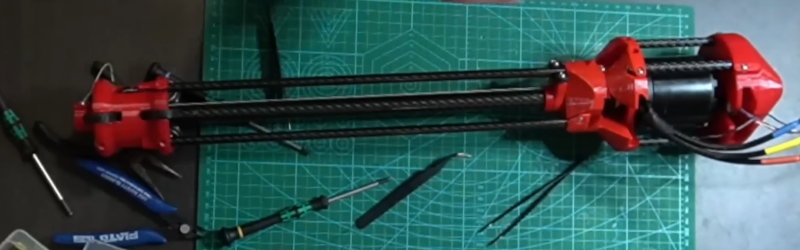
Homebrew Linear Actuators Improved
May
A homebrew linear actuator is one of those projects that looks simple until it starts squeaking, wobbling, binding, skipping steps, or launching your carefully printed carriage across the bench like a tiny mechanical goat. At its heart, the idea is beautifully straightforward: turn rotary motion from a motor into straight-line motion using a screw, nut, slider, or guided carriage. But the difference between “it technically moves” and “it moves smoothly, repeatedly, and without sounding like a haunted printer” comes down to design details.
This guide explores how improved homebrew linear actuators are built, why older DIY designs often struggle, and what makers can do to upgrade strength, accuracy, reliability, and serviceability. Whether you are building a compact robotics mechanism, a camera slider, a 3D-printer-inspired axis, a small automation tool, or a workshop gadget that makes you feel like a budget aerospace engineer, the same principles apply: support the load properly, control friction, choose the right screw, protect the motor, and give the motion a predictable path.
What Is a Homebrew Linear Actuator?
A linear actuator is a device that creates motion in a straight line. In commercial units, the usual recipe includes an electric motor, gearbox, lead screw or ball screw, translating rod or carriage, housing, bearings, and limit switches. A homebrew linear actuator follows the same basic logic, but it is built from maker-friendly parts such as 3D-printed brackets, aluminum extrusion, threaded rod, lead screws, stepper motors, DC gear motors, linear rails, bushings, and microcontrollers.
The most common DIY version uses a motor to rotate a screw. A nut attached to the moving carriage cannot rotate, so it travels forward or backward as the screw turns. That simple mechanical translation is the magic trick. Unfortunately, every magic trick has a trapdoor, and in this case the trapdoors are backlash, misalignment, screw whip, poor bearing support, undersized motors, and friction that appears at the worst possible moment.
Why Homebrew Linear Actuators Needed Improvement
Early DIY linear actuator designs often worked well enough for demos, but they had weaknesses once real loads entered the room. A 3D-printed body might flex. A long screw might wobble at speed. A carriage might twist because the screw was being asked to do the job of both drive mechanism and guide rail. The motor shaft might carry axial load it was never meant to carry. The actuator might reach the end of travel with no limit switch and continue trying to move, which is basically how electronics express emotional distress.
Improved designs solve these problems by separating responsibilities. The screw should provide driving force. The guide rail should handle alignment and side loads. Bearings should support thrust. Limit switches should protect the endpoints. The frame should resist bending. The motor should be sized for torque and duty cycle, not wishful thinking.
Main Improvements That Make DIY Actuators Better
1. Better Structural Support
The frame of a homebrew linear actuator is not just a nice place to mount parts. It determines how much the actuator flexes under load. A weak frame allows the screw, carriage, and guides to drift out of alignment, which creates binding and inconsistent motion. Improved designs often use aluminum extrusion, U-channel, steel rods, or reinforced printed parts instead of thin plastic plates.
A good frame keeps the motor, screw, bearing blocks, and guide rails aligned along the same axis. That alignment matters more than many beginners expect. A screw can be perfectly straight, but if the bearing mounts are crooked, the actuator will still complain loudly. Mechanical systems do not forgive “close enough” as generously as hot glue does.
2. Separate Guide Rails from the Drive Screw
One major upgrade is using dedicated linear guides. These can be smooth rods with linear bearings, V-slot wheels on aluminum extrusion, drawer-slide-style guides for low-precision builds, or compact linear rails for higher accuracy. The key idea is simple: the guide system handles side loads, while the screw handles push-pull force.
Without guides, the screw and nut must resist twisting, bending, and pushing all at once. That is like asking a pencil to be a driveshaft, a crane, and a therapist. It may survive for a while, but it will not be happy. Proper guide rails reduce friction, improve repeatability, and allow the actuator to carry off-center loads with far less drama.
3. Smarter Screw Selection
The screw is the heart of many homebrew linear actuators. Common choices include standard threaded rod, Acme lead screws, trapezoidal lead screws, and ball screws. Standard hardware-store threaded rod is cheap and easy to find, but it is usually inefficient, rough, and not ideal for precision motion. It can work for slow, light-duty projects, but it is rarely the best choice for a polished build.
Lead screws are a strong step up. They are designed for motion, not just fastening. Acme and trapezoidal threads offer better strength, smoother travel, and improved wear behavior. Ball screws are even more efficient because they use recirculating ball bearings inside the nut, reducing friction and increasing precision. The tradeoff is cost, complexity, and sometimes backdriving, where the load can push the screw backward if the system is not braked or self-locking.
4. Reduced Backlash
Backlash is the small amount of free movement that appears when reversing direction. In practical terms, it is the actuator saying, “Give me a second, I have to take up the slack.” For simple open-close mechanisms, backlash may not matter much. For CNC-style positioning, robotics, camera sliders, or measurement tools, it can ruin accuracy.
Improved homebrew linear actuators reduce backlash with anti-backlash nuts, spring-loaded split nuts, preloaded bearings, tighter couplers, and better screw-nut pairing. Another useful strategy is software compensation, where the controller accounts for known backlash when changing direction. Mechanical reduction is still preferred, because software cannot fix a carriage that physically wiggles like a shopping cart wheel.
5. Proper Bearing Support
A common DIY mistake is letting the motor shaft absorb axial thrust from the screw. Motors are designed to rotate; they are not always designed to be squeezed lengthwise by a loaded actuator. Improved designs use thrust bearings, angular-contact bearings, or fixed-end bearing blocks to support axial loads.
For longer screws, the opposite end may use a floating bearing support. This allows the screw to stay aligned while avoiding stress from thermal expansion or slight length changes. In small projects, this may sound overly fancy, but even basic bearing support can dramatically reduce wobble and motor wear.
6. Better Couplers and Alignment
The coupler connects the motor shaft to the screw. Flexible couplers can tolerate tiny alignment errors, but they are not a license to install parts with the precision of a sleepy raccoon. Too much misalignment causes vibration, uneven wear, lost steps, and ugly motion.
Improved builds use rigid or flexible couplers appropriately, align the motor and screw carefully, and check that the screw can rotate by hand before powering the motor. That manual test is simple and powerful: if it feels rough by hand, it will not become magically smooth at 12 volts.
Motor Choices for Improved Linear Actuators
Stepper Motors
Stepper motors are popular for homebrew linear actuators because they provide predictable motion in small increments. They are excellent for low-speed precision and are easy to control with common drivers. A stepper attached to a lead screw can produce repeatable motion without an encoder, as long as the load does not exceed available torque.
The downside is that most stepper systems are open-loop. If the motor stalls or skips steps, the controller may not know. That is why homing switches are important. A limit switch gives the system a known reference point so the actuator can reset its position.
DC Gear Motors
DC gear motors are simple, affordable, and strong for their size. They are great for applications where exact positioning is less important than push-pull motion. With an H-bridge motor driver, a DC motor can reverse direction easily. Add limit switches, current sensing, or a feedback potentiometer, and it becomes much more useful.
A DC motor without feedback does not know where it is. It only knows that electricity is happening. For adjustable positioning, use an encoder, potentiometer, Hall sensor, or external position sensor. For simple extend-retract tasks, end-stop switches may be enough.
Servo-Based Designs
Small linear actuators can also be made from hobby servos by converting rotational output into sliding motion. These are useful for lightweight robotics, animatronics, and compact mechanisms. The limitation is stroke length and force. A servo-based actuator is not the right answer for lifting heavy loads, but it can be perfect for small controlled movements.
Limit Switches: Small Parts, Big Protection
Limit switches are among the cheapest upgrades with the biggest payoff. They tell the actuator when it has reached the end of travel. Without them, a motor can continue pushing against a hard stop, causing skipped steps, overheated drivers, stripped gears, bent screws, or the unmistakable smell of poor planning.
In an improved design, limit switches should be mounted securely, placed where they trigger before mechanical collision, and wired so the actuator can still move away from the limit. Many builders use two switches: one for full extension and one for full retraction. For software-controlled systems, switches can be read as inputs. For simpler DC circuits, limit switches may be wired into the motor direction circuit so only the forbidden direction is blocked.
Feedback and Control Upgrades
An improved homebrew linear actuator is not only mechanically better; it is also easier to control. Feedback lets the system know where the actuator is, how fast it is moving, or whether it has encountered resistance. Common feedback options include rotary encoders on the motor, linear potentiometers, magnetic sensors, optical endstops, and current sensing.
Position feedback is especially useful when the actuator must stop at intermediate points instead of only fully extended or fully retracted. For example, a camera slider may need smooth repeatable movement over a timed path. A robotic gripper may need controlled force. A small lifting platform may need to stop at different heights. Feedback turns the actuator from a simple pusher into a controllable motion system.
Load, Speed, and Torque: The Triangle of Compromise
Every actuator design balances load, speed, and torque. A fine-pitch lead screw gives better resolution and more mechanical advantage, but it moves slowly. A coarse lead screw moves faster, but it requires more torque for the same thrust and may be easier to backdrive. A ball screw is efficient and fast, but it may need braking in vertical applications.
The practical question is not “What is the strongest actuator I can build?” It is “What load must this actuator move, how fast must it move, how accurately must it stop, and how long must it run?” A short-stroke actuator for a model robot has different needs from a workshop lift, and both have different needs from a precision camera slider.
Practical Build Example: A Better DIY Lead Screw Actuator
Imagine building a small actuator with a 200 mm stroke for a robotics project. A basic version might use a stepper motor, a T8 lead screw, a brass nut, and two printed brackets. It may work on the bench, but under load the carriage twists and binds.
An improved version would use a rigid aluminum channel as the frame, two linear rods or a compact rail to guide the carriage, a proper lead screw with anti-backlash nut, a fixed bearing block near the motor, a floating support at the far end, and two limit switches. The motor mount would be reinforced, the screw would be aligned before tightening the coupler, and the carriage would be tested by hand before power is applied.
The result is not just prettier. It is more repeatable, quieter, safer, and easier to repair. If a nut wears out, it can be replaced. If the limit switch fails, it is accessible. If the motor lacks torque, it can be swapped without redesigning the entire actuator from scratch. That is the real meaning of “improved”: not one heroic upgrade, but a series of small decisions that make the machine less annoying tomorrow.
Common Mistakes to Avoid
Using the Screw as a Guide Rail
A lead screw should drive motion, not carry every side load. Add guide rails or bushings whenever the moving load can twist or bend.
Skipping End Stops
Limit switches are inexpensive insurance. Even a well-programmed system can lose position after a stall, reset, or wiring issue.
Overtightening Printed Parts
3D-printed brackets can deform when screws are overtightened. Use heat-set inserts, washers, and reinforced mounting areas where possible.
Ignoring Duty Cycle
Motors and drivers generate heat. An actuator that works for ten seconds may not survive continuous operation. Test under realistic conditions.
Forgetting Maintenance
Screws collect dust. Nuts wear. Lubrication dries out. Improved designs leave room for cleaning, inspection, and replacement.
Materials and Parts That Improve Reliability
Better parts do not always mean expensive parts. Sometimes the best upgrade is using the right part in the right place. A simple bronze or polymer lead nut can outperform a rough printed nut. A proper linear bearing can eliminate binding. A thrust bearing can protect the motor. A thicker frame plate can reduce flex. Shielded wiring can prevent noisy switch signals from confusing the controller.
For 3D-printed components, choose materials based on heat, stiffness, and load. PLA is easy to print but can soften in warm environments. PETG offers better toughness. Nylon and polycarbonate can be strong, but they require more careful printing. In many improved designs, printed parts are best used as brackets, covers, spacers, and light-duty mounts, while metal handles the structural loads.
Safety Considerations for Homebrew Linear Actuators
Even a small actuator can pinch fingers, crush delicate parts, or damage itself if it jams. Keep hands away from moving sections during testing. Use current limits where possible. Add fuses for DC systems. Secure the load before running vertical mechanisms. Never assume software alone will protect the hardware; physical stops and limit switches are your mechanical seatbelt.
During early testing, run the actuator slowly and keep power easy to disconnect. Listen for grinding, clicking, or sudden changes in motor tone. Those sounds are not “character.” They are the machine filing a complaint.
Experience Notes: What Actually Helps When Improving a Homebrew Linear Actuator
The biggest lesson from building and improving homebrew linear actuators is that smooth motion starts before the motor ever turns on. Many beginners wire everything first, upload code, press a button, and then wonder why the carriage moves like it is dragging a suitcase through gravel. A better approach is to build the actuator mechanically, disconnect the motor, and move the carriage by hand. If the motion is not smooth by hand, the motor will only hide the problem temporarily while adding noise, heat, and disappointment.
Alignment is usually the first real battle. A lead screw can look straight from across the room and still be misaligned enough to cause binding. Tighten mounts gradually. Do not fully lock down the motor bracket, bearing block, guide rail, and nut housing all at once. Instead, loosely assemble everything, move the carriage through its full stroke, then tighten hardware in stages. This lets the parts settle into a better natural alignment. It feels slow, but it saves time compared with rebuilding the actuator three times while muttering things that would make a torque wrench blush.
Another hard-earned lesson is that side loads are sneaky. A mechanism may move perfectly with no load, then bind as soon as a bracket, arm, camera, panel, or tool is attached. That usually means the carriage is twisting. Adding a second guide rail, widening the carriage, or moving the load closer to the centerline can help. The screw should not be expected to resist twisting forces by itself. If the load hangs off one side like a backpack on one shoulder, the actuator will feel it.
Limit switches are also worth installing earlier than you think. During prototyping, people often say, “I’ll just be careful.” That works until the wrong button is pressed, the code loops, or the actuator reaches the end of travel while you are looking at the laptop. A properly placed switch turns a potential crash into a boring stop, and boring is wonderful when machinery is involved.
Lubrication and cleanliness matter more than expected. Dust, plastic crumbs, metal shavings, and dried grease can make a good screw feel terrible. A light, appropriate lubricant can reduce friction and noise, but too much grease can collect debris. For exposed workshop builds, a simple cover or bellows can extend the life of the screw. Even a basic shield made from thin plastic can keep chips and dust away from the threads.
Finally, improvement is easier when the actuator is modular. Design it so the motor, nut, switch, and carriage can be removed without destroying the entire assembly. Use accessible screws. Leave room for wires. Label connections. Build in adjustment slots where alignment matters. The best homebrew linear actuator is not the one that never needs service; it is the one that can be serviced without turning the project into an archaeological dig.
Conclusion
Improved homebrew linear actuators prove that DIY motion systems do not have to be wobbly, noisy, or mysterious. With better guide support, smarter screw selection, proper bearings, limit switches, feedback, and careful alignment, a homemade actuator can become a reliable and surprisingly capable machine component. The upgrade path is not about making everything expensive. It is about understanding what each part is supposed to do and refusing to make one poor little lead screw do five jobs at once.
For makers, students, hobby roboticists, and workshop tinkerers, the appeal is obvious. A homebrew linear actuator teaches mechanics, electronics, control, and patience in one compact package. It also teaches humility, usually right after the first binding test. But once the motion becomes smooth, repeatable, and controlled, the reward is huge: a custom actuator that fits your project, your budget, and your exact flavor of mechanical ambition.
Note: This article synthesizes practical engineering concepts from reputable maker, motion-control, robotics, actuator, and mechanical-design references, rewritten in original standard American English for web publishing.

