
Makeup
People Are Roasting Elon Musk Over His “Woke” Oscars Comment, And It’s Hilarious
May
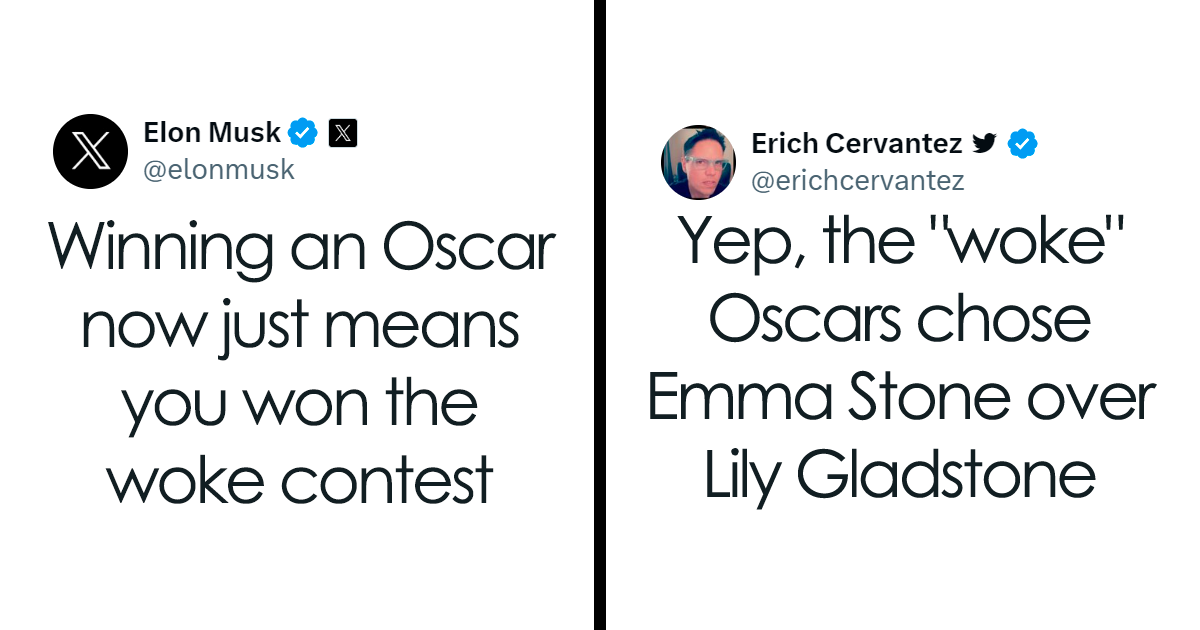
Elon Musk has built rockets, electric cars, brain-computer companies, tunnels, memes, and enough online arguments to power a small nation. But during the 2024 Oscars, the billionaire found himself in a very familiar place: the center of an internet pile-on. This time, the spark was his complaint that “winning an Oscar now just means you won the woke contest.”
That sentence landed on X, the platform Musk owns, like a tuxedo-clad banana peel. Within minutes, users were roasting him from every direction. Some mocked the timing. Some pointed to the actual winners. Others wondered why a man with multiple companies, global influence, and enough money to buy a small moon was spending Oscar night grumbling about Hollywood trophies.
The result was a perfect internet storm: celebrity culture, politics, awards-show discourse, the overuse of the word “woke,” and Musk’s unmatched ability to make himself the main character. And yes, the reactions were hilarious.
What Elon Musk Said About the Oscars
During the 96th Academy Awards on March 10, 2024, Musk posted on X that winning an Oscar had become equivalent to winning a “woke contest.” He also suggested that when an award becomes “diluted,” it no longer commands respect. The comments appeared to connect with a broader criticism often made by conservative commentators: that Hollywood honors diversity, equity, and inclusion more than artistic merit.
The problem? The actual 2024 Oscars did not exactly support that argument in a clean, easy way. “Oppenheimer,” Christopher Nolan’s massive historical drama about J. Robert Oppenheimer and the atomic bomb, dominated the ceremony with seven wins, including Best Picture, Best Director, Best Actor for Cillian Murphy, and Best Supporting Actor for Robert Downey Jr. Emma Stone won Best Actress for “Poor Things,” and Da’Vine Joy Randolph won Best Supporting Actress for “The Holdovers.”
In other words, if the ceremony was a secret political checklist, it had a very strange way of showing it. The night’s biggest winner was a three-hour biographical drama about nuclear physics, moral dread, and men in suits having historically important panic attacks.
Why the Roast Happened So Fast
The internet loves a contradiction, and Musk gave it one gift-wrapped in awards-season glitter. He complained that the Oscars were too “woke,” but users immediately pointed out that many of the night’s biggest winners were white men, including Nolan, Murphy, and Downey. When the winner list did not line up neatly with the complaint, the roast practically wrote itself.
That is why the backlash was not just political. It was comedic. People were not simply saying, “I disagree with your take.” They were saying, “Did you watch the same show as everyone else?” The joke was not only about Musk’s opinion; it was about the confidence with which he delivered it.
The “Woke” Word Did a Lot of Heavy Lifting
Part of the reason the comment became so roastable is that “woke” has become one of the most overworked words in modern culture wars. Originally associated with awareness of social injustice, the term has been stretched, flattened, and tossed around until it can mean almost anything someone dislikes. A movie has a woman lead? Woke. A brand changes a logo? Woke. An awards show honors a film you did not personally enjoy? Apparently, also woke.
By using the word as a catch-all complaint, Musk invited the internet to ask a very simple question: What exactly was he talking about? Was “Oppenheimer” too woke? Was Cillian Murphy’s cheekbone structure part of a diversity agenda? Was Robert Downey Jr.’s comeback secretly an ideological operation? The more people tried to apply the criticism to the actual winners, the sillier it looked.
The Internet Responded With Its Favorite Weapon: Jokes
Public figures and everyday users piled on with jokes that ranged from sarcastic to savage. One popular theme was that Musk sounded like someone who did not get invited to the cool after-parties. Another was that he was simply mad he would never win an Oscar. Others joked that the complaint felt outdated, like a tweet from 2016 had wandered into 2024 wearing a wrinkled suit.
What made the roasting especially funny was that it happened on Musk’s own platform. There is something deeply internet about buying the town square, walking into the middle of it, saying something inflammatory, and then watching the crowd throw tomatoes with professional-level accuracy.
And because X is designed for instant reaction, the replies became part of the spectacle. Award shows already function as live commentary events. People watch the red carpet, the speeches, the awkward presenter banter, the surprise wins, and the musical performances while scrolling through jokes in real time. Musk’s post simply became another category: Best Unintentionally Roastable Comment.
Why the Oscars Were Already a Perfect Culture-War Target
The Oscars have long been more than a film ceremony. They are a mirror for Hollywood’s taste, politics, anxieties, and occasional obsession with congratulating itself. That makes them an easy target for criticism from all sides.
Some viewers complain the Oscars are too political. Others argue they are not political enough. Some think the Academy ignores popular movies. Others think it rewards safe prestige dramas. Some want more diversity. Others roll their eyes whenever diversity is mentioned. In short, the Oscars are less an awards show than an annual emotional stress test for everyone who has ever had an opinion about movies.
The Academy has also introduced representation and inclusion standards for Best Picture eligibility. These standards are designed to encourage broader representation on screen, behind the camera, in industry access programs, and in audience development. Importantly, they apply to Best Picture eligibility, not every individual Oscar category. They also do not mean that a film wins because of demographics. A movie still has to be nominated, voted on, and judged by Academy members.
That nuance often disappears online. “Inclusion standards” becomes “Hollywood is giving trophies by checklist,” which becomes “the Oscars are woke,” which becomes a viral post, which becomes an even more viral roast.
The Funny Part: The Winners Complicated the Complaint
If Musk had made the same comment after a ceremony where every result perfectly matched his criticism, the reaction might have been different. But the 2024 Oscars were dominated by “Oppenheimer,” a film about a male physicist, directed by Christopher Nolan, starring Cillian Murphy, and featuring Robert Downey Jr. in a major supporting role. That is not exactly the easiest evidence for a claim that artistic merit had been replaced by a progressive participation trophy machine.
Then there was Emma Stone’s win for “Poor Things,” a surreal, feminist, visually wild film that certainly inspired debate. But even there, the award was widely understood as recognition of a bold performance, not simply a symbolic gesture. Da’Vine Joy Randolph’s Supporting Actress win was also celebrated throughout awards season, long before Oscar night, because critics and audiences repeatedly praised her performance in “The Holdovers.”
So the joke became obvious: Musk’s complaint seemed to arrive before the evidence. It was like reviewing a restaurant before reading the menu, then being surprised when people asked whether you had actually eaten there.
Elon Musk and the Art of Becoming the Main Character
One reason this story traveled so far is that Musk is not just another celebrity with a spicy opinion. He is the owner of X, CEO of Tesla, founder or leader of multiple high-profile companies, and one of the most recognizable public figures in the world. When he posts, people pay attention, even when the post is basically a digital eye roll.
Musk’s public persona has increasingly leaned into anti-“woke” commentary, criticism of DEI initiatives, and arguments about free speech and cultural politics. His supporters often see him as blunt, independent, and unafraid to challenge elite institutions. His critics see him as a billionaire who turns complex social issues into memes and then complains when the memes come back wearing boxing gloves.
That divide is exactly why his Oscars comment exploded. For fans, it was another example of Musk saying what they believe others are afraid to say. For critics, it was a lazy culture-war take from a man who could have spent the evening doing literally anything else, including launching something into orbit.
What the Roast Reveals About Online Humor
The roasting of Musk’s Oscars comment shows how online humor works in 2024 and beyond. The best jokes are often not complicated. They are fast, specific, and built on a shared sense that someone has missed the obvious.
Here, the shared fact was the winner list. Once users could point to “Oppenheimer” and its sweep, Musk’s “woke contest” line looked less like sharp cultural analysis and more like a pre-loaded opinion searching for a target. The jokes did not need elaborate setup. The ceremony itself was the punchline.
There is also a special kind of humor in watching an extremely powerful person get lightly humbled by ordinary users. The internet enjoys punching upward, especially when the powerful person is posting from a platform he owns. Musk may control the app, but he cannot control every joke that appears underneath his posts. That tension is part of the comedy.
Was Musk Completely Wrong About the Oscars?
To be fair, the Oscars are absolutely influenced by cultural trends. They always have been. Academy voters do not exist in a vacuum. Industry politics, public narratives, campaign strategies, historical context, and social values all play a role in awards season. Pretending the Oscars are a pure laboratory of artistic judgment would be as silly as pretending every acceptance speech is spontaneous.
But that does not mean every win is proof of a political agenda. Awards are messy because art is messy. “Oppenheimer” winning Best Picture can reflect craftsmanship, box-office success, critical acclaim, industry admiration, and the long-awaited recognition of Christopher Nolan all at once. Randolph’s win can reflect both a moving performance and the industry’s appreciation for an actor who delivered one of the year’s most emotionally grounded roles.
The funniest part of Musk’s comment is not that someone criticized the Oscars. People criticize the Oscars every year. The funny part is that the criticism was so broad, so familiar, and so poorly matched to the evening’s results that it practically begged to be turned into a meme.
Why This Moment Had Staying Power
Most celebrity posts disappear within hours. This one stuck because it combined several reliable internet ingredients: a famous billionaire, a loaded political buzzword, a glamorous live event, a visible contradiction, and a crowd ready to joke.
It also arrived during an era when people are tired of every entertainment discussion becoming a culture-war argument. Sometimes viewers just want to watch Ryan Gosling perform “I’m Just Ken” without immediately being drafted into a national debate about civilization. Musk’s post felt to many users like another attempt to turn a night of movies, gowns, speeches, and awkward applause into a political battlefield.
That fatigue helped fuel the jokes. The roasts were not just about Musk. They were about the exhausting habit of labeling every mainstream cultural event as either heroic or dangerous. Sometimes an Oscar is just an Oscar. Sometimes a movie wins because voters liked it. Sometimes a man in a black turtleneck drama wins because the movie was enormous, ambitious, and very good at making audiences feel like nuclear dread needed IMAX sound.
A 500-Word Experience: Watching the Internet Turn One Post Into a Comedy Event
There is a very specific experience that comes with watching a live awards show while scrolling social media. The television gives you the official version: the camera glides across the Dolby Theatre, celebrities clap politely, orchestral music swells, and someone thanks their agent, their parents, their dog, and “the power of storytelling.” Then the internet gives you the unofficial version: someone notices a weird facial expression in row three, someone turns a presenter’s pause into a meme, and someone else writes a joke so fast you wonder if they had it loaded in a drafts folder since last year.
The Musk Oscars moment fit perfectly into that second-screen ritual. Imagine sitting there with snacks, watching “Oppenheimer” collect trophies like it came to the ceremony with a shopping cart. You see Christopher Nolan finally get his big Academy moment. You see Cillian Murphy looking elegant and haunted, as if he just stepped out of a black-and-white photograph. You see Robert Downey Jr. complete one of Hollywood’s most dramatic comeback arcs. Then you open X and find Elon Musk declaring that the whole thing is a “woke contest.” The mental whiplash is immediate.
That is what made the experience funny. The comment did not feel like it emerged from the same room as the ceremony. It felt like it came from a parallel universe where every award show is secretly a policy memo and every acceptance speech is evidence in a congressional hearing. Meanwhile, regular viewers were simply trying to decide whether the “I’m Just Ken” performance was camp, genius, chaos, or all three at once.
Watching the replies roll in was almost like watching a bonus awards category. Best Supporting Drag. Best Original Ratio. Best Adapted Sarcasm. People competed to find the cleanest, quickest way to say, “Sir, what are you talking about?” Some jokes focused on Musk not being invited. Others focused on the fact that the night’s biggest winners did not exactly resemble the caricature he was describing. The best replies worked because they were not long lectures. They were tiny comedy darts.
This is the modern celebrity feedback loop. A famous person posts a broad opinion. The audience fact-checks the vibe. If the vibe fails inspection, the jokes begin. The whole thing becomes entertainment layered on top of entertainment. The Oscars were already a show, but the reaction to Musk became its own after-party, only with fewer gowns and more sarcasm.
The experience also shows why social media can be so addictive during live events. It turns viewers into a temporary comedy writers’ room. Everyone is watching the same thing, reacting in real time, and rewarding the sharpest observations. Musk may have intended to criticize Hollywood, but for many users, he accidentally improved Oscar night by giving them one more absurd subplot to laugh about.
Final Thoughts
Elon Musk’s “woke contest” Oscars comment became hilarious because it was perfectly timed, poorly supported by the night’s actual results, and delivered by someone who always attracts massive attention. The internet did what it does best: it turned a sweeping statement into a group comedy exercise.
The larger lesson is simple. If you are going to accuse the Oscars of being a “woke contest,” you should probably be ready for people to point at the winners list. And if that winners list is led by “Oppenheimer,” Christopher Nolan, Cillian Murphy, Robert Downey Jr., and Emma Stone, the jokes are going to arrive faster than an orchestra trying to play off a long acceptance speech.
In the end, Musk’s comment did not damage the Oscars. It gave the internet a new reason to watch, laugh, and roast. For a ceremony often accused of being too long, too serious, or too self-important, that may have been the most entertaining bonus feature of the night.
SEO Tags

