
Beauty Tools & Accessories
What Is the Chinese Middle Finger? Your Questions Answers
Jul
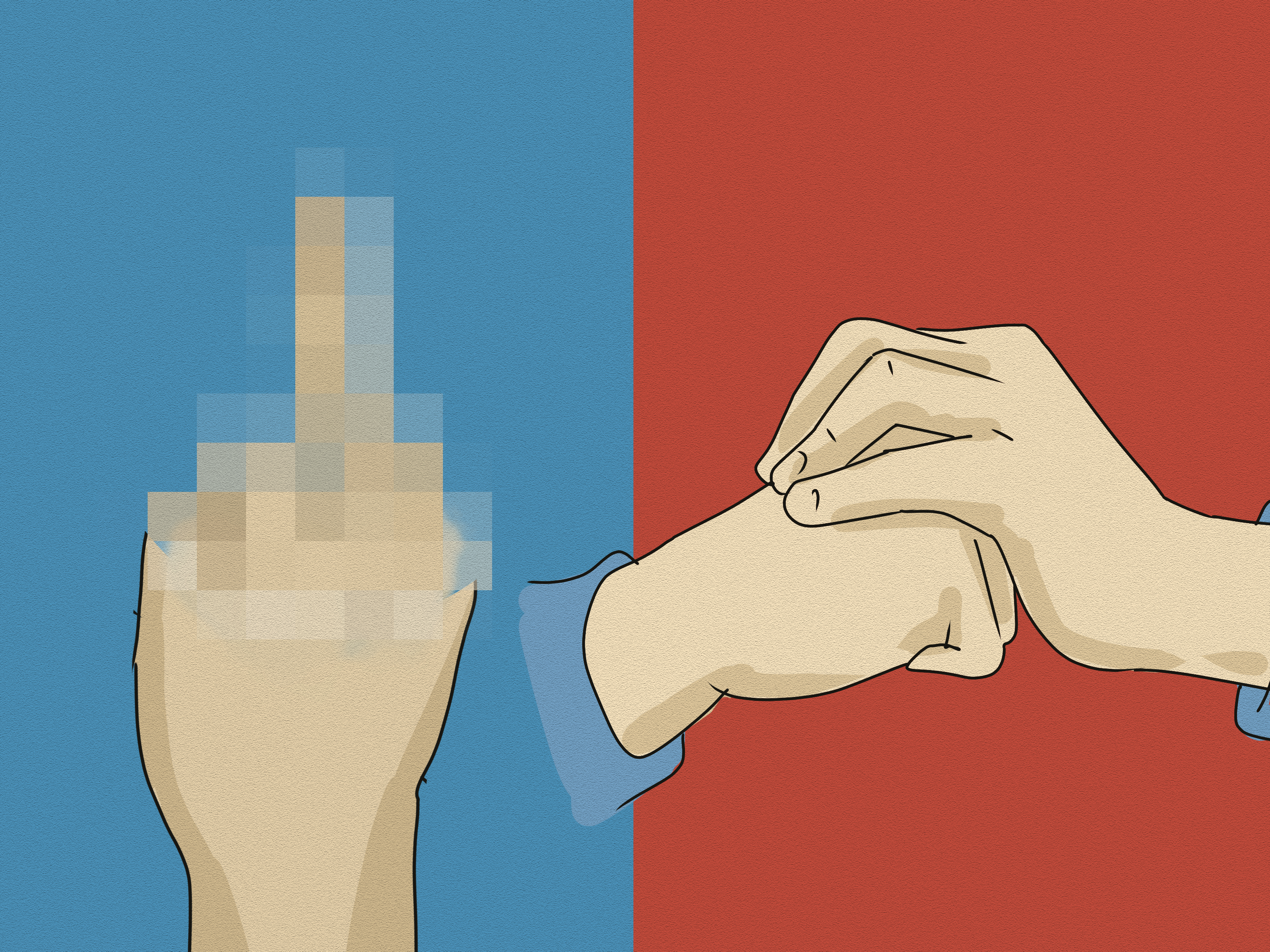
Search for the phrase “Chinese middle finger,” and the internet will confidently tell you that people in China use the pinky instead of the middle finger. It is the sort of explanation that sounds wonderfully simple, spreads quickly on playgrounds and social media, and becomes considerably less reliable once actual cultural context enters the room.
Here is the essential answer: in modern China, raising the middle finger at someone is generally understood as an offensive gesture, much as it is in the United States. An extended pinky can also be dismissive in certain situations, but it does not function as a perfect Chinese replacement for the Western middle finger. It more commonly suggests that someone is weak, insignificant, inferior, or “the smallest” in a comparison. Context, location, age, and intent all matter.
Note: China is culturally and linguistically diverse. No single gesture has an identical meaning among every Chinese person, and a movement that seems insulting in one situation may be harmless in another.
What Does “Chinese Middle Finger” Mean?
The phrase “Chinese middle finger” is informal English rather than the official name of a traditional Chinese gesture. It is often used online to describe someone raising a pinky finger toward another person. According to the popular explanation, the little finger supposedly communicates the same message that the raised middle finger communicates in Western countries.
That description contains a tiny grain of truth wrapped in a very large tortilla of oversimplification.
Holding up a pinky toward someone can communicate that the person is small, weak, unimpressive, or low-ranking. Since the pinky is the smallest finger, it naturally lends itself to comparisons involving weakness or inferiority. However, reputable discussions of Chinese gestures distinguish this dismissive pinky signal from the much more openly obscene middle-finger gesture.
In other words, the pinky may say, “You are not very important,” while the middle finger delivers a far more aggressive insult. Those messages can both be rude, but they are not socially identical.
Is the Pinky Really the Middle Finger in China?
No. Anatomically, linguistically, and culturally, the pinky remains the pinky.
The Mandarin term for the middle finger is zhōngzhǐ (中指), literally “middle finger.” The little finger may be called xiǎozhǐ (小指) or xiǎomǔzhǐ (小拇指). Chinese speakers do not ordinarily refer to the pinky as a middle finger, secret middle finger, substitute middle finger, or undercover agent working for the Department of Rude Gestures.
The myth probably survives because both gestures can express negative judgment. A person who raises a pinky while discussing someone’s abilities may be indicating that the person is weak or inferior. To an outsider, that can look like a culturally specific insult. Somewhere along the way, “an insulting gesture involving the pinky” became “the Chinese version of flipping someone off.”
That shortcut is memorable, but it removes the difference between contempt, belittlement, playful teasing, and outright obscenity.
What an Extended Pinky May Communicate
Depending on the setting, an isolated pinky may suggest:
- Someone is weak or physically unimpressive.
- A person has low status within a comparison.
- Something is minor, poor-quality, or unimportant.
- A competitor is in last place.
- The speaker is teasing or belittling someone.
The gesture becomes clearer when accompanied by facial expressions, speech, or comparison with a raised thumb. For example, a thumb may represent the strongest or best person, while a pinky represents the weakest. Without that context, an extended pinky might mean very little.
What the Pinky Does Not Automatically Mean
A visible pinky is not always an insult. People naturally extend fingers while counting, holding an object, drinking, making promises, demonstrating a hand position, or gesturing during conversation. Chinese friends may also link their pinkies when making a promise, similar to a pinky promise in the United States.
That is why interpreting body language from a single frozen image is risky. A finger is evidence of a finger. Everything else requires context.
Is the Actual Middle Finger Offensive in China?
Yes, particularly in modern cities, online culture, schools, entertainment, sports, and interactions involving younger generations. Raising the middle finger is widely recognized as a gesture of anger, contempt, and disrespect. Chinese-language etiquette resources commonly describe it as seriously offensive rather than as a meaningless Western curiosity.
The gesture may not have the same historical roots in China that it has in Europe and the Mediterranean world. Nevertheless, global movies, television, music, sports, video games, travel, and social media have made its modern meaning easy to recognize.
That recognition does not mean every person reacts identically. Close friends may use the gesture jokingly, just as some American friends do. An older person in a rural community might respond differently from a university student in Shanghai. Still, travelers should not assume that the gesture is harmless merely because it has Western associations.
If you direct it at a stranger during an argument, the safest prediction is not, “They will appreciate this fascinating intercultural experiment.”
Where Did the Middle-Finger Gesture Come From?
The raised middle finger has a much longer documented history in the West than many people realize. It appeared in ancient Greek and Roman culture, where it carried vulgar anatomical symbolism and expressed contempt. Modern English expressions such as “flipping someone off,” “giving someone the finger,” and “flipping the bird” refer to the same basic gesture.
Dictionaries continue to define “flip off” as raising the middle finger as an obscene expression of contempt.
Its spread across modern international culture illustrates an important point: gestures travel. A hand signal may begin in one cultural region, appear in movies and popular media, and eventually become recognizable thousands of miles away. Cultural communication is not preserved in sealed jars labeled “East” and “West.” It changes whenever people interact.
Why Gesture Meanings Are Easy to Misunderstand
Hand gestures feel obvious because they do not require translationuntil they do. The same movement can indicate approval, a number, an insult, a joke, or nothing at all in different places.
Even familiar signals can shift meaning when the palm changes direction or the fingers are arranged slightly differently. Cross-cultural communication guides therefore warn travelers not to assume that gestures are universal.
China provides several everyday examples. People may point toward the nose when referring to themselves rather than pointing toward the chest. Hand configurations are also used to represent numbers, especially in noisy restaurants, bars, and markets. Some of these signs may look unfamiliar to American visitors even though they are entirely practical.
The lesson is simple: before deciding that someone has insulted you with a finger, check whether they were ordering six dumplings.
Other Chinese Hand Gestures Worth Knowing
Thumbs-Up
A thumbs-up is generally positive and may express approval, excellence, or encouragement. It is often comparable to saying “good,” “great,” or bàng (棒).
Thumb and Pinky Extended
Extending the thumb and pinky while folding the other fingers can represent the number six in common Chinese number gestures. Americans may see a telephone or shaka sign, but the Chinese speaker may simply be communicating a quantity.
Index Finger Pointing
Pointing directly at a person can appear confrontational or impolite, especially during a disagreement. An open hand is generally a more courteous way to indicate a person, seat, doorway, or direction.
Thumb Between Two Fingers
A fist with the thumb protruding between two fingers resembles the “fig sign.” Its interpretation varies internationally, and sources report that it may be offensive in some parts of China. Because regional meaning is uncertain, this is not an ideal gesture to test at a formal dinner.
Fist-and-Palm Greeting
The traditional fist-and-palm salute, often associated with martial arts, festivals, and ceremonial greetings, communicates respect rather than aggression. One hand is formed into a fist and covered by the other palm, sometimes accompanied by a slight bow.
Can the Pinky Gesture Be Friendly?
Yes. Relationships can transform the meaning of almost any gesture.
Among friends, raising a pinky may be playful teasing rather than a serious judgment. A coach might use it humorously to compare strength. Children may imitate something they saw online without understanding its supposed cultural meaning. Couples or close friends may link pinkies to seal a promise.
Tone and facial expression provide useful clues. A relaxed smile suggests playfulness. A sneer, argument, or hostile stare suggests contempt. Speech can clarify the meaning further. If someone raises a pinky while saying a person is ruò (弱), meaning weak, the intention is fairly obvious.
Still, copying an unfamiliar insulting gesture because “someone on the internet said this is what Chinese people do” is not wise. At best, it may look childish. At worst, it may appear mocking or disrespectful.
Frequently Asked Questions
What finger is offensive in China?
The actual middle finger is widely recognized as offensive in contemporary China. An extended pinky can also be insulting when it suggests that someone is weak, inferior, or insignificant, but it is usually less obscene.
Does raising the pinky mean “I hate you”?
Not automatically. It may communicate belittlement, weakness, low status, or playful teasing. Its exact meaning depends on the conversation and relationship.
Can I use the middle finger jokingly with Chinese friends?
Only when you know the individuals and understand the group’s boundaries. Some friends may laugh; others may consider it disrespectful. Familiarity is not a magical diplomatic passport.
Is the Chinese pinky gesture used everywhere in China?
No gesture should be treated as universal across such a large and diverse country. Usage varies by region, generation, social group, and personal experience.
How should I gesture politely in China?
Keep movements relaxed, use an open hand when indicating people or places, and avoid aggressive pointing. When uncertain, communicate verbally. Words have the useful feature of being easier to clarify than an accidentally weaponized pinky.
What should I do if I accidentally offend someone?
Lower your hand, apologize briefly, and explain that you misunderstood the gesture. A sincere “Sorry, I didn’t know that was rude” is usually more effective than delivering a 20-minute lecture about comparative finger anthropology.
Experiences and Real-World Lessons About the “Chinese Middle Finger”
Many misunderstandings begin before anyone reaches China. American children sometimes hear classmates claim that holding up the pinky is the “Chinese middle finger.” The story is repeated as secret cultural knowledge, usually with the absolute confidence available only to children who learned something four minutes earlier.
Later, a traveler may arrive in Beijing, Guangzhou, Chengdu, or another city expecting locals to react dramatically whenever a pinky appears. Instead, the traveler sees people using their hands normally. A restaurant customer forms a number sign. A child links pinkies with a friend. Someone balances a shopping bag while the little finger sticks outward. Nobody gasps. No dramatic music begins.
The traveler may then test the myth with a Chinese friend by raising a pinky and asking what it means. The friend might laugh and explain that it can represent the weakest person in a comparison. Another friend may say it feels childish or old-fashioned. Someone else may barely recognize it as an insult at all. These different reactions demonstrate why cultural rules should not be presented as mathematical formulas.
A more awkward experience occurs when visitors assume the real middle finger is safe because they have been told China uses the pinky instead. Imagine an impatient passenger arguing with a taxi driver and raising the middle finger, believing it has no local meaning. The driver may recognize the insult immediately. What began as a transportation disagreement now has an international hand signal attached to it, and the situation has not improved.
Workplaces provide another useful lesson. An American employee may jokingly raise a middle finger during a video call with close colleagues back home. A Chinese coworker who does not share that joking relationship may see the gesture as openly hostile or unprofessional. Humor depends on shared expectations; the camera does not automatically provide them.
Exchange students often discover that number gestures are a more common source of confusion than insults. A student sees a vendor extend a thumb and pinky and assumes the vendor is miming a telephone call. The vendor is actually indicating six. Both people stare politely until a calculator appears and saves the negotiations. No one was rude; they simply brought different visual dictionaries to the conversation.
Online communication creates similar problems. A photograph captures one raised finger but excludes the preceding sentence, facial expression, and relationship between the people involved. Commenters then declare that the image proves a universal cultural rule. In reality, the person may have been counting, joking, demonstrating a gesture, or insulting someone for reasons that cannot be seen.
The most practical experience is therefore not memorizing a catalog of forbidden finger positions. It is learning to pause before assigning meaning. Look at the entire interaction. Consider the person’s expression, voice, age, and relationship with the audience. Ask politely when the situation allows it.
People are often happy to explain local gestures, especially when the question is respectful rather than framed as, “The internet says everyone in your country does thisis that true?” A better question is, “Does this gesture have a particular meaning where you grew up?” That wording acknowledges regional and personal variation.
The experience of navigating unfamiliar body language can even become a useful reminder of humility. Every culture contains gestures that outsiders misunderstand, and every culture changes over time. Today’s imported pop-culture symbol may become tomorrow’s ordinary local slang. Meanwhile, a supposedly ancient custom may turn out to be a rumor invented behind a school cafeteria.
Ultimately, the safest travel habit is simple: observe first, imitate cautiously, and do not insult strangers with any finger. This rule works remarkably well in China, the United States, and nearly everywhere else humans have hands.
Conclusion
The so-called Chinese middle finger is not a straightforward cultural equivalent of the Western gesture. The raised pinky may belittle someone by suggesting weakness, inferiority, or insignificance, but its meaning is situational and generally less obscene. The actual middle finger is widely understood as an offensive gesture in modern China.
The broader lesson is more valuable than memorizing which finger does what: gestures do not carry fixed meanings everywhere. Culture, media, relationships, region, age, facial expression, and context all shape how a movement is interpreted. When in doubt, keep your hands relaxed and use words. They may require translation, but they are much less likely to start an argument across a restaurant.

