
Beauty Unlocked
40 Of The Most Boring Books, As Rated By People Online
Jul
Every reader has that book. The one everyone else swears is “life-changing,”
while you stare at page 37 for the third week in a row, wondering if you’ve always
been this sleepy. The internet, being the internet, has turned that feeling into
a full-blown sport: roasting so-called “boring books” in comment sections, Reddit
threads, Goodreads lists, and, of course, viral roundups like Bored Panda’s
“40 Of The Most Boring Books, As Rated By People Online.”
Here’s the twist: many of these “boring” books are also bestsellers, cultural
touchstones, or serious literary classics. The same novel that puts one person
to sleep is another person’s comfort read, thesis topic, or personality trait.
So this article isn’t about declaring any book objectively bad; instead, we’ll
dig into why people label certain books dull, which titles are
repeat offenders in online conversations, and how to tell whether a famously
“boring” book might still be worth your time.
Why the Internet Loves to Call Books “Boring”
Bored Panda’s list builds on a popular Reddit thread where readers confessed
which books they struggled to finish, or never finished at all. Other sites,
like Goodreads lists of “Most Boring Books Ever Written” and blog posts about
least-favorite classics, echo the same titles again and again. The tone ranges
from gently disappointed (“I just couldn’t get into it”) to absolutely savage
(“this cured my insomnia in three pages”).
A few patterns show up when readers vent:
- Required reading backlash. Books forced on people in school often get labeled boring, even if they’re widely praised by critics later in life.
- Overhyped bestsellers. When a book is marketed as “everyone’s favorite,” expectations skyrocket. If it doesn’t click, it can feel even duller than it really is.
- Slow, descriptive classics. Older novels often move at a much slower pace, with long scenes of description or internal monologue that can feel glacial to modern readers.
- Dense philosophy or politics. Doorstop novels with ideological speeches, essays in dialogue form, or page-long paragraphs are a fast track to the DNF (“did not finish”) pile for many people.
In other words, “boring” usually means “wrong book, wrong reader, wrong moment”
more than “universally terrible literature.” But that doesn’t stop the internet
from making lists.
Common “Boring Book” Offenders People Mention Online
Different sites and discussions highlight different titles, but they tend to overlap.
Pulling from Bored Panda’s roundup (based on a Reddit thread), Goodreads lists
of “boring books,” reader polls, blog posts, and social media comments, you see
the same books show up over and over againoften with wildly conflicting opinions.
Pop Phenomena People Couldn’t Get Through
These are the books that seemed to be everywherein airport displays,
book clubs, and group chatsbut still ended up half-read on nightstands:
- Twilight by Stephenie Meyer – Some readers love the angsty romance; others complain that whole sections feel like nothing happens.
- Fifty Shades of Grey by E. L. James – Frequently criticized for repetitive writing and a thin plot, despite (or because of) its massive popularity.
- Eat, Pray, Love by Elizabeth Gilbert – On “couldn’t finish” lists for being too slow or self-absorbed for some readers, deeply inspiring for others.
- Harry Potter and the Cursed Child (script) – Fans often describe it as reading like bad fanfiction, while still devouring it out of curiosity.
Doorstop Epics and Philosophical Bricks
These are the books readers proudly buy, optimistically crack open, and then…
never seem to get past chapter five:
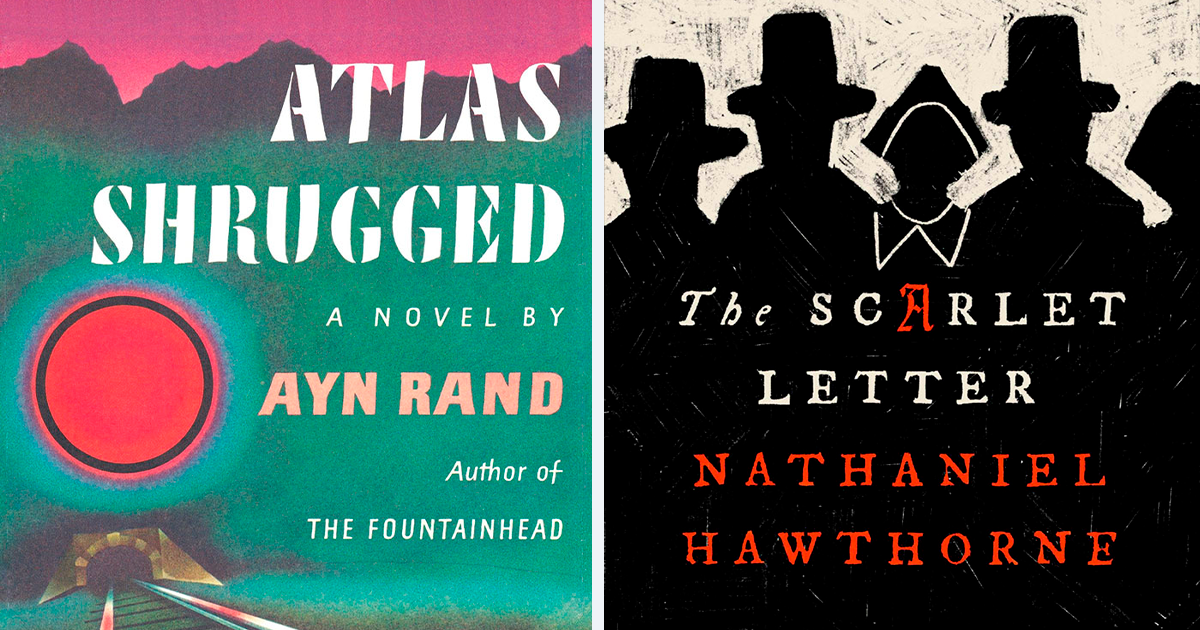
- Atlas Shrugged by Ayn Rand – Regularly called long, preachy, and packed with ideological speeches that derail the story.
- The Silmarillion by J. R. R. Tolkien – Beloved by lore nerds but infamous for its dense mythology and genealogies that feel more like a reference text than a novel.
- Moby-Dick by Herman Melville – Some readers adore its symbolism and style; others hit the whaling-technique chapters and quietly back away.
- Middlemarch by George Eliot – Critically revered, but often labeled a “slow burn” that never quite lights up for certain readers.
High-School Classics That Spark Strong Opinions
Several classic novels show up on “boring book” lists simply because so many
people were forced to read them as teenagers:
- The Great Gatsby by F. Scott Fitzgerald – For some, it’s a razor-sharp portrait of the Jazz Age; for others, it’s “a bunch of awful people making bad decisions at fancy parties.”
- The Catcher in the Rye by J. D. Salinger – Teen readers often relate to Holden; adult rereads sometimes result in “why is he whining so much?”
- Wuthering Heights by Emily Brontë – Frequently cited as atmospheric but exhausting, full of toxic people yelling on a windy moor.
- Great Expectations and Hard Times by Charles Dickens – Accused of dragging, despite Dickens’s wit and social commentary.
- Frankenstein by Mary Shelley – Some love its philosophical depth; others find the layered letters and reflections slow.
- Gulliver’s Travels and Robinson Crusoe – Historic and influential, but too episodic and descriptive for many modern readers.
- The Scarlet Letter and The Old Man and the Sea – Short in page count, long in perceived pacing.
Unexpected “Boring” Picks Readers Mention
Beyond the classics, recent bestsellers and genre titles also get the “boring” stamp:
- Boy Swallows Universe by Trent Dalton – Hailed by many, but described as “one of the most boring” by a few readers who found the pacing off.
- Insomnia by Stephen King – Ironically, some readers say they literally fell asleep trying to get through it.
- Various hyped romance, fantasy, and thriller series that individual readers admit they “just couldn’t get into” despite glowing recommendations.
That’s nowhere near a complete list of 40, but it gives a good sense of the
types of books that end up roasted online: beloved classics, mega-bestsellers,
long philosophical epics, and aggressively marketed “must-reads” that don’t land
with everyone.
What Makes a Book “Boring,” Really?
When you look past the jokes and snark, readers tend to point to a few very
specific reasons a book felt boring to them:
- Glacial pacing. Nothing seems to happen for long stretchesjust wandering thoughts, travel descriptions, or set-up without payoff.
- Unlikable or static characters. If readers don’t care what happens to the people on the page, even a fast-moving plot can feel dull.
- Dense, convoluted prose. Long, winding sentences packed with references and vocabulary can be rewarding, but also exhausting.
- Repetition. Self-help and inspirational books, in particular, get called out for repeating the same idea in slightly different words for hundreds of pages.
- Mismatch with mood or expectations. Someone who picks up a slow literary novel expecting a twisty thriller is almost guaranteed disappointment.
Interestingly, some critics have tried to rehabilitate “boring books,” arguing
that their slowness forces readers to think more deeply, linger in a world,
and notice details we’d otherwise skim past. In that view, it’s less “boring”
and more “demanding” or “patient”which doesn’t help much if you’re stuck on
page 27, but it explains why these titles keep being studied, argued about, and
re-read.
Should You Avoid Books That People Call Boring?
Short answer: not automatically. A book that’s a slog for one reader might be
exactly what you’re craving.
Before you cross a “boring” title off your list, ask yourself:
- Do I actually like this kind of story? If you’re a romance reader who hates political monologues, maybe skip the 1,000-page libertarian epicfor now.
- What mood am I in? Reading a dense classic after a long workday may be setting it up to fail.
- Do I enjoy slow, atmospheric reads? If you love lingering descriptions and character studies, the very books others call boring might be your favorites.
- Is there another format? Audiobooks, dramatized versions, or annotated editions can make tough books much easier to digest.
It can help to reframe online “boring book” lists as vibe warnings,
not official bans. They tell you what kind of patience and reading style
a book might demandnot whether you’re allowed to enjoy it.
How to Handle a Book That’s Boring You to Tears
Let’s say you’ve already started a book and you’re struggling. What now?
1. Give It a Fair Trial (But Set a Limit)
Many readers use a “50-page rule” or “first 10% rule”: if the book hasn’t
hooked you by then, you have full permission to DNF without guilt. Sometimes
it just takes a few chapters to find the rhythm; other times, you know in
your gut that you’re forcing it.
2. Switch Up How You’re Reading
Try:
- Listening to the audiobook while doing chores or commuting.
- Reading shorter chunks instead of marathon sessions.
- Pairing the book with a lighter, more fast-paced read so you can alternate.
Some so-called boring books feel amazing as audiobooks because a narrator
adds tone, pace, and personality you might not hear in your head.
3. Accept That It’s Okay to Quit
Online discussions about “boring books” are full of people confessing that
they kept slogging through a book just because they’d already started it.
Life is short; your TBR (to-be-read list) is long. If a book is making you
dread picking it up, it’s completely valid to set it aside and move on.
4. Or… Use It as a Sleep Aid (Seriously)
Some readers cheerfully admit they keep one Very Boring Book on their nightstand
specifically because it knocks them out in minutes. If you’ve got a gently
mind-numbing nonfiction book lying around, it might be more effective than
doomscrolling at midnight.
Real-Life Reading Tales: When “Boring Books” Hit Home
To really understand why lists like “40 Of The Most Boring Books, As Rated By
People Online” resonate so much, you have to look at the experiences readers
share behind those votes. The stories are often funny, painfully relatable,
and weirdly comforting.
The High-School Classic That Soured You on Reading
Picture this: you’re fifteen, it’s 8 a.m., and your teacher assigns a
century-old novel about people in stiff clothes arguing in drawing rooms.
There’s a love triangle, but nobody texts, nobody screams, and nobody even
storms out dramatically. Instead, you get three pages describing curtains.
A lot of adults trace their “I hate reading” phase back to a specific classic
they were forced to annotate line by line. Years later, they stumble across
an online thread asking, “What was the most boring book you ever read?” and
instantly type that title with the righteous fury of someone who survived
pop quizzes and timed essays about it.
Ironically, some of those same readers return to the very book as adults and
suddenly see the nuance, humor, or heartbreak that zoomed straight over their
heads in high school. The book didn’t changebut they did.
The Overhyped Bestseller That Just… Didn’t Work
Then there’s the modern version: a wildly popular novel that everyone on
social media swears is “unputdownable.” You finally cave, buy a copy, and
sit down expecting fireworks. Instead, it feels like slogging through wet
cardboard. The main character annoys you. The pacing crawls. You keep
checking how many pages are left.
This is where the internet becomes a lifesaver. You search “[Book Title] boring?”
and find entire threads of people whisper-yelling, “I thought it was just me!”
Suddenly, you’re not a bad readeryou’re just not the target audience. That
little moment of solidarity is exactly why lists like Bored Panda’s hit so hard:
they give you permission to admit, “Actually, I hated this giant bestseller
and that’s okay.”
The Ambitious Reading Project That Stalled Out
Maybe you decided this would be the year you tackled a massive classic or a
doorstop fantasy that’s been judging you from your shelf. You made a cup of
tea, turned off your phone, and dove in… and then got lost halfway through
chapter two, somewhere between the fifth family tree and the seventeenth
description of a hill.
Online, you’ll find readers confessing that they’ve tried some of these
“boring” epics three, four, even five times. Sometimes they finally break
through on attempt number six and declare it a masterpiece. Other times they
shrug, admit defeat, and pass the book along to someone who might love it more.
The Book That Wasn’t BoringJust Wrong Timing
One of the most interesting patterns in “boring book” threads is how often
people say, “I hated it the first time, but when I picked it up years later,
it became a favorite.” A novel about middle-aged regret might land very
differently when you’re 40 than when you’re 19. A slow family saga might feel
snoozy during a stressful work week, but deeply comforting on a quiet vacation.
That’s the hidden gift of boring-book lists: they don’t just help you decide
what not to read. They also remind you that reading is a long game.
You can always come back to a book when your life, attention span, and tastes
have shifted. A DNF today might be a five-star favorite a decade from now.
Final Thoughts: Boring Books, Brilliant Debates
“40 Of The Most Boring Books, As Rated By People Online” is less a hit list
and more a snapshot of how wildly different readers’ tastes can be. The same
book can be:
- a teenager’s worst homework assignment,
- a critic’s all-time favorite,
- a book club’s heated argument topic, and
- someone else’s cozy reread every winter.
So if a book on one of these lists is your absolute favorite, don’t panic.
And if your “most boring book ever” is universally acclaimed, you’re not wrong
either. You’re just honest about what doesor doesn’tspark joy when you open
a book. That honesty is what keeps reading communities lively, memes flowing,
and Bored Panda comments gloriously chaotic.
In the end, the best reading rule might be this: read what genuinely interests
you, skip what doesn’t, and don’t be afraid to admit that the world’s most
beloved novel almost put you to sleep. Someone online is definitely going to agree.
meta_title: 40 Most Boring Books, Rated by Readers Online
meta_description: Discover why readers labeled 40 popular classics
and bestsellers as “boring” and what it really says about our reading tastes.
sapo: From Twilight to The Great Gatsby, the internet
has no chill when it comes to calling famous books “boring.” Based on viral
Bored Panda and Reddit conversations, this in-depth guide unpacks why certain
classics, bestsellers, and doorstop epics end up on “most boring books” lists,
what readers actually mean when they say a book put them to sleep, and how to
decide if a supposedly dull novel is worth your timeor your DNF pile. Expect
honest reader confessions, funny reading horror stories, and a reminder that
taste is personal, even when the whole internet seems to disagree.
keywords: boring books list, most boring books, Bored Panda books,
overrated classic novels, books people couldn’t finish, boring bestsellers,
why books feel boring

