
Beauty Unlocked
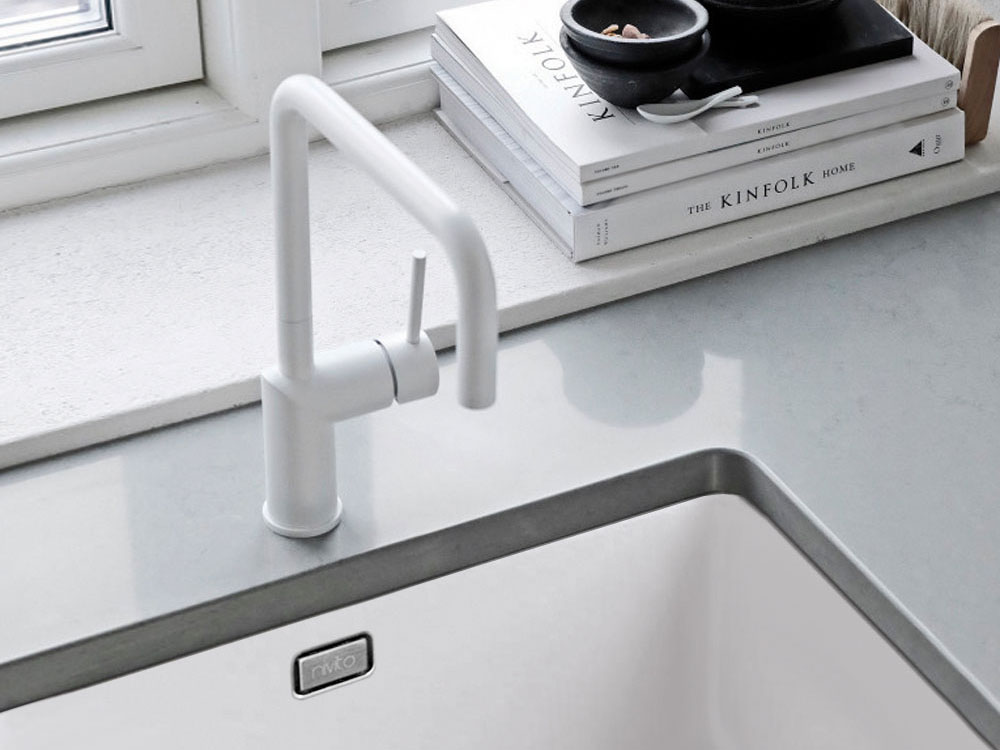
White Kitchen Faucet
Jul
A white kitchen faucet is basically the “clean sneakers” of kitchen design: crisp, confident, and somehow makes everything around it look more expensive.
Done right, it’s modern without being cold, classic without being boring, and it can play nicely with just about any stylefrom farmhouse to ultra-minimal.
Done wrong… well, let’s just say “mystery beige” is not a finish anyone wants to discover in week three.
This guide breaks down what actually matters when you’re shopping for a white kitchen faucet: finish types (matte vs. glossy),
durability, stain resistance, how to match undertones, which features are worth paying for, and how to keep your faucet white without making it your new hobby.
Why White Faucets Are Trending (and Not Just Because Your Kitchen Wants a Snow Day)
White fixtures are having a moment because they do something most finishes can’t: they look intentional without demanding attention.
Stainless steel blends in. Matte black makes a statement. Brushed gold says, “I own coasters made of marble.”
A white kitchen sink faucet says, “I’m calm, collected, and I probably have my pantry labeled”even if you absolutely do not.
Designers love white because it can brighten a space and soften contrast. A matte white kitchen faucet especially works as a “quiet focal point”:
it reads modern, but it won’t fight your backsplash tile for dominance. It’s also a smart choice if you want a light, airy kitchen that doesn’t feel sterile.
White Finish Types (It’s Not Just “White”)
“White” is a whole family, not a single paint chip. The fastest way to end up annoyed is to buy a faucet that’s a cool, bluish white
when your cabinets are warm, creamy white. Under kitchen lighting, that mismatch can look like two strangers forced to share an elevator.
1) Matte White vs. Gloss White
-
Matte white: Soft, contemporary, and better at disguising fingerprints and light water spotting. It also feels “designed,”
like you meant to do it (even if you accidentally fell into faucet research at 1:00 a.m.). -
Gloss white: Cleaner, sharper, and often closer to the look of porcelain. It can feel more traditional, and it tends to reflect more light.
The tradeoff is that glossy surfaces can make smudges more visible in certain lighting.
2) What “White Finish” Usually Means in the Real World
Many white faucets use a powder-coated finish or a related colored coating system designed for non-metallic color surfaces.
Powder coating is applied and then heat-cured, creating an even colored layer that can be durable when treated with normal human decency
(read: no steel wool rage-cleaning).
Some brands also describe multiple finish technologies across their lineupslike powder coat for colors, lacquer for certain looks, and PVD for many metallic finishes.
Translation: white is often achieved through a colored coating rather than a “raw metal” finish, so care matters.
3) Undertones: The Secret Sauce
Before you commit, stand near your cabinets and identify the vibe:
- Warm whites (creamy, ivory, slightly yellow): Pair beautifully with brass, warm wood, beige stone, and off-white tile.
- Cool whites (crisp, slightly blue/gray): Pair well with chrome, stainless, concrete, marble, and cool gray cabinetry.
- True whites (balanced): Most flexible, but still test under your kitchen lighting.
Pro tip: if you can, order a finish sample or buy from a retailer with a painless return policy. Your eyes under your lighting beat any product photo.
Pros & Cons of a White Kitchen Faucet
Why people love them
- Brightens the sink zone: White reflects light and can make a busy countertop feel less visually crowded.
- Plays well with modern trends: Especially matte finishes that feel contemporary without being harsh.
- Pairs with white sinks seamlessly: If you have a white farmhouse sink or composite white basin, a matching faucet looks cohesive.
- Unexpected but not risky: It’s more unique than chrome, less polarizing than some bold metals.
What can annoy you (unless you plan for it)
- Chips can be more noticeable: On cheaper faucets, a hard impact can reveal a darker underlayer. Quality matters.
- Harsh cleaners are a no: Many coated finishes don’t love abrasives or strong chemicals. You’ll need a gentler routine.
-
White-on-white can disappear: If your sink, counter, and backsplash are all white, the faucet may visually “vanish.”
That’s great for minimalists, less great if you want contrast.
Styles & Features to Consider
A white faucet isn’t one style. It’s a finish you can put on different bodieskind of like a tuxedo on different humans:
still formal, but the results vary wildly.
Pull-Down vs. Pull-Out
Pull-down kitchen faucets typically have a taller, high-arc spout and the spray head pulls straight down into the sink.
They’re great for deeper sinks and big pots. Pull-out faucets usually have a lower profile, and the head pulls outward toward you,
which can be handy in tighter spaces.
Touchless and “Clean-Hands” Features
If you cook a lot (or have kids who treat faucet handles like a group art project), a touchless kitchen faucet can be genuinely useful.
Many touchless models still include a manual handle, so you can adjust temperature normally and use motion for on/off.
Look for reliable sensor placement and straightforward override controls.
Spray Modes That Actually Help
At minimum, you want:
- Aerated stream for everyday use (washing hands, filling a glass, normal rinse).
- Spray for food bits and wide coverage.
- Optional “power” rinse for stubborn messes, if you’re the household’s unofficial dish-rescue squad.
Handle Style & Ergonomics
- Single-handle: Easiest for quick control, especially when your hands are wet.
- Two-handle: More traditional look and slightly more precise temp controlat the cost of convenience.
- Wall-mount: Gorgeous in the right kitchen, but requires plumbing planning (not a “Sunday afternoon surprise” project).
Performance Specs That Matter (A.K.A. the Stuff Your Faucet Cares About)
Flow Rate
Most people only notice flow rate when it’s either painfully weak or aggressively splashy.
While federal limits exist for kitchen faucets, many efficient models are available around the 1.5–1.8 gallons per minute range,
and some regions have additional efficiency requirements. If you love fast pot-filling, some faucets include a temporary “boost” feature that returns
to the standard flow afterward.
Spout Height, Reach, and “Will This Hit My Backsplash?”
Measure two things before you fall in love:
- Arc height: High-arc looks great and helps fill tall pots. But if you have a shelf or window ledge close behind the sink, check clearance.
- Spout reach: Too short and you’ll splash the back of the sink. Too long and you’ll splash the front of your shirt. (Science.)
Valves and Build Quality
You’ll often see quality faucets use ceramic disc cartridges, solid metal construction, and strong docking systems for pull-down heads.
You don’t need to memorize engineering termsjust aim for reputable brands, a meaningful warranty, and reviews that talk about performance after months,
not minutes.
Water Safety Certifications
Because this is literally a device that carries drinking water, it’s worth looking for products that reference appropriate safety and performance standards.
Common examples in the U.S. market include listings/certifications related to drinking-water contact and national plumbing fitting standards.
If you’re unsure, check the spec sheetboring paperwork is where the good info lives.
Pairing White Faucets with Sinks & Hardware
A white kitchen faucet shines when it’s part of a “planned outfit,” not a random closet grab. Here are pairings that work in real kitchens:
White Faucet + White Sink
This is the cleanest, most cohesive lookespecially with farmhouse sinks or matte composite basins. To keep it from looking flat:
add contrast with cabinet hardware (black, brass, or brushed nickel), a textured backsplash, or a darker countertop.
White Faucet + Stainless Steel Sink
Surprisingly strong combo. The stainless adds practical durability; the white faucet adds softness and style. Tie it together by repeating a white element
nearby (white tile grout, white accessories, or a light backsplash).
White Faucet + Stone Counters
- Marble / quartz with gray veining: Cool white faucet, chrome or stainless accents, minimal lines.
- Warm quartz / granite: Warm white faucet, brass or champagne-toned hardware, wood accents.
- Butcher block: Matte white faucet looks chef-y and cozy; add matte black or aged brass pulls.
Installation & Compatibility Checklist
Before you order, do a quick reality check with your sink/countertop:
- Number of holes: One-hole faucets are common; many can adapt to 3-hole setups with a deck plate/escutcheon.
- Mount type: Deck-mounted is standard; wall-mount requires plumbing behind the wall.
- Sprayer hole: If you’re replacing an older faucet, you may have an extra hole from a soap dispenser or side sprayer.
- Power for touchless: Some use batteries, some offer AC adapters. If your sink base is already storage chaos, plan accordingly.
- Water pressure quirks: If your home has low pressure, prioritize strong internal design and good spray performance.
If you’re DIY-ing installation, shut off the water, keep a towel handy, and accept that you may briefly become a contortionist.
If that sentence made you tired, hiring a plumber is a valid form of self-care.
Cleaning & Care (Keep It White, Not “Mystery Beige”)
The goal is simple: clean often, gently, and brieflyso you never have to clean aggressively.
Most manufacturers recommend a soft cloth with mild soap and water, then rinse and dry.
The drying step matters more than people want to admit (like flossing, but for faucets).
A simple weekly routine
- Wipe with a damp microfiber cloth.
- Add a tiny bit of mild dish soap if needed.
- Rinse (don’t leave soap residue to collect dust).
- Dry with a soft towel to prevent mineral spotting.
Hard water spots and mineral buildup
If you live in a hard water area, you may see chalky spots at the base or around the aerator.
A common approach is a diluted vinegar-and-water method for short contact time, followed by a thorough rinse and dry.
Always avoid harsh abrasives and aggressive chemicals unless the manufacturer explicitly says they’re safe for your finish.
What to avoid (unless you enjoy regrets)
- Abrasive pads, scouring powders, and “magic” scrubbers used aggressively.
- Harsh chemical cleaners that can dull or damage coated finishes.
- Letting cleaner sit for long periodsshort and gentle wins.
Buying Scenarios (Pick Your Player)
If you cook constantly
Go for a white pull-down kitchen faucet with a strong docking system, multiple spray modes, and a comfortable handle.
Consider touchless if you handle raw meat often and want fewer handle touches.
If your kitchen is small
A pull-out or lower-arc faucet can reduce splashing and prevent the faucet from visually dominating the space.
White helps keep the sink area light and less “busy.”
If you want modern minimal
Matte white + a clean cylindrical shape is the easiest path to that “calm showroom kitchen” energywithout needing to hide your toaster forever.
If you love farmhouse style
White faucet + apron-front sink is a classic pairing. Add warm metals (aged brass) or matte black hardware for contrast.
Bonus points for a bridge-style silhouette if you want a vintage nod.
FAQ
Do white kitchen faucets stain?
High-quality finishes resist staining with normal use, but hard water minerals and soap residue can dull any surface over time.
The best defense is quick wiping and dryingespecially around the base where water likes to throw tiny parties.
Is matte white harder to maintain than stainless?
Not necessarily. Stainless can show fingerprints and water marks depending on finish; matte white can be forgiving.
The key is using gentle cleaners and avoiding abrasives.
Will a white faucet look weird with stainless appliances?
It can look fantastic. Think of white as a “neutral,” like cabinetry. If you repeat white elsewhere (backsplash, trim, counters),
the faucet feels intentional rather than random.
Can I use vinegar to remove hard water spots?
Often, diluted vinegar solutions are used briefly for mineral deposits, followed by a thorough rinse and drying.
Always check your faucet’s care instructions, especially for specialty coated finishes.
Real-World Experiences: What Owning a White Kitchen Faucet Is Actually Like (500+ Words)
Let’s talk about the part most product listings don’t capture: day-to-day life with a white faucet. Not the glamorous “soft morning light” version
the real version, featuring spaghetti night, enthusiastic handwashing, and a sink that somehow attracts every crumb in a three-mile radius.
Week 1: You will stare at it. A lot. White fixtures have that “new sneakers” effectsuddenly the whole kitchen feels fresher.
You’ll probably wipe it down just because you can. Everything is smooth. Everything is clean. You are basically a minimalist influencer now.
Week 3: Reality arrives with a tiny mineral ring near the base. If your water is hard, you’ll notice faint chalky spots sooner than you’d like.
Here’s the surprising part: it’s usually not “staining,” it’s residue. When you wipe and dry regularly, it disappears easily.
When you ignore it for a month because life happens, it becomes “a project.”
Month 2: You learn your faucet’s personality. Matte white is typically more forgiving than gloss in overhead lighting,
especially for fingerprints. Gloss white looks sharp, but it can reveal smudges in certain angleslike it’s auditioning to be a detective.
Either way, you’ll discover that the quickest win is drying after heavy use. Thirty seconds of prevention saves ten minutes of scrubbing later.
Month 4: You develop a “cleaning lane.” Most people end up with a routine like this: a microfiber cloth lives in a drawer near the sink,
and once or twice a week you do a fast wipe with mild soap and water, then dry. That’s it. No special sprays. No chemical Olympics.
When guests come over, you do the same wipebecause the faucet sits at eye level, and humans are judgmental creatures.
Month 6: The big test: durability. This is where quality matters. A well-made white faucet finish stays consistent and smooth.
Cheaper coatings can start showing wear in high-touch spots (like the handle edge) or, in worst cases, tiny chips from impacts.
Homeowners who stay happy long-term tend to do three things: (1) buy from a reputable brand, (2) avoid abrasive cleaning tools,
and (3) treat the faucet like a coated surfacenot like a cast-iron skillet you can attack with sandpaper.
Unexpected bonus: White faucets often encourage better sink hygiene. Because the fixture is light-colored, you notice grime sooner.
That sounds annoyinguntil you realize it keeps buildup from getting stubborn. Think of it like a smoke alarm for soap scum.
Best pairing lesson: A white faucet looks best when it has at least one “friend” in the kitchensomething else white nearby.
That could be a backsplash, cabinet color, trim, or even countertop veining. If the faucet is the only white item in a sea of dark finishes,
it can look accidental. But when the room repeats white in a couple spots, it looks curated.
Final real-life tip: If you’re worried about maintenance, choose matte white, keep a microfiber cloth nearby,
and commit to gentle cleaning. That combo delivers the look without turning you into a full-time faucet caretaker.
Your kitchen should serve younot the other way around.

