
Beauty Tools & Accessories
Talk Your Book: Investing in Private Credit
Jul
Note: This article is for educational purposes only and should not be treated as personal financial advice. Private credit can be useful, complicated, expensive, illiquid, and occasionally spicy enough to make a bond analyst reach for antacids.
Introduction: Why Everyone Suddenly Wants to “Talk Their Book” on Private Credit
Private credit has become one of the loudest conversations in modern investing. A few years ago, it sounded like a niche corner of finance where institutions, pension funds, insurance companies, and private equity sponsors quietly shook hands over complicated loans. Today, it is being pitched to wealth clients, discussed on podcasts, packaged into interval funds and business development companies, and described with phrases like “income,” “diversification,” “senior secured,” and “less volatility.” In other words, private credit has officially entered the financial dinner party.
The phrase “talk your book” means someone is promoting an investment idea that benefits their own position. That does not automatically make the idea bad. A chef will talk up the soup because the chef made the soup. The real question is whether the soup is actually deliciousor whether it is lukewarm leverage in a designer bowl.
Investing in private credit can make sense for certain investors. It may offer attractive income, exposure outside traditional public bonds, and negotiated lender protections. But it also comes with risks that are easy to underestimate: illiquidity, credit losses, opaque valuations, high fees, manager dispersion, and redemption limits. This guide explains what private credit is, why it has grown, how investors access it, what risks matter most, and how to evaluate a pitch without being hypnotized by a glossy yield number.
What Is Private Credit?
Private credit, also called private debt, generally refers to loans made by non-bank lenders to companies or asset owners outside the public bond market. Instead of a company issuing a bond that trades daily, a private credit manager negotiates a loan directly with the borrower. The borrower may be a middle-market company, a private-equity-backed business, a real estate owner, a consumer-finance platform, an infrastructure project, or an asset-backed borrower with collateral such as receivables, equipment, mortgages, aircraft, or other hard assets.
The largest and best-known category is direct lending. In direct lending, private credit funds lend money to companies, often in senior secured, floating-rate loans. “Senior secured” means the lender is higher in the repayment line than junior debt or equity and may have claims on collateral if the borrower fails. “Floating rate” means the loan’s interest rate can adjust with benchmark rates, which may help income rise when rates rise. It also means borrowers feel the squeeze when rates stay high. Finance, like comedy, is all about timing.
Why Private Credit Grew So Quickly
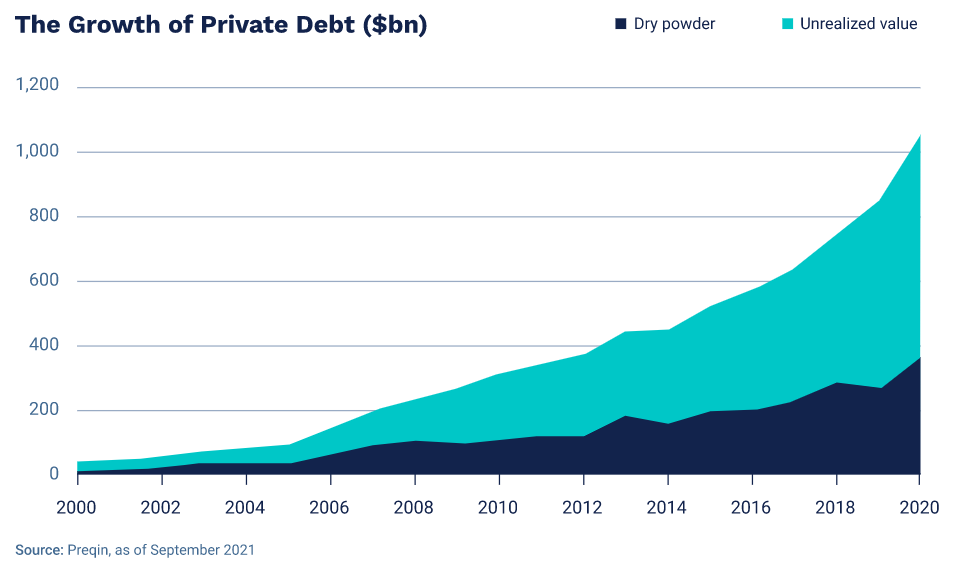
Private credit expanded because borrowers needed flexible financing and banks became more selective after the global financial crisis and later regulatory changes. At the same time, investors searched for income in a world where traditional bonds often felt either low-yielding or rate-sensitive. Private credit stepped into that gap with custom loans, faster execution, and potential yield premiums.
For borrowers, private credit can offer speed, certainty, confidentiality, and flexible terms. A company may prefer negotiating with one or a few lenders rather than launching a syndicated loan or public bond. For lenders, private deals can provide tighter covenants, more information rights, customized collateral packages, and higher coupons. That is the sales pitch, and parts of it are true. But when too much money chases the same loans, lender discipline can weaken. The best private credit managers know when to say no. The worst ones treat “covenant-lite” like it is a lifestyle brand.
How Investors Access Private Credit
Private Funds
Historically, private credit was mainly available through private funds limited to institutions and accredited investors. These funds often lock up capital for several years. The benefit is that the fund structure matches the illiquid nature of the loans. The drawback is obvious: investors cannot simply click “sell” on a bad Tuesday.
Business Development Companies
Business development companies, or BDCs, give investors access to loans made to private or middle-market companies. Some BDCs trade publicly on exchanges, while others are non-traded. Public BDCs offer daily liquidity through the stock market, but their share prices can swing above or below net asset value. Non-traded BDCs may report smoother values but typically limit redemptions.
Interval Funds and Tender Offer Funds
Interval funds and tender offer funds are increasingly popular vehicles for individual investors. They may provide access to private credit while offering limited liquidity at scheduled intervals. The important word is “limited.” These funds can restrict repurchases, and investors may receive only a portion of requested withdrawals if too many people head for the exit at once.
Public Credit Funds With Private Exposure
Some mutual funds, closed-end funds, or alternative funds may include exposure to private loans, asset-backed finance, or leveraged credit. These can be easier to buy, but investors still need to understand what is inside the wrapper. A liquid-looking package does not magically turn illiquid loans into cash. It just makes the wrapper look calmer than the contents.
The Appeal: Why Investors Like Private Credit
Potentially Higher Income
The most obvious attraction is yield. Private credit often pays more than investment-grade bonds and may offer a premium over public leveraged loans or high-yield bonds. That premium is not a gift basket. It compensates investors for taking credit risk, liquidity risk, complexity risk, and manager risk.
Floating-Rate Exposure
Many direct-lending loans are floating rate. When short-term rates rise, income may rise too. This can make private credit appealing during periods when traditional fixed-rate bonds struggle. However, higher rates can also pressure borrowers. A loan that pays more because the borrower is under stress is not exactly free money; it is a louder alarm clock.
Negotiated Protections
Private lenders may negotiate covenants, collateral, reporting requirements, and call protections. Strong covenants can give lenders early warning signs and more control if a borrower deteriorates. But protections vary widely. “Senior secured” sounds comforting, yet recovery depends on the quality of collateral, leverage levels, documentation, and what the company is worth when trouble arrives.
Portfolio Diversification
Private credit may behave differently from public stocks and bonds because loans are not traded daily. That can reduce visible volatility. But lower visible volatility is not the same as lower risk. A loan valued monthly or quarterly may look peaceful until a credit event forces a markdown. Sometimes the calm lake is calm because nobody has checked for alligators.
The Risks: Where the Pitch Gets Less Shiny
Credit Risk
The main risk is simple: borrowers may not pay. Many private credit borrowers are smaller, more leveraged, or more complex than public investment-grade companies. If revenue falls, margins shrink, or refinancing becomes difficult, defaults can rise. Investors should ask how a fund handles non-accrual loans, restructurings, amendments, and payment-in-kind interest.
Liquidity Risk
Private loans are hard to sell quickly. Even funds that offer periodic withdrawals may limit redemptions. This matters because investors often discover their true liquidity needs during market stress, not during calm periods when every chart points politely upward.
Valuation Risk
Because private loans do not trade daily, managers estimate values using models, comparable transactions, borrower performance, and third-party inputs. Reasonable people can disagree on fair value. If marks are too optimistic, investors may think the portfolio is healthier than it is. If marks are too conservative, returns may look unnecessarily poor. Either way, valuation is part science, part judgment, and part “please read the footnotes.”
Fee Risk
Private credit funds can have management fees, incentive fees, servicing costs, administration costs, platform fees, and other expenses. A high gross yield can become a much less exciting net return after fees. Investors should focus on net returns, not brochure returns.
Manager Selection Risk
Private credit is not one market; it is thousands of negotiated loans. The difference between a disciplined lender and a yield-chasing lender can be enormous. Strong managers may have better sourcing, stricter underwriting, deeper restructuring teams, and more bargaining power. Weak managers may stretch terms just to deploy capital. In private credit, manager selection is not a detail. It is the main character.
Important Questions Before Investing in Private Credit
1. What Type of Private Credit Is This?
Direct lending, mezzanine debt, distressed debt, opportunistic credit, real estate debt, infrastructure debt, and asset-based finance are not identical. A senior secured loan to a stable software company is different from junior debt in a cyclical business or a distressed loan bought at a discount. Ask what the fund actually owns.
2. Who Are the Borrowers?
Look at borrower size, industry exposure, sponsor backing, revenue stability, leverage, and cash-flow coverage. A diversified portfolio across hundreds of borrowers may be safer than a concentrated portfolio of fashionable companies all exposed to the same economic risk.
3. How Much Leverage Does the Fund Use?
Fund-level leverage can boost returns, but it can also magnify losses. Leverage is like hot sauce: useful in small amounts, dangerous when someone unscrews the cap.
4. What Is the Non-Accrual Rate?
Non-accrual loans are loans that are no longer generating expected interest income because the borrower is in trouble. A rising non-accrual rate can signal credit stress. Also check whether income comes from cash interest or payment-in-kind interest, where interest is added to the loan balance instead of paid in cash.
5. What Are the Redemption Rules?
Can you redeem monthly, quarterly, annually, or only at the manager’s discretion? Is there a gate? What happens if requests exceed the limit? Liquidity rules should be understood before investing, not discovered during a panic while holding a coffee and whispering, “Wait, what do you mean I can’t get all my money back?”
A Practical Example
Imagine two private credit funds. Fund A owns mostly first-lien, senior secured loans to 150 companies across healthcare, business services, software, and industrials. It uses moderate leverage, has low non-accruals, strong documentation, and a long-tenured team. Fund B advertises a higher yield but owns riskier second-lien loans, uses more leverage, has heavy exposure to one sector, and relies on payment-in-kind income to support distributions.
Fund B may look better in a simple yield comparison. But Fund A may be the better investment after adjusting for risk. Private credit analysis should not begin and end with the distribution rate. A high yield can be a reward, a warning, or both wearing the same suit.
Where Private Credit Fits in a Portfolio
For suitable investors, private credit may serve as an income-focused alternative allocation. It can complement traditional bonds, high-yield credit, floating-rate loans, real estate income, or dividend strategies. But it should not replace emergency cash, short-term savings, or core liquidity. Money needed soon should not be locked in a strategy that may only open the exit door once a quarter and only halfway.
Allocation size matters. A modest position may improve income and diversification. An oversized position can create liquidity problems and hidden concentration risk. Investors should also consider tax treatment, account type, fees, and whether the strategy overlaps with other holdings.
How to Listen When Someone Talks Their Book
When a manager, advisor, or commentator promotes private credit, listen carefully to incentives. Are they explaining both upside and downside? Are they comparing net returns or gross returns? Are they discussing defaults, recoveries, leverage, fees, and liquidity? Or are they waving around the yield like a magician distracting you from the trapdoor?
A good private credit pitch should include plain-language answers to uncomfortable questions. What went wrong in past loans? How were losses handled? What industries are avoided? How are loans valued? What happens if rates fall? What happens if rates stay high? How much of the return comes from spread, fees, leverage, or credit improvement? If the answer to every question is “our platform is differentiated,” keep asking.
Experience Notes: What Investing in Private Credit Teaches You
One of the most valuable experiences related to private credit is learning that income investing is never just about income. The first time an investor sees a private credit fund showing an attractive distribution, the instinct is understandable: “That looks better than my bond fund.” But private credit asks for a different mindset. You are not just buying yield. You are lending money to real businesses through a manager whose underwriting skill determines whether that yield is durable.
A practical investor experience often begins with comparing private credit to familiar public bonds. Public bonds trade every day, which can feel uncomfortable because prices move visibly. Private loans may look smoother because they are valued less frequently. At first, that smoothness feels like a feature. Over time, experienced investors learn to ask whether the smooth ride reflects real stability or simply delayed recognition of risk. A portfolio can appear calm right up until a borrower misses a payment.
Another lesson is that documents matter. In public markets, many investors can get away with broad fund analysis. In private credit, details such as first-lien versus second-lien exposure, loan-to-value ratios, interest coverage, covenants, sponsor quality, sector concentration, and amendment history can change the entire risk profile. Reading fund reports may not be thrilling. Nobody throws a parade for someone who studies a quarterly credit schedule. But that boring work often separates informed investing from yield shopping.
Liquidity is another experience investors remember quickly. During strong markets, limited liquidity sounds manageable. During stress, it becomes very real. Investors who may need cash for taxes, business expenses, tuition, home purchases, or emergencies should not rely on private credit funds as instant liquidity sources. Redemption limits are not fine print decorations. They are part of the product’s design.
Private credit also teaches humility about manager selection. Two funds in the same category can produce very different outcomes. One manager may avoid overheated deals, insist on stronger documentation, and restructure problem loans early. Another may chase assets to keep fundraising momentum alive. From the outside, both may use similar words: senior, secured, diversified, disciplined. The difference shows up later, usually when the economy becomes less friendly.
The best personal rule is simple: do not invest in private credit because the yield looks high; invest only if you understand why the yield exists, what could interrupt it, and whether you can live with the liquidity terms. Private credit can be a useful tool, but it is not magic. It is lending. Lending works beautifully when borrowers pay and less beautifully when they do not. That may sound obvious, but in finance, the obvious truths are often the ones most likely to be ignored during a bull market.
Conclusion: Private Credit Is Useful, Not Magical
Private credit deserves attention because it has become a major part of the lending ecosystem. It can offer income, diversification, customized loan terms, and access to opportunities outside public markets. For long-term investors who understand the trade-offs, it may be a valuable portfolio component.
But private credit is not a risk-free yield machine. It is not a savings account wearing a blazer. It is an illiquid credit strategy that depends on underwriting, structure, valuation discipline, borrower performance, and manager skill. Before investing, understand the vehicle, the assets, the fees, the leverage, the liquidity limits, and the downside scenario.
When someone talks their book on private credit, do not automatically dismiss them. Just make them open the book. Then read the footnotes.
SEO Tags

