
Skincare
How to Train a Horse to Respect You: 12 Steps
Jul
Training a horse to respect you is not about acting like a movie cowboy, puffing up your chest, and whispering dramatic things into the sunset. Real respect comes from safety, trust, consistency, timing, and clear communication. A respectful horse does not fear you. A respectful horse understands your personal space, responds to light cues, pays attention on the ground, and sees you as a calm, reliable leader rather than a confusing two-legged snack dispenser.
Whether you own a young horse, a pushy pasture potato, or a sweet senior who has learned that humans are basically treat machines with boots, ground manners matter. If your horse drags you to grass, crowds you at the gate, ignores your stop cue, swings his hindquarters toward you, or walks over you like you are decorative barn flooring, it is time to return to the basics.
This guide explains how to train a horse to respect you in 12 practical steps. The focus is humane horsemanship: no fear, no bullying, no gimmicks. Just clear boundaries, fair pressure and release, body language, repetition, and a little patience. Also, probably some dirt on your jeans. That part is traditional.
What Does “Respect” Mean in Horse Training?
In horse training, respect means the horse understands and responds to boundaries. It does not mean the horse is “dominated,” intimidated, or forced into obedience. A horse that respects you can lead politely, back up when asked, yield the shoulders and hindquarters, stand quietly, and stay mentally connected even when distractions appear.
Respect also goes both ways. You respect the horse by reading his body language, using safe equipment, avoiding pain-based shortcuts, and recognizing when a behavior may be caused by fear, confusion, poor handling, ulcers, dental pain, lameness, or an ill-fitting saddle. A horse cannot learn well when he is frightened, sore, or overwhelmed. Imagine trying to study calculus while someone pokes your ribs and yells, “Relax!” Not ideal.
Before You Begin: Safety Comes First
Work in a safe, enclosed area such as a round pen, arena, or small paddock with good footing. Use a properly fitted halter and a 10- to 12-foot lead rope. Wear boots, gloves if needed, and a helmet when appropriate. Avoid wrapping the lead rope around your hand, standing directly behind the horse, or getting trapped between the horse and a wall, fence, gate, trailer, or feed tub.
If your horse bites, strikes, rears, bolts, kicks, or has become dangerous to handle, work with a qualified trainer or veterinarian. There is no shame in getting professional help. In fact, it is cheaper than a hospital bill and usually comes with fewer fluorescent lights.
How to Train a Horse to Respect You: 12 Steps
1. Start With Your Own Energy and Consistency
Horses notice details. They read posture, breathing, rhythm, hesitation, and whether you really mean “whoa” or you are just making barn poetry. Before training your horse, train yourself to be consistent. Use the same cues, the same boundaries, and the same expectations every time.
Stand tall but relaxed. Keep your shoulders open. Move with purpose. Do not nag with constant pulling or clucking. Ask clearly, then release immediately when the horse gives the correct response. If you are calm and predictable, your horse has a much easier job: listen, respond, relax.
2. Define Your Personal Space
A respectful horse should not push into you, rub his head on you, step on your feet, swing his shoulder into your body, or search your pockets like a tiny detective looking for peppermints. Decide how much space you want. Many handlers like a bubble of about an arm’s length around the body.
To teach this, stand facing your horse at a safe angle. If he walks into your space without being invited, ask him to back up. Start softly: lift your hand, wiggle the lead rope, or step toward him with assertive body language. The instant he shifts weight backward or takes one step away, release the pressure and soften your posture. Timing is everything. The release tells him, “Yes, that was the answer.”
3. Teach a Light Backup Cue
Backing up is one of the most useful groundwork exercises for horse respect. It teaches the horse to move out of your space, wait for instructions, and pay attention to your body. A horse that backs up softly is usually safer at gates, stall doors, trailers, wash racks, and feeding time.
Stand slightly to the side of your horse’s head, not directly in front. Ask with a voice cue such as “back.” Then use a light wiggle of the lead rope or gentle pressure toward the chest. Increase only as much as needed. As soon as the horse takes even one backward step, stop asking. Praise quietly, pause, and repeat.
Do not pull constantly. Constant pressure teaches the horse to lean. Instead, ask, release, reset, and repeat. Your goal is for the horse to back up from a tiny cue, not from a wrestling match that ends with both of you questioning your life choices.
4. Practice Polite Leading
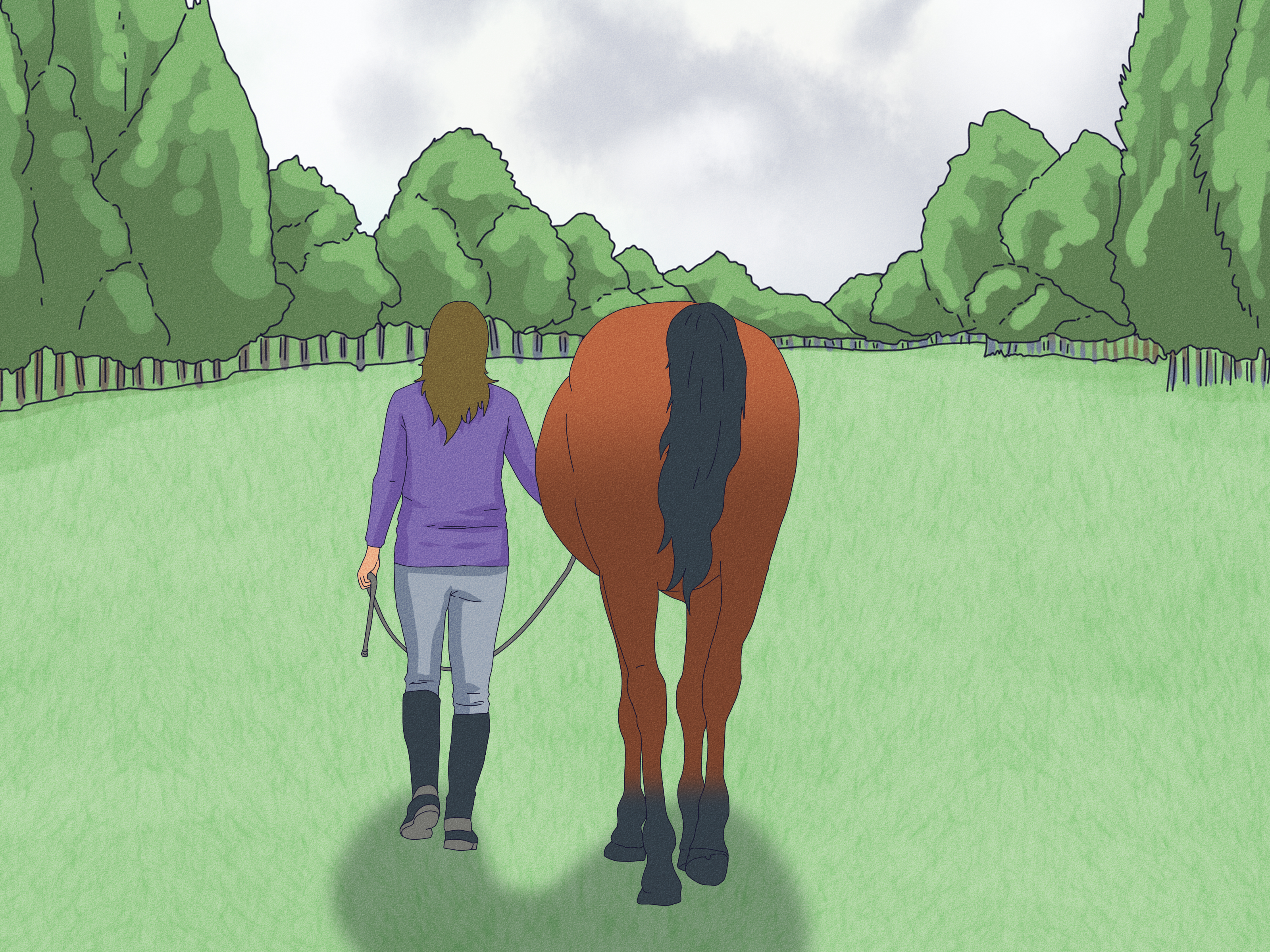
A horse that leads respectfully walks beside you without dragging, lagging, crowding, or turning the walk to the pasture into a water-skiing event. Stand near the horse’s shoulder, face the direction you want to go, and hold the lead rope with safe slack. Keep your eyes forward and your body organized.
Ask the horse to walk with you. If he rushes ahead, stop and back him several steps. If he lags behind, encourage forward motion with your voice, body, or the tail end of the lead rope directed behind you, never in anger. If he crowds your shoulder, move him away before continuing. Every walk from stall to pasture can become a mini training session.
5. Teach the Horse to Stop When You Stop
Stopping is not optional. A horse who keeps walking after you stop is either distracted, dull to your cue, or convinced he has been elected project manager. Practice walk-stop transitions on the lead. Walk forward with energy, then stop your feet, exhale, and say “whoa.” If your horse stops with you, release and praise. If he walks past you, back him up to the original stopping point.
Repeat until he begins watching your body instead of waiting for rope pressure. This builds attentiveness. Soon your horse learns that your feet, shoulders, and breathing matter. That is the beginning of real communication.
6. Move the Shoulders Away
Pushy horses often use the shoulder like a bulldozer with hooves. Teaching shoulder control helps prevent crowding, leaning, and barging. Stand near the horse’s shoulder, facing slightly toward him. Use your body energy, hand, or training stick to ask the shoulder to step away from you.
Look for a small try: a shift of weight, a crossing step, or the shoulder moving one inch away. Release instantly. Over time, ask for one clean step, then two, then a full turn on the haunches. This exercise is excellent for gate manners and barn aisles, where shoulder invasion can become a safety issue.
7. Yield the Hindquarters
Yielding the hindquarters teaches the horse to move his back end away from pressure. This is important because the hindquarters are powerful, and the kicking zone is not a place to hold a committee meeting. Stand near the horse’s shoulder, keep his head slightly tipped toward you, and direct your energy toward the hindquarters.
Ask the inside hind leg to step under and across. Release when the horse moves away. Start slowly and stay out of the kick zone. If the horse pins his ears, threatens to kick, or becomes tense, stop and get professional help. Done correctly, hindquarter yields improve control, focus, and safety.
8. Use Pressure and Release Correctly
Pressure and release is a foundation of horse training. Pressure means a cue: rope movement, body position, leg pressure under saddle, or a hand signal. Release means removing that cue the moment the horse gives the correct answer. The release is the reward.
The biggest mistake is holding pressure too long. If your horse takes one correct step and you keep pulling, he may think the answer was wrong. Another mistake is releasing when the horse pushes, drags, or ignores you. That accidentally rewards the behavior you do not want.
Think of pressure as a question and release as “yes.” Ask softly first. Increase gradually. Reward the smallest try. With practice, your horse learns to respond to lighter cues because the conversation makes sense.
9. Reward Calm Attention
Respect is not just movement. It is attention. A horse can move his feet all day and still be mentally in the next county, probably thinking about hay. During groundwork, reward moments when your horse lowers his head, softens his eye, licks and chews, sighs, or turns an ear toward you.
Keep sessions short and clear. Ten focused minutes can be more valuable than an hour of drilling. If the horse gives you a good effort, pause. Let him stand. Rub his neck if he enjoys it. The pause teaches him that calm attention is the easiest place to be.
10. Set Boundaries Around Food
Many respect problems show up around feed, treats, grass, and gates. A horse that dives for grass while you are leading is not being adorable; he is taking control of the situation. A horse that crowds at feeding time can become dangerous fast.
Teach your horse to wait. At the stall door or gate, ask him to step back before you enter. When leading past grass, correct the dive before his head reaches the ground. If you use treats, give them in a structured way, not because your horse mugged your jacket like a four-legged raccoon. Hand-feeding can work for experienced handlers using positive reinforcement, but it must be done with rules: no biting, no nudging, no pocket invasion.
11. Practice Desensitizing Without Flooding
A respectful horse is not one who never gets scared. Horses are prey animals, and suspicious objects are part of their operating system. Plastic bags, tarps, clippers, umbrellas, and that terrifying corner of the arena all deserve patient training.
Introduce scary objects gradually. Let the horse look, sniff, and process. Retreat before he panics, then approach again. Reward curiosity and calmness. Do not trap the horse or force him to “get over it” by overwhelming him. That can create fear, not trust. The goal is confidence, not emotional shut-down.
12. End Every Session With a Clear Win
Good horse training ends before the horse mentally checks out. Pick one or two skills per session. When the horse improves, even slightly, end on that success. For example, if he backs up from a lighter cue than yesterday, stop there. If he leads through the gate without crowding, call it a win.
Horses learn through repetition, but they also learn from the emotional tone of the session. Ending with clarity and calmness helps the horse come back tomorrow ready to try again. Ending with frustration teaches both of you to dread the halter. Nobody needs that drama before breakfast.
Common Mistakes That Make a Horse Less Respectful
Being Inconsistent
If your horse is allowed to crowd you on Monday, corrected on Tuesday, and fed treats for crowding on Wednesday, he is not disrespectful. He is confused. Boundaries must be the same every day.
Using Too Much Force
Force may create a temporary reaction, but it does not create understanding. Overly harsh handling can make horses defensive, fearful, dull, or explosive. Use the least pressure needed and reward quickly.
Ignoring Pain or Fear
A horse that suddenly becomes aggressive, resistant, girthy, hard to catch, or unwilling to move may be hurting. Dental problems, ulcers, lameness, sore backs, poor saddle fit, and stress can all look like “bad behavior.” Rule out physical causes before labeling the horse stubborn.
Training Only When There Is a Problem
Ground manners should not appear only when the horse has already turned into a furry forklift. Practice small skills daily: leading, stopping, backing, yielding, standing, and waiting. Five minutes of prevention beats 45 minutes of “Why are we like this?”
Sample 20-Minute Respect-Building Groundwork Session
Here is a simple routine for a horse that already handles safely. Adjust based on age, fitness, temperament, and training level.
- Minutes 1–3: Walk calmly around the arena. Practice personal space and polite leading.
- Minutes 4–6: Stop and back up. Reward light responses.
- Minutes 7–10: Yield shoulders both directions.
- Minutes 11–14: Yield hindquarters both directions while staying safe.
- Minutes 15–17: Walk over poles, around cones, or through a simple pattern to build attention.
- Minutes 18–20: Repeat the easiest skill, praise, breathe, and finish on a calm note.
How Long Does It Take to Earn a Horse’s Respect?
Some horses improve in one session. Others need weeks or months of consistent handling, especially if they have learned pushy habits or have had rough experiences with people. The timeline depends on the horse’s age, personality, past training, health, environment, and your timing.
Do not measure progress only by big breakthroughs. Notice small wins: one softer stop, one quieter gate entry, one less grass dive, one moment of attention when another horse calls. Those tiny improvements are the bricks. Stack enough of them, and suddenly you have a solid horse-human relationship instead of a daily negotiation with a thousand-pound toddler.
Experience Notes: What Real Respect Training Feels Like
In real barns, training a horse to respect you rarely looks glamorous. It looks like walking to the pasture and stopping six times because the horse thinks the grass buffet opens immediately. It looks like backing a gelding three steps away from the gate, then doing it again tomorrow, and the next day, until he waits with both eyes on you. It looks like choosing not to pick a fight when the horse is anxious, but also not letting him climb into your lap because the wind moved a leaf.
One common experience is the “sweet but pushy” horse. This horse is not mean. He likes people. He likes people so much that he wants to wear them as accessories. He rubs his head on your shoulder, nudges your elbow, crowds your space, and follows you too closely. Many owners laugh at first because it feels affectionate. Then the horse steps on a foot, pins someone against a stall door, or swings his head hard enough to make a human see three versions of the same bucket. The fix is not anger. The fix is clarity. Every time he enters the bubble, he backs up. Every time he waits politely, life gets easy. The horse learns that space is not rejection; it is the rule that keeps everyone comfortable.
Another familiar scenario is the horse that leads beautifully in the arena but becomes a dragon kite on the way to turnout. This is where daily routines become training opportunities. Instead of saving groundwork for special sessions, the handler practices leading, stopping, and backing during normal chores. The horse rushes; the handler stops. The horse crowds; the handler moves the shoulder away. The horse dives for grass; the handler redirects before the nose hits the ground. After several consistent days, the horse begins to realize the pasture will still be there if he walks politely. Shocking news, but horses can survive delayed grass by approximately 40 seconds.
Then there is the nervous horse, often mistaken for disrespectful. This horse may rush, swing away, refuse to stand, or bump the handler because his mind is in survival mode. With this type, respect training must include confidence building. The handler uses smaller requests, more pauses, and careful desensitizing. Instead of forcing the horse toward scary objects, the handler rewards curiosity: one step closer, one sniff, one breath, one lowered head. Over time, the horse learns that the human does not create panic; the human provides direction through it.
The most rewarding experience is the day the horse chooses softness before pressure gets stronger. He stops when your feet stop. He backs from a raised hand. He walks beside you with slack in the rope. He stands at the gate instead of barging. That moment feels quiet, not dramatic. There are no trumpets. The barn cat may not even look up. But it is a big deal. It means the horse understands the conversation, trusts the rules, and no longer needs to guess what you want. That is respect worth building.
Conclusion
Learning how to train a horse to respect you begins on the ground. It is built through personal space, polite leading, soft backing, shoulder and hindquarter control, calm attention, and consistent boundaries. The secret is not being louder, tougher, or more dramatic. The secret is being clearer.
A respectful horse is not a robot. He is still a horse, complete with opinions, instincts, and occasional suspicion of plastic bags. But with fair training, he can learn to look to you for guidance instead of walking through you, dragging you, or ignoring your cues. Keep sessions short. Reward small tries. Stay safe. Call a professional when needed. And remember: the best horse training is not about winning an argument. It is about creating a partnership where both of you understand the rules and nobody loses a toe.

