
Beauty Unlocked
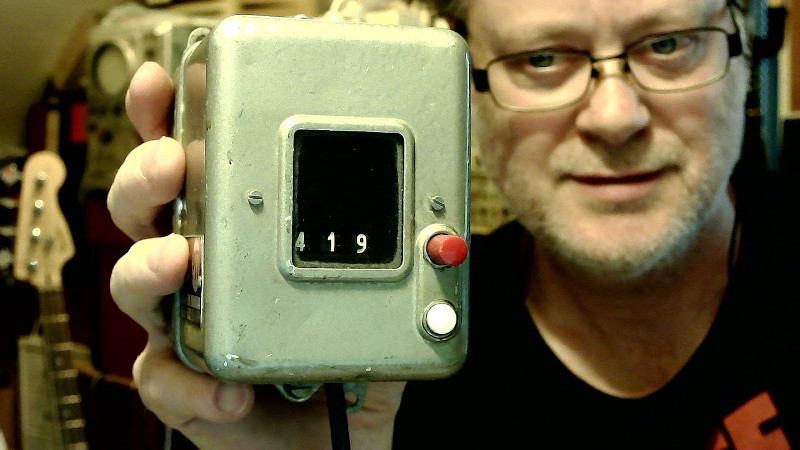
Telco Curio Hacked Into Simple Counter
Jul
Note: This article is written for web publication in standard American English and synthesizes real maker, telecom, and electronics information into original editorial content.
When Old Telephone Hardware Gets a Second Life
Some gadgets age into junk. Others age into character. The “telco curio hacked into simple counter” project belongs firmly in the second group: a heavy, old-school telephone metering device turned into a charming modern counter. It is the kind of build that makes electronics hobbyists stop scrolling, lean toward the screen, and mutter, “Well, that is wildly unnecessary. I love it.”
At the heart of the project is a tikkenteller, a Dutch telephone cost counter once used to track telephone usage in shared spaces. In student houses, communal halls, cafés, or other places where multiple people used one landline, a device like this could help count billing pulses so everyone could pay their fair share. Before smartphones, unlimited calling plans, and group chats with 47 unread messages, phone time was money in a very literal sense.
The original device was not built to count YouTube subscribers, workshop visitors, cups of coffee, or how many times someone says “just one more feature” during a software project. It was designed for a telephone network. Yet that is exactly what makes the hack delightful. Instead of treating obsolete telecom hardware as dead equipment, the maker treats it as a rugged electromechanical display waiting for a new job.
What Is a Tikkenteller?
A tikkenteller, sometimes described as a pulse counter or telephone cost counter, was used to measure telephone usage by counting pulses sent over a phone line. In its original environment, the telephone exchange could send an electrical pulse when a billing unit had been consumed. The tikkenteller would respond by advancing its mechanical count.
That sounds primitive compared with cloud dashboards and real-time analytics, but it was practical, visible, and difficult to ignore. A mechanical counter has a way of making numbers feel real. When the wheel clicks forward, it does not politely update a database row. It announces itself. It says, “Congratulations, you have spent more money.” Subtle? Not especially. Effective? Absolutely.
The project discussed here takes that old billing hardware and turns it into a general-purpose counter. The counter no longer cares about phone charges. Instead, it responds to button inputs controlled by a small microcontroller. The result is a vintage telecom artifact that behaves like a simple modern tally machine while still keeping its original mechanical soul.
The Core Hack: Old Solenoid, New Brain
The beauty of this build is that it does not replace the entire mechanism. It respects the original hardware. The tikkenteller’s mechanical counter remains the star of the show, while modern electronics act as the translator between human input and vintage motion.
ATtiny13: A Small Microcontroller With a Big Job
The build uses an ATtiny13, a compact 8-bit AVR microcontroller. It is not a flashy board with Wi-Fi, Bluetooth, a color screen, and the emotional need to run a web server. It is small, inexpensive, and perfectly suited for simple control tasks. In this project, the microcontroller watches the buttons and generates pulses to operate the original counter mechanism.
That design choice is part of the project’s charm. A simple counter does not need a supercomputer. It needs reliable timing, input handling, and a way to trigger the output. The ATtiny13 offers exactly that. It is the electronics equivalent of a reliable shop assistant: quiet, focused, and unlikely to ask whether you have considered moving the whole thing to Kubernetes.
Solid State Relay: The Safe Switching Middleman
The vintage counter’s solenoid requires more power than a microcontroller pin can provide directly. That is where a solid state relay, or SSR, enters the story. The microcontroller sends a low-voltage control signal, and the SSR switches the higher-power side that energizes the solenoid.
This separation matters. Microcontrollers are wonderful, but they are not tiny superheroes. Asking one to drive a mains-powered solenoid directly would be like asking a goldfish to tow a pickup truck. The SSR provides isolation and switching capability, allowing the low-voltage logic side to command the high-voltage action side without inviting electrical disaster to dinner.
HLK-PM01: Compact Power for the Controller
The project also uses an HLK-PM01 5V AC-to-DC power module to run the control electronics. This compact module converts mains input into the low-voltage supply needed by the microcontroller. That means the whole build can operate from a single mains supply, simplifying the finished device.
Of course, “simplifying” does not mean “casual.” Mains voltage deserves respect. Any project involving line voltage should be enclosed properly, fused appropriately, insulated carefully, and handled only by people who understand the risks. Vintage hardware is charming; electrical shock is not charming. It is the opposite of charming. It is spicy in the worst possible way.
Why This Counter Feels So Satisfying
Modern counters are everywhere. They appear on websites, dashboards, fitness apps, industrial panels, social media widgets, and point-of-sale systems. Most are clean, silent, and forgettable. A tikkenteller counter is different because it has physical presence.
When the number advances, something moves. A solenoid fires. A wheel steps. A small mechanical event happens in the real world. That tactile feedback gives the device personality. It is not merely displaying a count; it is performing the count.
This is one reason retro electronics hacks remain popular. They combine the precision of modern control with the drama of mechanical hardware. A digital display can show “42” instantly, but a mechanical counter arrives at “42” with ceremony. It clicks. It clunks. It suggests that somewhere inside, a tiny accountant wearing sleeve garters is approving the transaction.
From Telephone Billing to Everyday Counting
Once the tikkenteller is freed from its original telephone network role, it can count almost anything. That opens the door to practical, silly, and wonderfully specific applications.
Workshop Project Counter
A maker could use it to count completed parts, button presses, successful test runs, or failed 3D prints. The last category may require a counter with extra digits, depending on the printer’s mood and whether the filament has decided to become abstract sculpture.
Visitor or Event Counter
The device could be placed at an exhibit booth, hackerspace entrance, or community event. Each press of a button could count a visitor, a demonstration, or a giveaway item. Unlike a phone app, it would also become a conversation piece.
Habit Tracker With Mechanical Drama
Want to count glasses of water, writing sessions, workouts, or days without ordering unnecessary components online? A mechanical counter makes the habit visible. Admittedly, if the habit is “not buying components,” building the counter may already represent a small defeat. But at least it is an educational defeat.
Subscriber or Donation Counter
With additional electronics, a project like this could be connected to online data sources, sensors, or automation systems. In theory, it could count subscribers, donations, orders, or support tickets. In practice, APIs change, authentication breaks, and suddenly your antique telephone counter is more emotionally stable than your software stack.
The Engineering Lesson: Preserve What Works
A common mistake in hardware hacking is replacing too much. When makers find old equipment, the temptation is to gut it completely and install new electronics behind the shell. Sometimes that is necessary. But in a project like this, the original mechanism is the entire point.
The best approach is not to erase the old design but to understand it. What voltage did it expect? What kind of pulse advanced the counter? How long should the solenoid be energized? What mechanical limits exist? How quickly can it count without jamming or overheating? These questions turn a simple hack into a real restoration-minded engineering exercise.
This project succeeds because it bridges eras. The microcontroller provides modern control, the SSR handles power switching, and the original electromechanical assembly keeps doing what it was built to do: count pulses. The result is neither a museum piece nor a disposable gadget. It is a working hybrid.
Safety Considerations for Similar Vintage Electronics Projects
Any project involving old telecom hardware, solenoids, and mains power should be approached carefully. Vintage devices may have brittle insulation, unknown modifications, corroded terminals, or parts that were never designed for today’s safety expectations.
Inspect Before Powering
Before applying power, inspect wiring, insulation, screws, terminals, switches, and the solenoid. Look for cracked insulation, loose conductors, rust, and signs of overheating. If a component smells like toasted dust and regret, do not ignore it.
Keep Low Voltage and Mains Voltage Separate
The control side and the high-voltage switching side should be physically and electrically separated. Proper enclosure design, strain relief, fusing, insulation, and grounding are not optional decorations. They are the difference between a fun counter and a dramatic incident report.
Test With Current Limiting
When possible, use safe test equipment and current-limited setups during development. Do not assume that an old solenoid behaves politely. Electromechanical loads can create voltage spikes, heat, and mechanical stress. They are charming, yes, but they are also tiny metal hammers controlled by electricity.
Why Makers Love Obsolete Telecom Gear
Old telecom equipment is a treasure chest for hardware hackers. It was usually built for reliability, serviceability, and long-term use. The parts are often large enough to understand visually. Screws are real screws. Mechanisms are visible. The design language says, “A technician may need to fix this at 2 a.m. in a basement,” not “Please replace the entire sealed unit.”
That makes vintage telco gear ideal for educational projects. A beginner can see how a solenoid moves a counter wheel. An intermediate maker can add a microcontroller interface. An advanced builder can add sensor inputs, data logging, network triggers, or custom firmware. The same object supports several levels of curiosity.
There is also a cultural appeal. Telephone networks once represented some of the most sophisticated infrastructure in everyday life. They connected cities, businesses, families, emergencies, gossip, romance, and wrong numbers. Repurposing a telephone billing counter is not just a technical hack; it is a tiny act of historical remixing.
Modernizing Without Sterilizing
The best retrofits keep the personality of the original object. In this case, the goal is not to make the tikkenteller as efficient as a modern OLED display. A modern display would be cheaper, smaller, quieter, and easier to drive. It would also be less fun.
The point is the click. The weight. The overbuilt metal case. The slightly excessive seriousness of a machine that once helped settle phone bills and now might count button presses at a garage workbench. That contrast is the magic.
Good maker projects do not always optimize for cost or convenience. Sometimes they optimize for delight. A telco curio hacked into a simple counter is a perfect example. It solves a simple problem in a beautifully roundabout way, which is basically the official love language of hardware hackers.
Practical Build Analysis
If you were planning a similar project, the design process would start with the original counter mechanism. First, identify how the counter advances. Is it a solenoid? What voltage does it expect? Does it need AC or DC? How long should the pulse last? Does it reset manually or electrically? These answers define the rest of the circuit.
Next comes the controller. A small microcontroller such as an ATtiny-class device is enough for button input, debounce logic, pulse timing, and basic state control. If the project needs internet connectivity, a more capable board could be added, but for a plain counter, simplicity is a virtue.
The output stage must match the load. A solenoid is an inductive load, so the switching method must handle electrical noise and transients properly. Depending on whether the solenoid is driven by AC or DC, the protection and relay choice may differ. An SSR can be a clean solution, but it must be selected for the actual voltage, current, load type, thermal conditions, and safety requirements.
Finally, the enclosure matters. A counter like this deserves a finished presentation. Mount the buttons securely. Label them clearly. Keep wiring neat. Add strain relief. Avoid exposed live terminals. A beautiful vintage counter loses some of its charm when it looks like it was wired during a raccoon disagreement.
Experience Notes: What This Project Teaches in the Real World
Working with a project like “Telco Curio Hacked Into Simple Counter” teaches lessons that are hard to get from a simulator or a neat beginner kit. The first lesson is patience. Vintage hardware rarely explains itself politely. There may be no modern manual, no friendly pin labels, and no helpful silkscreen saying “connect your microcontroller here, brave nerd.” You have to observe, trace, measure, and make careful assumptions.
The second lesson is that old mechanisms have rhythm. A digital counter can update thousands of times per second, but an electromechanical counter has a preferred pace. Pulse it too quickly and it may skip, chatter, jam, or fail to complete the motion. Pulse it too long and the solenoid may heat unnecessarily. The trick is to find the sweet spot where the mechanism advances confidently without stress. That process feels less like programming a chip and more like learning the personality of a small machine.
The third lesson is respect for power. Many hobby projects live comfortably at 3.3V or 5V, where mistakes are usually annoying rather than dangerous. A mains-powered solenoid changes the mood immediately. The builder must think about isolation, enclosure design, fusing, creepage, clearance, grounding, and strain relief. These are not glamorous topics, but they are what separate a reliable finished project from a risky bench experiment.
The fourth lesson is restraint. It is tempting to add Wi-Fi, a web dashboard, RGB lighting, sound effects, and maybe a tiny screen showing motivational quotes. But the most elegant version of this project is simple: press a button, hear a click, watch the number advance. That minimalism gives the old counter room to shine. The hardware is already theatrical; it does not need a circus hat.
The fifth lesson is that repurposing can be more rewarding than replacing. A brand-new counter module would be easier. A phone app would be easier still. But neither would carry the history of a device that once belonged to the physical infrastructure of communication. When you reuse an object like this, you are not just saving metal from a drawer or landfill. You are preserving a fragment of engineering culture and giving it a new reason to exist.
In practical terms, a similar project would make an excellent weekend build for someone comfortable with electronics safety. It offers mechanical discovery, embedded programming, power switching, and enclosure work in one compact challenge. It also creates a finished object people actually notice. Put a silent digital counter on a desk and most visitors will ignore it. Put a restored telco counter there, let it clunk forward once, and suddenly everyone wants to press the button. That is the power of physical feedback. It turns counting into an event.
Conclusion
The story of a telco curio hacked into a simple counter is more than a quirky electronics project. It is a reminder that old hardware often has untapped value hiding behind obsolete use cases. A tikkenteller may no longer be needed to divide landline bills among housemates, but its electromechanical counter can still click, count, and entertain.
By combining a small microcontroller, a solid state relay, a compact 5V power module, and the original counter mechanism, the project creates something that is both practical and delightfully impractical. It counts things, yes. But it also celebrates the sound, movement, and durability of older engineering.
In a world full of silent screens and disposable gadgets, a heavy metal telephone counter that clunks forward one number at a time feels oddly refreshing. It is not the cheapest counter. It is not the smallest counter. It may not even be the most sensible counter. But it has charm, and in the maker world, charm is a perfectly valid technical specification.
SEO Tags

