
Hair Care
Terry Crews’ Shilling For Amazon & 3 Other Bizarre Commercials
Jul
Note: This article is written from publicly available reporting, advertising history, and real commercial examples, with no source links inserted into the body copy for cleaner publication.
Celebrity commercials are supposed to make us feel something simple: trust, excitement, nostalgia, hunger, or at least the sudden belief that our bathroom needs a new body wash. But every so often, an advertisement escapes the normal marketing zoo and wanders into the public square wearing clown shoes, a luxury watch, and a confusing message. That is the magical, awkward territory occupied by Terry Crews’ Amazon warehouse ad and three other bizarre celebrity commercials that still make viewers ask, “Who approved this, and did they approve it before lunch?”
The title alone sounds like a Mad Libs assembled by a tired social media manager: Terry Crews shilling for Amazon, Bob Odenkirk debating a horse for beer supremacy, David Cross pretending a monkey glove makes AOL harder to use, and Mikhail Gorbachev helping Pizza Hut turn post-Soviet politics into a topping. Yet all four examples are real, and each reveals something fascinating about advertising: famous people can grab attention instantly, but attention is not the same thing as persuasion.
In today’s media environment, bizarre commercials do not simply vanish after a few TV airings. They are clipped, mocked, re-shared, analyzed, and preserved forever like fossils in the amber of the internet. A weird ad can become brand gold, brand poison, or something even stranger: a cultural joke that outlives the product itself.
Why Bizarre Celebrity Commercials Stick in Our Brains
Before we dive into the four ads, it helps to understand why strange celebrity endorsements work at all. Brands hire actors, athletes, comedians, and public figures because fame creates instant recognition. A viewer may ignore a warehouse hiring pitch, but add Terry Crews bouncing through the scene with his trademark energy and suddenly the ad becomes harder to scroll past. That is the first job of advertising: interrupt the viewer’s boredom.
The problem is that celebrity energy has to match the message. Terry Crews can make yogurt, body wash, or action-comedy chaos feel fun because his public persona is playful, muscular, and joyfully over-the-top. But when that same persona is placed inside a conversation about warehouse labor, worker benefits, and corporate reputation, the tone becomes trickier. The more cheerful the delivery, the more some viewers notice what the ad is not saying.
That tension is the secret ingredient in all four commercials below. They are not bizarre merely because they are silly. They are bizarre because the celebrity, the product, and the cultural moment collide in a way that feels slightly off-center. Sometimes that off-center feeling is hilarious. Sometimes it is uncomfortable. Sometimes it is both, which is the true flavor of internet discourse: spicy confusion.
1. Terry Crews for Amazon: Warehouse Hype Meets Internet Backlash
In 2021, Terry Crews appeared in a sponsored Amazon video that showed him visiting a fulfillment center, trying out warehouse tasks, and promoting Amazon jobs. The ad leaned hard into Crews’ usual enthusiasm. He moved through the warehouse like a man discovering a theme park where the rides are forklifts, pallets, boxes, and benefits talk. He joked, smiled, lifted, wrapped, and delivered the kind of high-energy performance that has made him a favorite in shows like Brooklyn Nine-Nine and America’s Got Talent.
On paper, the commercial had a clear purpose: make Amazon warehouse employment look active, friendly, and full of opportunity. The spot highlighted benefits such as tuition support and flexible scheduling, which are real parts of Amazon’s hiring message. But the timing and tone created an instant backlash. Amazon had already faced heavy public scrutiny over warehouse conditions, injury concerns, productivity pressure, union debates, and worker turnover. So when a wealthy, beloved celebrity appeared to “test-drive” warehouse work with cartoonish delight, critics saw the ad less as recruitment and more as reputation laundering.
That is why the commercial became such a strange cultural object. Terry Crews did what he was hired to do: perform charm at full volume. But the audience did not only see Terry Crews. They saw Amazon. They saw a corporate giant trying to make demanding labor look like a goofy workplace adventure. The mismatch was hard to miss. A celebrity can bring warmth to a brand, but he cannot erase the public’s memory of labor headlines with one enthusiastic forklift joke.
Why the Terry Crews Amazon Ad Felt So Odd
The oddness came from contrast. Crews’ public image is rooted in physical strength, optimism, and comic exaggeration. Amazon’s warehouse reputation, however, has often been discussed in far more serious terms. That made the ad feel like two different videos playing at the same time: one was a cheerful celebrity job-tour; the other was an unspoken debate about modern labor.
The internet’s response also shows how quickly viewers now read ads politically. A traditional recruitment commercial might once have been judged mainly on whether it made the job look appealing. In 2021, especially on TikTok and X, viewers judged the ad as a corporate statement. Was Amazon listening to worker concerns? Was the company using celebrity charisma to soften criticism? Was Crews simply taking a paycheck, or did his presence imply support for the company’s labor practices? Those questions turned a short sponsored video into a full-blown online argument.
For marketers, the lesson is painfully clear: celebrity casting cannot solve a credibility gap. If the audience believes the underlying issue is serious, a goofy tone may not lighten the mood. It may make the brand look like it brought a kazoo to a court hearing.
2. Bob Odenkirk for Miller Beer: The President of Beers Debates a Horse
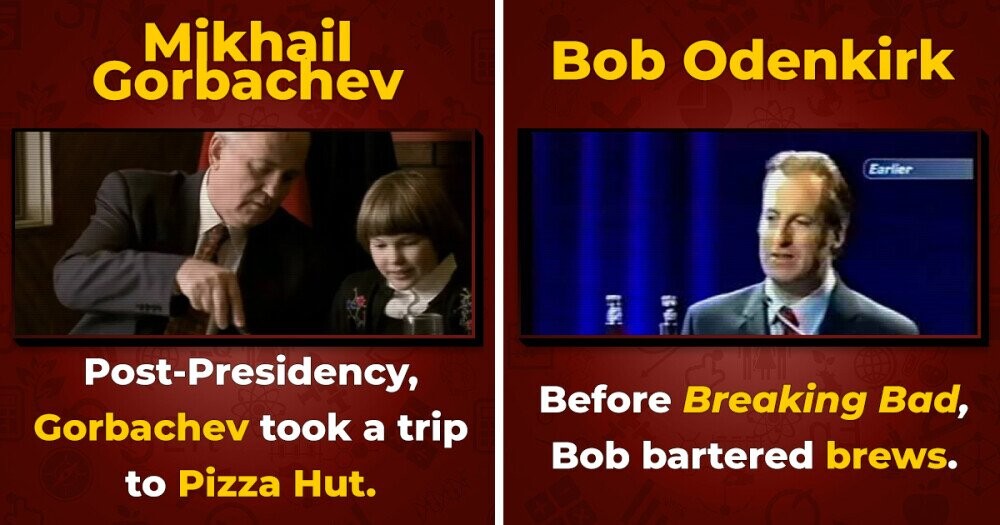
Long before Bob Odenkirk became internationally beloved as Saul Goodman in Breaking Bad and Better Call Saul, he appeared in a 2004 Miller Beer campaign built around the idea of a “President of Beers.” The ads parodied American political campaigns, complete with debate staging, patriotic energy, and the kind of mock-serious rhetoric that makes beer sound like it is running for office on a platform of cold refreshment and mild bad decisions.
The commercial’s best absurd touch is its opponent: a Clydesdale horse, an obvious jab at Budweiser’s famous equine imagery. Odenkirk’s character delivers debate-style arguments for Miller while the horse stands there, majestic and silent, possibly wondering how it got dragged into beverage politics. It is a wonderfully strange piece of advertising because it mixes three things that should not naturally belong together: presidential theater, beer rivalry, and a horse who has no rebuttal because, tragically, democracy has not yet extended speaking rights to livestock.
What makes the ad work is Odenkirk’s deadpan comedy. He was not yet the mainstream prestige-TV figure many viewers know today, but he already had a sharp comic presence. The campaign understood his ability to treat nonsense as if it were extremely important. That is the central joke. Nobody truly believes beer needs an electoral system, but Odenkirk behaves as if national stability depends on choosing the correct light lager.
Why the Miller Beer Commercial Was Bizarre but Smart
Unlike the Amazon ad, the Miller Beer spot does not create the same moral whiplash. It is bizarre in a safer, more intentionally comic way. The product is ordinary, the rivalry is familiar, and the surreal elementthe horse opponentmakes the whole thing memorable. It also cleverly pokes Budweiser without needing a long explanation. The Clydesdale visual does the work instantly.
The commercial belongs to a long tradition of beer ads that turn minor product differences into grand drama. A beer brand cannot simply say, “Please choose our fizzy grain water.” It needs conflict. It needs tribes. It needs a candidate, a campaign, and apparently a debate moderator willing to seat a horse behind a podium. In that sense, the ad is ridiculous but strategically clear.
Today, the spot is especially funny because Odenkirk’s later fame changes how we watch it. Seeing the future Saul Goodman sell beer in a political parody feels like watching a rehearsal for a fictional campaign manager who might accept payment in six-packs and legal loopholes.
3. David Cross for AOL: The Monkey Glove and the Glory Days of “You’ve Got Mail”
In the mid-1990s, America Online was not just a service; it was a portal into the strange new world of being online. Before social media feeds, streaming platforms, and smartphones turned everyone into a tiny unpaid content factory, logging on to AOL felt like entering a digital clubhouse. There were chat rooms, screen names, dial-up sounds, and the iconic “You’ve got mail” notification, which somehow made receiving one spammy message feel like being personally knighted by the internet.
That brings us to David Cross and one of the odder AOL commercials of the era. The ad begins with what appears to be a monkey paw registering for AOL, set to dramatic music associated with cinematic grandeur. Then the camera reveals the truth: it is not a monkey at all. It is David Cross wearing a prosthetic monkey glove. The joke is that AOL is so easy to use that even someone wearing a ridiculous monkey hand can sign up. Cross then delivers the punchline with dry resignation, noting that it would have been even easier without the glove.
As a piece of 1990s internet advertising, the commercial is magnificently weird. It takes a simple messageAOL is easyand wraps it in a visual gag that feels like it escaped from a sketch-comedy writers’ room. It is not sleek. It is not aspirational. It does not feature a glowing family gathered around a computer while a golden retriever looks impressed. Instead, it says, “What if a comedian wore a fake monkey hand?” And honestly, that is a purer form of creative courage than many brands can manage today.
Why the AOL Monkey Glove Ad Still Feels So 1990s
The ad reflects a time when the internet still needed explaining. Today, a tech company usually sells speed, privacy, artificial intelligence, convenience, or ecosystem dominance. Back then, the barrier was more basic: “Can normal people use this thing without accidentally summoning a printer demon?” AOL’s entire brand promise was accessibility. The monkey glove gag turned that promise into slapstick.
David Cross was also a fitting choice because his comedy often thrives on discomfort and absurdity. The commercial’s humor is not polished in the modern influencer sense. It is awkward, dry, and slightly homemade in spirit. That awkwardness is part of its charm. It reminds us that early internet marketing was still figuring out whether cyberspace should be sold like a business tool, a toy, a miracle, or a place where comedians wear animal parts.
Compared with modern tech ads that speak in glowing abstractions about “connection” and “possibility,” the AOL spot feels almost refreshing. It has one idea, one prop, one joke, and one unforgettable question: did anyone keep the monkey glove, and is it now in a climate-controlled museum of dial-up history?
4. Mikhail Gorbachev for Pizza Hut: The Cold War Ends With a Stuffed Crust Energy
Of all bizarre celebrity commercials, few can compete with Mikhail Gorbachev’s Pizza Hut ad. The former Soviet leader, one of the defining political figures of the 20th century, appeared in a 1997 commercial for an American pizza chain. The spot aired internationally in 1998 and became one of the most surreal examples of political history colliding with fast-food marketing.
The commercial shows Gorbachev entering a Pizza Hut in Moscow with his granddaughter. A nearby family notices him and begins debating his legacy. One person blames him for economic confusion and chaos. Another credits him with opportunity and freedom. The argument rises until an older woman cuts through the debate with the ad’s central punchline: because of Gorbachev, they have Pizza Hut. The room then unites in praise, raising slices as if pizza has accomplished what decades of diplomacy could not.
It is difficult to overstate how strange this is. The ad compresses the collapse of the Soviet Union, post-Cold War capitalism, generational disagreement, Western consumer culture, and melted cheese into roughly one minute. Gorbachev barely needs to speak. His presence is the concept. He is not simply endorsing pizza; he is functioning as a symbol of global transformation. That is a lot of weight to put on a crust.
Why the Gorbachev Pizza Hut Ad Became Legendary
The commercial is bizarre because it is both silly and historically loaded. On one level, it is a fast-food ad saying pizza brings people together. On another level, it uses one of the most consequential leaders of the modern era to suggest that consumer choice is a unifying social force. The result is funny, uncomfortable, and unforgettable.
Gorbachev reportedly agreed to the commercial partly because the money could support his foundation. The ad did not air in Russia, where his legacy was much more controversial than it was in many Western countries. That context makes the commercial even stranger. It was aimed largely at international audiences who understood Gorbachev as a symbol of openness and change, not necessarily as a figure associated with hardship or national loss.
In advertising terms, the spot is brilliant in the most outrageous way possible. It uses shock value, cultural symbolism, and a simple emotional resolution. People argue. Pizza appears. Unity follows. Is that how politics works? Absolutely not. Is that how commercials wish politics worked? With every fiber of their mozzarella-stuffed being.
What These Four Commercials Reveal About Celebrity Endorsements
The Terry Crews Amazon ad, Bob Odenkirk’s Miller Beer debate, David Cross’s AOL monkey glove spot, and Mikhail Gorbachev’s Pizza Hut commercial all belong to the same odd family, but they succeed or fail for different reasons. The Odenkirk and Cross ads are bizarre by design. Their strangeness supports the joke and makes the product message easier to remember. The Gorbachev ad is bizarre because the celebrity’s historical meaning is almost too large for the product. The Crews ad is bizarre because the tone clashes with the public conversation around the brand.
That difference matters. Weirdness can be a strength when it clarifies the message. It becomes a weakness when it distracts from an unresolved issue. If the viewer laughs with the brand, the ad wins. If the viewer laughs at the brand, the ad may still go viral, but the victory starts to smell faintly like smoke.
Modern audiences are especially sensitive to authenticity. They know celebrities are paid. They know sponsored content is engineered. What they resist is the feeling that a familiar face is being used to smooth over an uncomfortable truth. That is why the Amazon ad received such sharp criticism. Crews’ enthusiasm was not the problem by itself. The problem was that the cheerfulness seemed disconnected from the serious concerns many people associated with Amazon warehouse work.
Personal Viewing Experience: Why These Ads Are So Hard to Forget
Watching these commercials as a viewer and content analyst is like opening a time capsule filled with glitter, corporate strategy, and one suspiciously calm horse. The first thing that stands out is how differently each ad uses awkwardness. Some commercials try to avoid awkwardness. These four walk directly into it, take off their shoes, and ask whether anyone has snacks.
The Terry Crews Amazon ad is the most modern of the group because it feels designed for social media speed. It is short, energetic, and built around a celebrity who understands physical comedy. But it also shows the danger of TikTok-era advertising: viewers can respond instantly, collectively, and brutally. In the past, a controversial commercial might have generated letters to the editor or a few angry phone calls. Now, viewers can turn a single sponsored post into a public referendum before the marketing team has finished its morning coffee. The experience of watching it is not just about the video; it is about the comments, reactions, stitches, quote posts, and cultural pile-on that become part of the ad itself.
The Bob Odenkirk Miller Beer commercial feels more forgiving. It is the kind of ad that rewards people who enjoy comic timing. Odenkirk’s later fame adds an extra layer of pleasure because we now associate him with characters who can sell anything with a straight face, from legal defense to moral compromise. In the Miller spot, he is already practicing that beautiful art of making nonsense sound official. The horse, meanwhile, is perfect casting. It says nothing, which in a political debate may be the most honest answer available.
The David Cross AOL commercial is enjoyable because it captures the innocent weirdness of early internet marketing. The idea that a monkey glove could demonstrate ease of use is ridiculous, but it is also clear. There is no complicated brand manifesto, no emotional piano music, no slow-motion child gazing into a digital future. Just David Cross, a fake animal hand, and the promise that the internet is easy enough for your household to try. That directness has aged better than many sleeker ads from the same era.
The Gorbachev Pizza Hut ad is the one that feels most like a fever dream. It is funny, but not in a simple way. You laugh because the premise is absurd, then you pause because the symbolism is enormous. A former world leader sits in a pizza restaurant while actors debate his role in history, and the commercial resolves the conflict with a shared chant over slices. It is either one of the strangest ads ever made or one of the most efficient summaries of post-Cold War capitalism. Possibly both.
From an SEO and content perspective, these commercials continue to matter because they are rich in searchable curiosity. People do not merely search for “celebrity ads.” They search for the exact bizarre detail: Terry Crews Amazon warehouse ad, Bob Odenkirk beer commercial, David Cross AOL monkey glove, Gorbachev Pizza Hut commercial. That specificity is valuable. Weird commercials become long-tail search engines for cultural memory. They keep attracting readers because each one contains a question that demands an answer: why did this happen?
The biggest lesson from all four examples is that attention is powerful but unstable. A bizarre commercial can make a brand unforgettable, but it cannot fully control what viewers remember. They may remember the product, the joke, the celebrity, the controversy, or the unsettling sensation that history has been turned into a pizza topping. For brands, that is both the promise and the risk of going weird. For viewers, it is free entertainment. For writers, it is a gift basket delivered by the advertising gods, wrapped in confusion and topped with a bow made of monkey-glove material.
Conclusion: When Ads Get Weird, Culture Pays Attention
Bizarre commercials endure because they do more than sell. They reveal what brands think audiences will accept, what celebrities are willing to attach their names to, and how quickly a simple pitch can become a cultural artifact. Terry Crews’ Amazon ad became controversial because its upbeat tone collided with serious labor concerns. Bob Odenkirk’s Miller Beer spot became memorable because it turned beer rivalry into political theater. David Cross’s AOL commercial transformed internet accessibility into a monkey-glove joke. Mikhail Gorbachev’s Pizza Hut ad turned geopolitical history into one of the strangest restaurant endorsements ever filmed.
Together, these ads prove that celebrity endorsement is never just about fame. It is about fit. When the fit is clever, the weirdness becomes charm. When the fit is uneasy, the weirdness becomes criticism. And when the fit involves the last leader of the Soviet Union being thanked for pizza, well, congratulations: you have entered the advertising hall of fame, where the lighting is fluorescent and the hors d’oeuvres are probably sponsored.

