
Hair Care
Native American Zodiac: All 12 Animals & Their Meanings
Jul
If you have ever fallen down an astrology rabbit hole and landed on a page full of wolves, otters, ravens, and very intense geese, welcome. The so-called “Native American zodiac” is one of the most searched spiritual personality systems online, largely because it swaps the usual ram-and-scorpion lineup for animals that feel more earthy, vivid, and story-rich. It is colorful, memorable, and, frankly, a lot more fun to say “I’m a Woodpecker” at brunch than “I’m basically just emotional Cancer energy with coffee.”
But before we hand the beaver a birth chart and let the owl run group therapy, there is an important point to make. Native cultures are not one single belief system. Hundreds of tribal nations have their own histories, languages, ceremonies, kinship systems, and teachings. So the popular 12-animal zodiac seen online should be understood as a modern, generalized spiritual framework inspired by nature, medicine wheel symbolism, and pan-Indian New Age interpretations, not as a universal sacred tradition shared the same way by every Native community.
That respectful note matters. It also does not stop us from exploring why this zodiac became so popular. At its best, the system gives people a poetic way to think about personality through the natural world. Instead of asking whether you are “fire sign chaotic,” it asks whether you move through life like an Otter, a Bear, a Snake, or a Snow Goose. And honestly, that is a lot more cinematic.
What Is the Native American Zodiac?
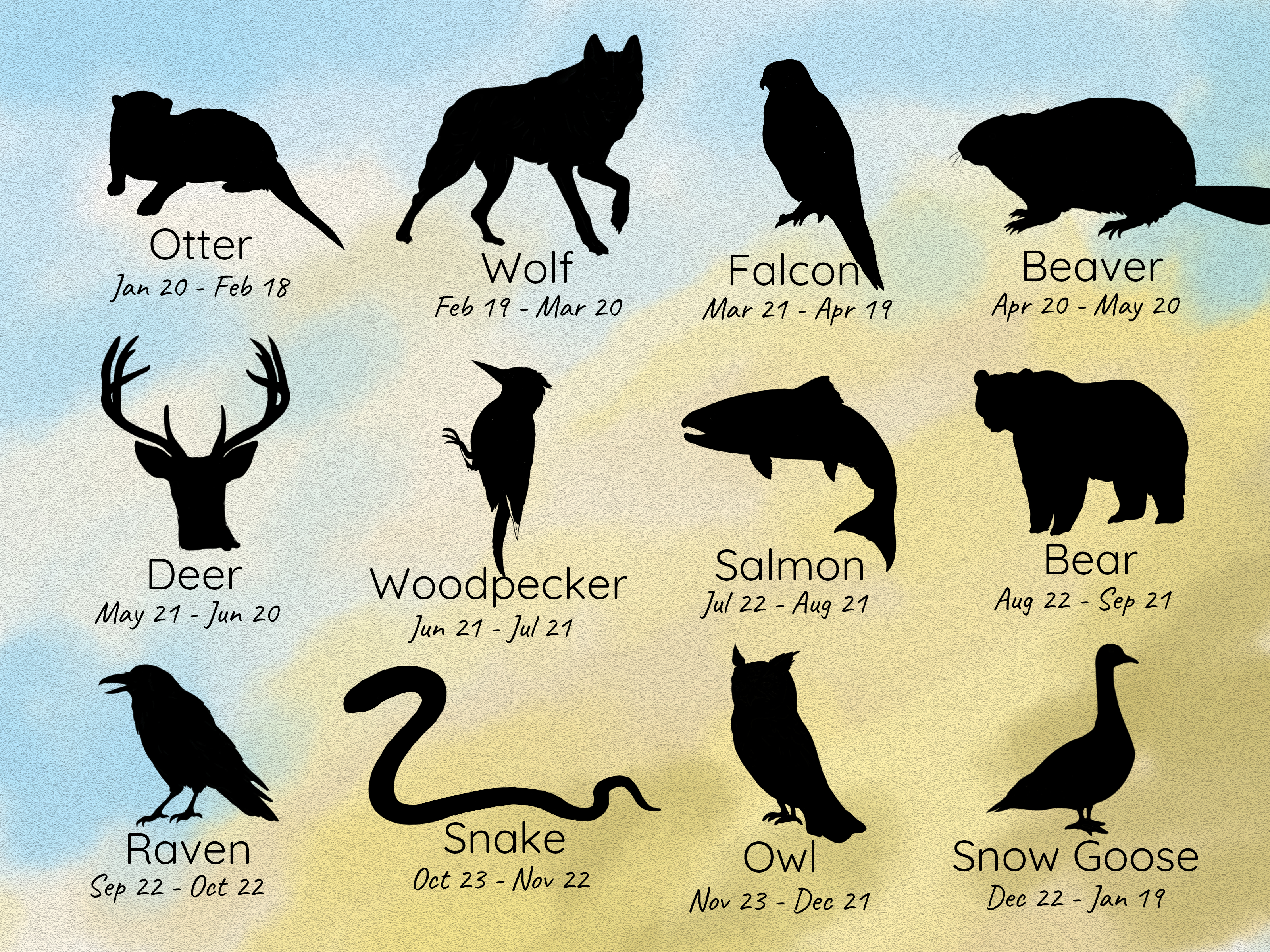
In its most widely circulated modern form, the Native American zodiac uses 12 animal signs assigned by birth date, with date ranges that closely mirror the Western zodiac in the Northern Hemisphere. Each animal is associated with a set of personality traits, strengths, blind spots, and emotional patterns. Many versions also connect each sign to seasons, directions, elements, and medicine wheel themes.
The appeal is easy to understand. Animals carry symbolism instantly. A Beaver feels industrious. A Wolf feels intuitive. A Raven sounds mysterious even before it enters the room. The zodiac turns personality into story, and story is a powerful way to understand ourselves. Even if you read it casually, the system can still offer a useful prompt for self-reflection: What traits do I naturally lean on? Which ones do I overuse? Which kind of balance do I need?
All 12 Native American Zodiac Animals and Their Meanings
Snow Goose (December 22 – January 19)
The Snow Goose is usually seen as disciplined, ambitious, and quietly determined. People linked with this sign are often portrayed as builders of long-term success. They like structure, standards, and goals that actually go somewhere. Snow Goose energy is less about flashy entrances and more about steady upward movement, like the person who already made the spreadsheet before everyone else found the meeting link.
At its best, this sign represents focus, patience, and self-mastery. At its worst, it can become rigid, overly serious, or a little too married to control. The lesson of Snow Goose is that achievement works better when it leaves room for warmth, humor, and flexibility.
Otter (January 20 – February 18)
Otter is the lovable oddball of the bunch. This sign is commonly associated with originality, independence, curiosity, and unconventional thinking. Otter people are often described as clever, observant, and just different enough to make everyone else wonder whether they missed the memo. The answer is no. Otter wrote a better memo and forgot to send it.
In personality terms, Otter symbolizes innovation and social intelligence. These people may look lighthearted on the surface, but they often notice more than they say. Their challenge is grounding their ideas so they do not float away like bright little balloons. When balanced, Otter energy is inventive, humane, and refreshingly authentic.
Wolf (February 19 – March 20)
Wolf is typically connected with emotion, instinct, loyalty, and spiritual depth. This sign is often described as sensitive, intuitive, and deeply relationship-oriented. Wolf people tend to care hard, feel hard, and remember emotional details other people forgot five minutes after dessert. They value meaningful bonds and usually have a strong inner world.
The beauty of Wolf energy is empathy. The risk is emotional overwhelm. Wolves can become overly idealistic, moody, or too affected by the feelings around them. Their medicine is healthy boundaries. When they trust their intuition without drowning in every passing current, they become compassionate guides, loyal friends, and emotionally wise partners.
Falcon (March 21 – April 19)
Falcon is the classic initiator. In most descriptions, this sign is bold, decisive, energetic, and action-driven. Falcon personalities do not wait forever for life to send a formal invitation with embossed lettering. They move. They start. They test. They leap. If something needs momentum, Falcon brings it.
This sign’s strengths include courage, leadership, and sharp instinct under pressure. The downside is impatience. Falcons can rush, dominate, or assume speed is always wisdom. Spoiler: sometimes wisdom is just speed wearing better shoes. Balanced Falcon energy is fearless without being reckless, strong without being harsh, and inspiring without bulldozing everyone else’s lunch plans.
Beaver (April 20 – May 20)
Beaver symbolizes practicality, reliability, and the instinct to create security. This is the sign of the planner, the builder, and the person who knows where the extra batteries are. Beaver energy is often associated with persistence, work ethic, and a strong appreciation for tangible results. If Falcon starts the project, Beaver is the one making sure it actually gets finished.
That dependable streak can also become stubbornness. Beaver may resist change, cling to routine, or confuse comfort with growth. Still, this sign has a grounded kind of wisdom. It understands that dreams need structure. In healthy form, Beaver energy is patient, competent, generous, and deeply committed to creating something lasting.
Deer (May 21 – June 20)
Deer is usually described as lively, witty, adaptable, and socially magnetic. This sign carries the energy of communication, curiosity, and movement. Deer people are often talkative in the best way: bright, engaging, quick with humor, and able to make even a grocery store anecdote sound like premium entertainment. They are often mentally agile and emotionally light on their feet.
The challenge for Deer is consistency. With so much curiosity comes distraction. They may skim instead of dive, charm instead of commit, or scatter their energy across too many interests. But when focused, Deer becomes a brilliant connector, bringing people and ideas together with grace, playfulness, and a sense of ease.
Woodpecker (June 21 – July 21)
Woodpecker is the nurturer of the zodiac. This sign is commonly linked to devotion, emotional intelligence, protectiveness, and deep care for home and family. Woodpecker energy notices what people need before they ask. It remembers birthdays, weird snack preferences, and the emotional tone in the room before anyone says a word.
Its great strength is heart. Its risk is overextension. Woodpeckers can give too much, worry too much, or take on everyone else’s emotional weather report as if they are personally responsible for changing the forecast. Balanced Woodpecker energy is loving without martyrdom, supportive without control, and deeply rooted in the kind of care that helps others grow.
Salmon (July 22 – August 22)
Salmon is often associated with confidence, drive, enthusiasm, and creative fire. Some versions of this zodiac use Sturgeon instead, which is your reminder that this system has never exactly been managed by one grand cosmic HR department. Either way, this sign usually points to charisma, determination, and a powerful urge to move toward purpose.
Salmon people are often described as energetic motivators. They can attract attention naturally and inspire others through passion alone. The shadow side is pride, drama, or a need for too much validation. But in its highest form, Salmon energy is generous, radiant, and purpose-filled. It reminds us that confidence works best when it is tied to heart, not ego.
Bear (August 23 – September 22)
Bear represents steadiness, practicality, observation, and quiet strength. This sign is often linked to analysis, service, and a grounded approach to life. Bear people tend to notice details other people miss, and they usually prefer competence over noise. They are often dependable, thoughtful, and more powerful than they initially appear.
Because Bear energy is careful and exacting, it can slide into overthinking, criticism, or perfectionism. Bears sometimes forget that not every problem needs a twelve-step improvement plan and a labeled storage bin. Still, their strength is real. In balance, Bear is wise, efficient, calm, and deeply trustworthy, with a protective spirit that does not need to perform to be felt.
Raven (September 23 – October 22)
Raven is the sign most often associated with charm, diplomacy, balance, and relationship intelligence. Raven energy understands social nuance. It likes beauty, fairness, and environments where harmony is possible. These people often know how to read a room, smooth conflict, and make others feel seen without turning every conversation into a TED Talk about emotional alignment.
The difficulty for Raven is indecision or people-pleasing. In trying to keep the peace, they may avoid necessary truth. Yet Raven’s gift is elegant connection. When grounded in honesty, this sign becomes a gifted mediator, thoughtful partner, and graceful presence. Raven teaches that balance is not pretending conflict does not exist; it is facing it with wisdom and style.
Snake (October 23 – November 21)
Snake is the intense one, and it knows it. This sign is usually tied to transformation, mystery, focus, emotional depth, and powerful instinct. Snake people often come across as magnetic, private, and difficult to fool. They are drawn to what is hidden beneath the surface, whether that means psychology, truth, strategy, or the emotional subtext everybody else politely ignored.
The shadow side is suspicion, control, or becoming too consumed by inner storms. But Snake also carries the medicine of rebirth. It sheds. It transforms. It survives by renewing itself. In healthy form, Snake energy is perceptive, emotionally brave, and capable of profound growth. It reminds us that change is not always graceful, but it can still be sacred.
Owl (November 22 – December 21)
Owl is typically described as wise, adventurous, curious, and freedom-loving. This sign blends insight with motion. Owl people often want truth, but they want to discover it firsthand, preferably while traveling, questioning assumptions, and refusing to stay boxed into tiny categories. They are often humorous, big-picture thinkers with a strong moral streak.
Their challenge is restlessness. Owls may become blunt, inconsistent, or too eager to chase the next horizon before fully learning from the current one. Still, this sign has an expansive spirit that keeps life from getting stale. Balanced Owl energy is honest, hopeful, and intellectually alive, with the courage to keep learning long after other people decided they already knew enough.
How to Read This Zodiac Respectfully
If you enjoy this system, enjoy it with context. Do not treat it as a universal Native doctrine, and do not assume one article, one chart, or one viral social post can stand in for hundreds of living Indigenous cultures. A respectful approach is simple: treat the zodiac as a modern popular framework for reflection, while learning about actual Native nations through Native voices, tribal histories, museums, and community-based educational resources.
It also helps to avoid flattening sacred concepts into trendy accessories. Animal relationships in Native cultures can be tied to clan systems, oral histories, place, kinship, and ceremony. That is much deeper than grabbing a “spirit animal” mug and calling it a day. Curiosity is great. Casual appropriation is not. The more respect you bring to the subject, the more meaningful your learning becomes.
What People Experience When They Explore the Native American Zodiac
One reason this topic keeps showing up in search results is that people often have a surprisingly personal reaction when they first read their animal sign. Someone born under Wolf may feel instantly recognized by descriptions of intuition, loyalty, and emotional depth. A Beaver might laugh at how accurately the sign captures their need for order, stability, and a very specific place for the scissors. A Deer may see their own fast-moving mind in the sign’s humor, curiosity, and social sparkle. Even skeptics often admit that the symbolism sticks because it feels visual and alive in a way that standard horoscope language sometimes does not.
Many people also describe the experience as less predictive and more reflective. Instead of asking, “What is going to happen to me this week?” they start asking, “Why do I react this way? Why do I keep repeating this pattern? Why do I feel most like myself in certain situations?” That shift is part of the appeal. Animal imagery gives people a mirror without making it feel clinical. It turns self-analysis into story. And story, for most humans, is easier to remember than a bullet-point personality report that sounds like it came from a printer with low toner.
Another common experience is discovering both strengths and warnings in the same sign. A Snake may love being seen as powerful and transformative, then pause when they read about intensity becoming secrecy or control. A Snow Goose may feel proud of being disciplined, then notice how easily discipline can harden into rigidity. A Woodpecker may recognize how beautiful it is to care deeply for others, while also realizing that constant caretaking can become emotional exhaustion in a nice outfit. This duality is part of what makes the system engaging. The signs do not just flatter; they invite balance.
People often use the zodiac socially, too. Friends compare signs for fun, couples look at shared traits, and families pass around date charts at birthday dinners like they are distributing dessert menus with personality commentary. The appeal here is not scientific certainty. It is conversation. The zodiac gives people a language for discussing temperament, habits, and emotional style without immediately turning the room into a therapy session. Well, not an official therapy session. Someone’s aunt may still absolutely diagnose the whole family after two slices of cake.
Perhaps the most meaningful experience, though, comes when curiosity deepens into respect. A person may arrive through a lighthearted search for their animal sign, then realize the topic opens into larger questions about Native storytelling, symbolism, relationships with animals, and the importance of not treating Indigenous cultures as interchangeable. In that sense, the best outcome is not just “I found my sign.” It is “I found a starting point, and now I want to learn more carefully.” That is where interest becomes insight, and where a trendy topic can lead to something more thoughtful, grounded, and worthwhile.
Final Thoughts
The Native American zodiac remains popular because it is vivid, emotionally resonant, and deeply tied to images from the natural world. A Wolf feels different from a water sign. A Bear feels different from an earth sign. The animal language makes personality feel embodied, memorable, and story-shaped. That is the magic of the system.
Still, the most useful way to approach it is with both curiosity and care. Read it as a modern interpretive tool, not as a single sacred map for all Native peoples. Enjoy the symbolism. Reflect on the patterns. Laugh a little when your sign reads you for filth. Then go one step deeper and remember that real Native cultures are living, diverse, and far richer than any one zodiac chart can capture.

