
Hair Care
Kitchen: Hang Around and Toss Around from Muuto
Jul
Some kitchen tools are born to work. Others are born to look good while pretending they have a PhD in modern design. Muuto’s Hang Around and Toss Around manage to do both, which is annoyingly impressive if you are the kind of person who believes a spoon should just be a spoon and not a tiny Scandinavian lifestyle manifesto.
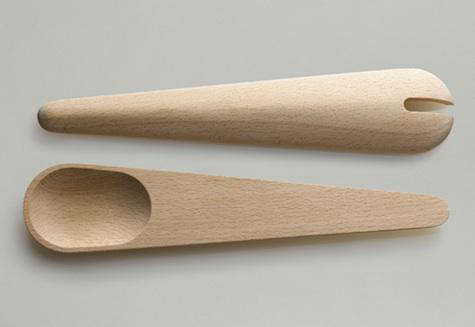
These wooden kitchen tools, designed for Muuto by KiBiSi, land in that sweet spot where form and function stop arguing and start sharing the same apartment. Hang Around is the cooking set: a spoon and a spatula designed with a groove that lets them rest on the edge of a pot or pan. Toss Around is the salad-serving companion: a sleek pair of servers that takes the same minimalist design language and applies it to the dinner table. The result is simple, clever, and just a little smug in the way only great Scandinavian design can be.
For anyone interested in Muuto kitchen accessories, Scandinavian kitchen design, or the ongoing quest to make countertops look less like a chaotic cooking crime scene, Hang Around and Toss Around remain fascinating examples of what happens when everyday tools get a thoughtful redesign. They are not flashy. They are not gadgety. They do not beep, blink, or require an app. Thank goodness.
What Exactly Are Hang Around and Toss Around?
At first glance, the pair looks almost monastic in its simplicity. Both sets are made in wood and shaped with the kind of restraint that Scandinavian brands do so well. But the details are where the design starts flexing.
Hang Around: The Pot-Hugging Cooking Set
Hang Around is made up of two basic kitchen workhorses: a spoon and a spatula. The clever twist is the groove cut into the back of each piece, which allows the utensils to balance on the edge of a pot or pan. In theory, that means fewer drips on the stove, fewer messy spoon rests, and fewer moments where you put down a sauce-covered utensil and instantly regret every life choice that brought you to that exact splatter mark.
It is one of those ideas that feels obvious once you see it. Good design often works that way. It doesn’t scream, “Look how innovative I am!” It quietly makes you wonder why this wasn’t standard years ago.
Toss Around: Salad Servers with Better Manners
Toss Around takes the same visual DNA and shifts it from the stove to the table. Instead of a spoon and spatula, this set uses two serving spoons, including one with a notch that helps it manage leafy salads, pasta salads, and whatever else you are pretending is a side dish when it is actually the main event. Compared with Hang Around, Toss Around is a little more table-friendly and a little less hardworking, but no less intentional.
There is a quiet elegance to the pair. They are the kind of salad servers that make romaine feel overdressed in a good way.
Why Muuto’s Design Language Fits the Kitchen So Well
Muuto has long positioned itself as a modern interpreter of Scandinavian design. That matters here, because Hang Around and Toss Around are not random pretty objects. They reflect the larger Muuto philosophy: durable materials, practical use, and a fresh perspective on familiar forms.
That “fresh perspective” is exactly what gives these tools their appeal. They are rooted in traditional wooden utensils, but refined into something sharper, cleaner, and more architectural. Nothing is overworked. Nothing is ornamental for ornament’s sake. The tools look calm, which is more than can be said for most kitchens at 6:30 p.m. on a Tuesday.
Scandinavian design has always had a strong relationship with livability. It is not just about looking good in a magazine spread lit by suspiciously flattering sunlight. It is about supporting daily life through materials, ergonomics, and restraint. In that sense, Hang Around and Toss Around are textbook examples of the style. They are humble, tactile, and designed to earn their place.
The Smart Part: Why the Groove Actually Matters
The defining feature of Hang Around is the back groove that lets the utensils perch on cookware. It sounds small, and it is small. But kitchen life is basically a series of small annoyances. Anything that reduces those annoyances deserves a round of applause and maybe a good towel.
Think about the usual routine: stir soup, put the spoon down, wipe the counter, forget where you left the spoon, find the spoon sticking to a cutting board like a guilty accomplice. Hang Around tries to interrupt that cycle. By giving the utensil a resting place directly on the pot, Muuto and KiBiSi transform storage into part of the tool itself.
That idea feels especially relevant now, because contemporary kitchen thinking increasingly values fewer tools that do more. The “capsule kitchen” concept, minimalist kitchens, and clutter-free counters all point in the same direction: keep what works, ditch what doesn’t, and stop buying gadgets that have exactly one job and an ego problem. Hang Around fits beautifully into that mindset.
Beauty Versus Utility: Does It Actually Work?
This is where things get interesting. Design publications praised the ingenuity and the graceful simplicity of Hang Around and Toss Around, but not everyone was ready to crown them the undisputed champions of kitchen practicality. Some criticism centered on the thickness needed to create the groove in Hang Around, suggesting that the redesign made the tools visually smarter than they were physically nimble.
And honestly, that tension is part of what makes the collection worth discussing. Great product design is rarely just about utility in a lab-test sense. It is about utility filtered through experience, emotion, ritual, and environment. A stainless steel restaurant spoon may outperform a sculptural wooden spoon in some situations, but that does not automatically make it the better object for a home kitchen.
Hang Around and Toss Around succeed because they do more than complete tasks. They shape the feeling of the kitchen. They make cooking look and feel calmer. They turn the act of pausing a utensil into a tiny design event. That may sound dramatic, but kitchens are emotional spaces. We gather there, rush there, snack there, procrastinate there, and occasionally produce dinner there. The objects we keep in that room affect the tone of the whole experience.
Why Wooden Kitchen Tools Still Matter
Wooden utensils have stuck around for good reason. They are gentle on cookware, pleasant to hold, and warm in a way metal and silicone often are not. Muuto leans into that history rather than trying to replace it. Instead of reinventing the spoon from scratch, the brand refines the silhouette, updates the ergonomics, and lets the material do much of the talking.
That material choice also helps explain why the collection still feels relevant. In a kitchen era dominated by engineered surfaces, hidden appliances, and enough matte black hardware to outfit a small spaceship, wood adds humanity. It softens the room. It says, “Yes, this kitchen is organized, but someone still lives here.”
Designers and home editors keep circling back to this balance: clean but not cold, minimal but not sterile, organized but not joyless. That is exactly the territory where these Muuto kitchen tools thrive.
How Hang Around and Toss Around Fit into a Modern Kitchen
Even though the collection first caught attention years ago, the ideas behind it feel current. Modern kitchens increasingly prioritize concealed storage, fewer countertop items, and tools that justify their footprint. Whether you are dealing with a small apartment kitchen, a carefully styled open shelf, or a serious cooking setup that somehow still has one junk drawer from the underworld, these pieces make sense.
For Small Kitchens
In a compact kitchen, every inch matters. Tools that reduce mess and eliminate extra accessories are instantly more valuable. If a spoon can rest on the pot, maybe you need one less spoon rest cluttering your stovetop. Tiny win? Yes. Meaningful tiny win? Also yes.
For Minimalist Kitchens
Minimalist kitchens look best when the visible items are either beautiful, necessary, or ideally both. Hang Around and Toss Around qualify on both counts. They can live out in the open without turning the kitchen into a hardware aisle.
For Entertaining
Toss Around especially shines when the meal moves from prep to presentation. The servers look refined enough to go straight from counter to table, which is exactly what good serving tools should do. Nobody wants to plate a beautiful salad with utensils that look like they escaped from a cafeteria.
The Real Appeal: Quiet Intelligence
There are louder kitchen products. Plenty of them. Some promise to save three seconds. Some promise to change your life. Some should frankly promise to stop taking up drawer space. Muuto’s approach is different. Hang Around and Toss Around are intelligent without being noisy about it.
That restraint is part of their charm. The collection does not rely on novelty. It relies on proportion, material, and one good idea executed cleanly. In design terms, that is harder than it looks. Anyone can add features. Fewer people know when to stop.
And that is why this collection still deserves attention. It captures a deeply Scandinavian principle: daily tools should be practical, beautiful, and pleasant to live with. Not because every spoon must become high design, but because everyday life improves when ordinary objects are made with care.
Are Hang Around and Toss Around Still Worth Talking About?
Absolutely. Not because they are the only smart kitchen tools ever made, but because they illustrate a bigger idea that still matters: kitchen design works best when it solves small problems elegantly. Hang Around turns utensil restlessness into a built-in function. Toss Around makes serving tools feel sculptural without becoming silly. Together, they show how a brand like Muuto can bring fresh energy to something as humble as a wooden spoon.
That is no small feat. Spoons have been around for a while. They were not exactly crying out for a publicist. Yet here we are.
If you love modern kitchen accessories, Scandinavian kitchen tools, and designs that make daily routines smoother while making your countertop look like it finally got its act together, Hang Around and Toss Around still feel like a smart, stylish benchmark. They are thoughtful without being precious, useful without being boring, and handsome without trying too hard. In kitchen design, that is basically the triple crown.
Experiences with the Idea Behind Hang Around and Toss Around
What makes Hang Around and Toss Around memorable is not just the shape of the tools, but the kind of kitchen experience they encourage. Imagine a weeknight dinner in a small apartment kitchen. Pasta water is boiling, the pan is hot, the counter space is limited, and every surface already seems to be hosting a tomato, a cutting board, or a spoon with poor impulse control. A conventional utensil usually ends up abandoned on the stove, dripping like it pays no rent. Hang Around changes that tiny moment. You stir, pause, and let the spoon rest on the pot. No frantic search for a spoon rest. No extra streak of sauce. The kitchen feels just a little more under control, which is often the difference between cooking feeling relaxing and cooking feeling like a live-action game show.
Toss Around creates a different kind of experience. It belongs to the part of the meal when cooking stops being mechanical and starts becoming social. The salad is done, people are gathering, and suddenly the tools in your hand matter because they are visible. A cheap pair of plastic servers will do the job, sure, but they rarely add anything to the table. Toss Around feels better in that setting because it continues the visual language of the meal. It serves food without breaking the mood. That may sound dramatic for salad servers, but dinner parties are built on details. Candles, plates, serving bowls, linen napkins, and yes, even the humble spoon all contribute to whether a table feels thrown together or thoughtfully composed.
There is also a tactile experience here that deserves credit. Wooden tools bring warmth to the hand. They soften the act of cooking. Metal can feel clinical; silicone can feel purely practical; plastic usually feels like plastic, which is not exactly a sonnet. Wood has texture, grain, and a quiet confidence. It ages. It picks up character. It looks appropriate in a minimalist kitchen, but it also works in a more lived-in one with cookbooks stacked sideways and a fruit bowl permanently auditioning for a still-life painting.
Most of all, these tools support a calmer rhythm in the kitchen. That is the real experience Muuto sells so well. Not perfection. Not performance theater. Just a little more order, a little more beauty, and a little less nonsense in the middle of everyday cooking. And in a room where onions burn, timers beep, and someone always asks, “Is it almost ready?” that kind of calm is worth a lot.
Conclusion
Muuto’s Hang Around and Toss Around are proof that kitchen tools do not have to choose between brains and beauty. These wooden utensils reinterpret classic forms through a Scandinavian lens, adding clever functionality, cleaner lines, and a more considered user experience. Whether you see them as practical problem-solvers, small countertop sculptures, or the kitchen equivalent of someone who is effortlessly well-dressed, they remain a sharp example of thoughtful design at work.
For design lovers, home cooks, and anyone trying to make the kitchen feel less cluttered and more intentional, this collection still delivers a lesson that holds up: the best objects are often the ones that improve everyday life quietly, elegantly, and without making a big scene about it.

