
Hair Care
Review: FilaDryer Sunlu SP2 Filament Dryer – Make:
Jul
If you own a 3D printer long enough, filament eventually starts acting like a moody houseplant. Leave it out too long, especially in a humid room, and suddenly your once-trusty spool begins hissing, stringing, bubbling, and generally behaving like it resents your life choices. That is exactly why filament dryers exist, and it is also why the SUNLU FilaDryer SP2 is interesting. It is not just trying to dry filament. It is trying to solve the annoying part that usually comes after drying: where the heck do you keep the spool once it is finally dry?
The SP2 stands out because it combines two jobs that are usually split between different products. First, it acts as an active filament dryer. Second, the chamber can be detached and used as a sealed storage box. That sounds simple, but in the real world of desktop 3D printing, simple is often another word for “finally, somebody noticed the obvious problem.”
This review takes a close look at what the SUNLU SP2 gets right, where it still feels like a hobbyist compromise, and whether it deserves space next to your printer instead of becoming just another gadget that looks impressive for three days and then becomes a very expensive dust magnet.
What the SUNLU SP2 Actually Is
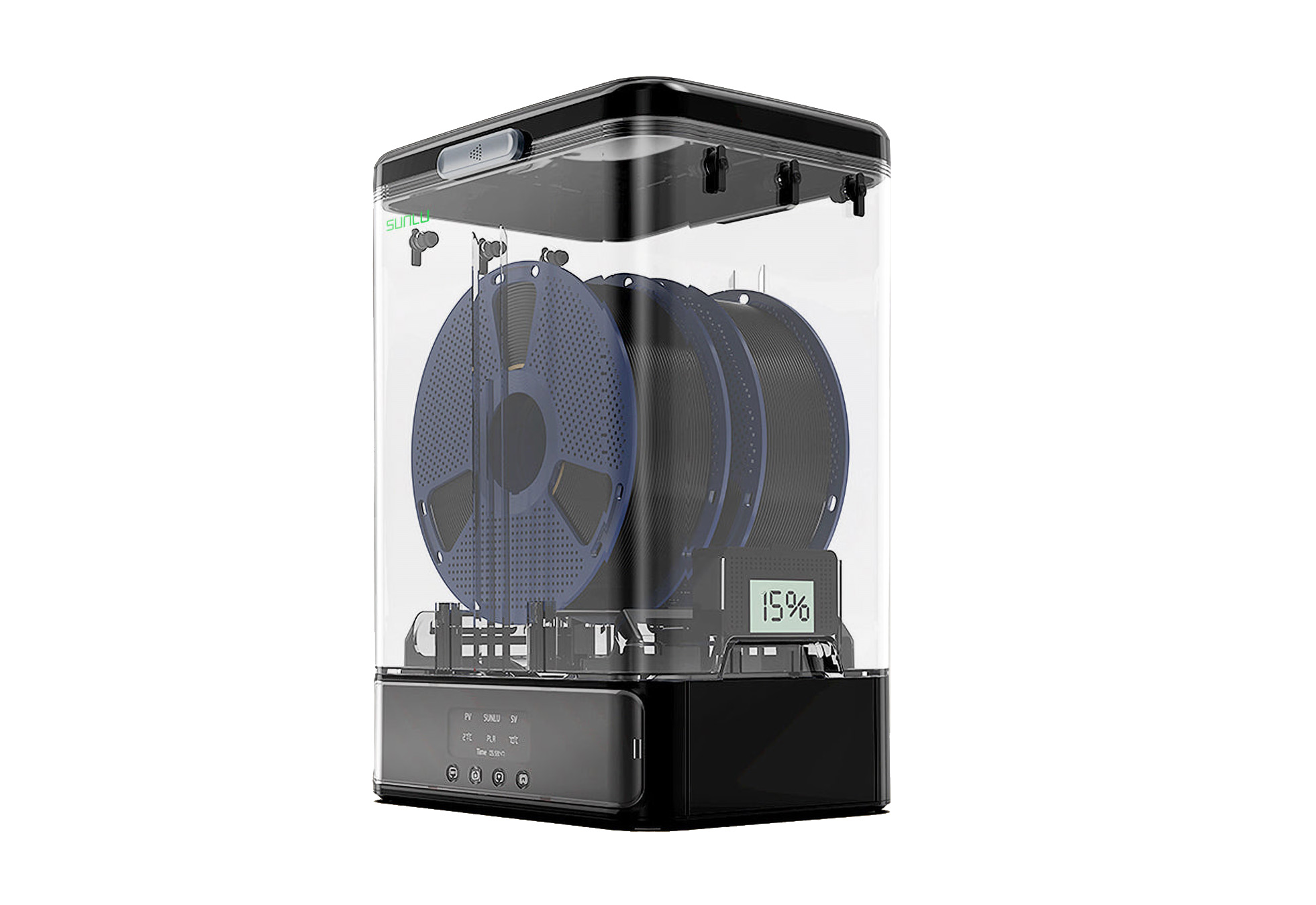
The SUNLU SP2 is a split-style filament dryer with a heating base and a removable storage chamber. That chamber is the real party trick. Instead of drying your filament and forcing you to move it to another sealed container later, the SP2 lets you lift the chamber off the base and keep the spool protected. In other words, it is trying to bridge the gap between active drying and long-term storage.
For many makers, that is a big deal. Traditional filament dryers often do a decent job of warming a spool, but once the drying cycle ends, the spool is right back out in room air the moment you remove it. In a humid climate, that is a little like carefully drying your socks and then tossing them into a puddle for storage. Very efficient. Very bold. Very unhelpful.
The SP2 is designed to handle the kinds of spools most hobbyists and small-shop users actually own, including two standard 1 kg spools or one larger 3 kg spool. It also supports direct feeding to a printer, which means it is not only about drying before printing but also about keeping filament in better condition while printing.
Why Filament Drying Matters More Than People Think
It is easy to assume wet filament is only a serious problem for advanced materials, but moisture trouble shows up across more materials than many beginners expect. Nylon and TPU are famous for drinking humidity like they are training for a marathon, but PETG, PVA, ABS, and even PLA can show noticeable print issues once moisture gets into the spool.
That moisture can cause familiar headaches: popping sounds during extrusion, rough surfaces, extra stringing, weak layer bonding, inconsistent flow, and prints that look like they were made by a printer with commitment issues. Dry filament tends to feed more consistently and produce better surface quality, especially when you are chasing clean walls, reliable dimensions, or stronger functional parts.
This is why filament drying is no longer some ultra-nerdy side quest for workshop perfectionists. It is basic maintenance. If you print regularly, especially in a humid garage, apartment, basement, or tropical climate, a dryer stops being optional surprisingly fast.
Design and Usability: The Smart Part Is the Modular Storage
A More Practical Layout Than Most Filament Dryers
The SP2’s split-body design is its strongest selling point. Instead of making the electronics and the storage chamber one inseparable unit, SUNLU separates them. That means the heated base does the active drying, while the chamber can continue life as a sealed storage container after the cycle ends.
That matters because it reduces handling. Every time you move a spool from dryer to bag, bag to shelf, shelf to printer, and printer to storage box, you add friction to your workflow. And in maker-land, “friction” is usually the first step toward “I’ll deal with it later,” which is the second step toward “why does my TPU sound like frying bacon?”
The chamber also includes thoughtful details: a built-in hygrometer, multiple outlet holes for feeding filament, and a form factor that is clearly built around actual use rather than just looking futuristic on a product page. The carrying handle and sealed design make the storage side feel like more than an afterthought.
Setup Should Be Friendly for Normal Humans
One of the nicest things about the SP2 concept is that it does not demand an engineering degree to justify itself. Load filament, choose a drying preset or manual settings, let the unit do its thing, and either print directly from it or remove the chamber for storage. That is the kind of workflow most home users want: less fiddling, more printing.
For beginners, that ease matters. Many new 3D printer owners are already juggling slicer settings, bed leveling, nozzle temperatures, and the occasional emotional breakdown caused by first-layer drama. A filament dryer should reduce complexity, not add a fresh chapter to the troubleshooting novel.
Drying Performance: Good for Common Filaments, Not a High-Temp Monster
The SUNLU SP2 reaches up to 70°C, which puts it in a very usable zone for a large chunk of desktop filament. That temperature range should cover many real-world drying tasks for common materials such as PLA, PETG, ABS, TPU, ASA, and similar everyday filaments. For the average hobbyist, that is where most of the action is anyway.
In practical terms, the SP2 seems best suited for people who want more reliable prints from common materials, especially if their filament sits out for days or weeks between jobs. If your printing routine includes damp PETG, stringy TPU, or a collection of half-used PLA spools living on open shelves like abandoned office snacks, the SP2 makes sense.
Where the unit becomes less impressive is in the context of serious engineering-material workflows. Some nylons and other performance-oriented filaments often benefit from hotter or longer drying conditions than a 70°C hobby dryer comfortably provides. That does not make the SP2 bad. It just means you should buy it for the right mission. This is not a lab oven replacement. It is a smart prosumer tool.
Who Will Benefit the Most
The SP2 makes the strongest case for three types of users. First, the everyday PLA and PETG printer living in a humid environment. Second, the TPU user who is tired of fighting stringing and inconsistent extrusion. Third, the organized hobbyist who wants a cleaner print station with less spool shuffling.
If that sounds very specific, it is. Good tools are specific. A mediocre tool tries to do everything and ends up doing interpretive dance instead of actual work.
What the SUNLU SP2 Gets Right
1. It Solves the “Now What?” Problem
This is the biggest win. Most dryers answer the question, “How do I dry filament?” The SP2 also answers, “How do I keep it dry afterward?” That extra step is where many products stop short and many users lose the plot.
2. It Supports Real-World Printing Habits
People do not always print nonstop. Many makers rotate materials, leave projects half-finished, or keep a handful of favorite spools on deck. The SP2’s detachable chamber fits that rhythm nicely. Dry a spool today, store it sealed, and use it tomorrow without starting over from scratch.
3. It Is More Efficient Than Buying Multiple Full Dryers
The modular concept also has a budget logic to it. If you like the system, extra storage chambers are more sensible than buying multiple complete dryers with duplicate electronics. That makes the SP2 feel like a platform rather than a one-off box.
4. It Feels Like a Workflow Product, Not Just a Heating Product
That distinction matters. Lots of filament accessories focus on one technical function and forget the rest of the printing routine. The SP2 clearly tries to fit into how people actually manage spools over days and weeks, not just during a single drying session.
Where the SP2 Still Has Limits
It Is Not the Last Dryer You Will Ever Need
If you regularly print very moisture-sensitive nylons, filled engineering materials, or advanced technical polymers, you may eventually want a higher-temperature, more industrial-style drying setup. The SP2 is clever, but it is still aimed at the desktop market. Think “smart and practical,” not “small materials science lab.”
The Value Depends on Your Printing Style
If you print only occasionally, use mostly fresh PLA, and already store every spool in vacuum bags with desiccant, the SP2 may feel like a convenience upgrade rather than a necessity. A useful one, sure, but not life changing. On the other hand, if your workspace humidity is high or your material shelf looks like a plastic spaghetti museum, the value climbs fast.
Storage Discipline Still Matters
No filament dryer can fully rescue chaotic habits forever. A dryer helps. Sealed storage helps. Desiccant helps. But if you dry a spool, leave the ports open, store it badly, and expose it repeatedly to humid air, you are still inviting moisture back to the party. The SP2 improves the system; it does not repeal physics.
How the SUNLU SP2 Compares to Typical Filament Dryers
Compared with a basic one-piece dryer, the SP2 feels more mature. Not necessarily hotter. Not necessarily more powerful in every technical sense. But more mature. It recognizes that drying is part of a larger material-handling workflow.
That makes it especially appealing to makers who have already learned one painful truth: good filament management is less about one dramatic fix and more about consistent handling. Drying, storing, feeding, and monitoring all matter. The SP2 packages those steps more elegantly than many budget alternatives.
It also occupies a nice middle ground. It is more sophisticated than a bargain-bin heater box, but far less intimidating than higher-end drying systems built for demanding engineering materials or production shops. In that sense, the SP2 feels like the kind of product that says, “You are no longer a total beginner, but you do not need an industrial machine either.”
Should You Buy the SUNLU SP2?
You should seriously consider the SP2 if you print often, live in a humid region, switch between multiple spools, or use materials like TPU and PETG often enough that moisture issues keep showing up. You should also consider it if you are tired of the awkward dance between drying filament and finding a safe place to store it afterward.
You may want to skip it if you rarely print, only use brand-new PLA, or already have a storage-and-drying routine that works beautifully. Likewise, if your main priority is drying demanding engineering materials at higher temperatures, you will probably outgrow the SP2 and want something more aggressive.
Final Verdict
The SUNLU FilaDryer SP2 is one of those products that wins by fixing a boring but important problem. It is not flashy in the way a new printer or fancy extruder is flashy. It will not make your workshop look like a sci-fi command center unless your command center really loves dry plastic. But it addresses a genuine weakness in the typical filament workflow: the gap between drying and storage.
That alone gives it real value. Add in support for common spool sizes, direct-feed practicality, a built-in hygrometer, and a design that feels genuinely thought through, and the SP2 becomes more than a novelty. It becomes a smart accessory for people who print enough to care about consistency.
Is it perfect? No. Its temperature ceiling means it is not the universal answer for every advanced material under the sun. But for a huge slice of desktop 3D printing, it looks like a genuinely useful upgrade. In a market full of accessories that feel optional, the SP2 makes a solid case for being one of the useful ones.
Extended Experience: What Living With the SUNLU SP2 Is Likely to Feel Like
The most appealing part of the SUNLU SP2 is not just the headline feature list. It is the day-to-day experience it promises. Imagine a normal week in a home 3D printing setup. You print a few bracket prototypes in PETG, switch to TPU for a flexible part, then return to PLA for a decorative project. In many workspaces, those spools end up sitting around between jobs, soaking up humidity while pretending everything is fine. By the time you load them again, print quality starts slipping and you begin blaming retraction settings, nozzle temperature, moon phases, or the general cruelty of the universe.
A product like the SP2 changes that routine by making good filament habits less annoying. That matters more than people admit. A lot of makers do know what they should do with filament. They should dry it, store it properly, reseal it, add desiccant, and keep an eye on humidity. The problem is that doing all of that can be enough of a hassle that it does not happen consistently. The SP2 seems designed to reduce exactly that friction.
In practical use, the biggest comfort would probably be psychological as much as technical. You dry a spool, remove the chamber, seal it, and stop worrying that all your progress disappears the second the cycle ends. That creates a calmer, cleaner workflow. It also encourages rotating materials more intelligently. Instead of keeping every spool out in the open because repacking them is a pain, you have a storage chamber that feels ready to stay in service.
There is also something satisfying about a product that respects how makers really behave. We do not all run perfectly organized print farms. A lot of us have a half-finished helmet on one side of the bench, a roll of TPU looking suspicious on the other, and three little test cubes that were supposed to answer one question but somehow created seven more. In that kind of environment, convenience is not laziness. Convenience is the difference between maintaining good material condition and giving up.
That is why the SP2’s likely ownership experience feels promising. It fits into a messy but real creative process. It helps you rescue materials before a print, protect them after a print, and keep your station a little more intentional in between. No, it will not turn bad slicer settings into genius. No, it will not make every spool immortal. But it does seem built to eliminate one of the most common and preventable causes of disappointing prints: moisture creep disguised as mystery failure.
And honestly, any tool that saves you from losing another evening to wet-filament nonsense deserves at least a polite round of applause and maybe a cleared spot on the workbench.

