
Hair Care
10-Year-Old Girl Becomes Internet Sensation After Bringing Baby To School With Her
Jun
Every once in a while, the internet pauses its regularly scheduled chaoscelebrity drama, suspicious recipes, and people arguing with strangers about parking spotsto collectively say, “Wait, this child is amazing.” That is exactly what happened when a 10-year-old girl in Thailand, nicknamed Green, became an internet sensation after bringing her baby sister to school with her.
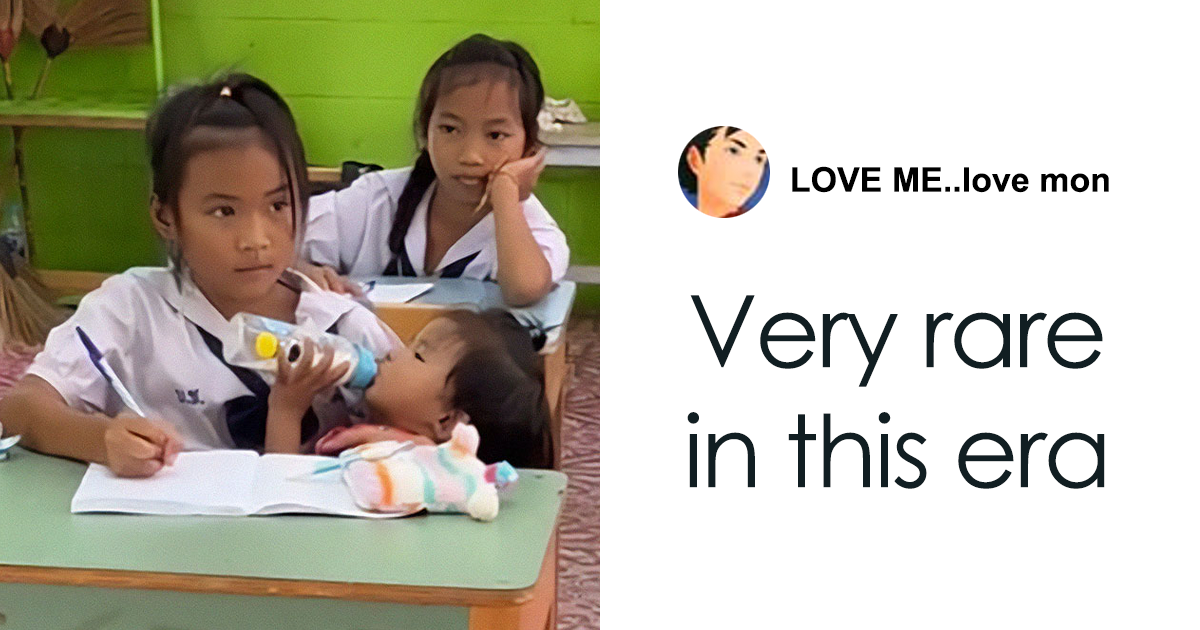
The viral classroom moment showed Green sitting at her desk, focused on her schoolwork, while gently holding and bottle-feeding her one-year-old sister. In one arm: a baby. In the other: a pencil. On her face: the kind of calm concentration many adults lose after one unread email.
The short video, reportedly posted by her teacher, Yingggzz, at Ban Klong Kaem Cham School in Prachin Buri province, quickly spread across social media. Viewers were charmed by Green’s maturity, impressed by her multitasking, and moved by the teacher’s compassionate response. But beyond the cuteness of the clip, the story raises a deeper conversation about family responsibility, school attendance, sibling caregiving, and what adults can learn from children who are quietly carrying more than a backpack.
The Viral Moment That Captured Millions of Hearts
In the clip, Green appears to be doing what students do every day: listening, writing, and trying to keep up with class. The difference is that she is also caring for her baby sister, who rests peacefully in her arm while drinking from a bottle. At one point, the baby reportedly pokes Green’s cheek, which is exactly the kind of baby behavior that says, “I know you’re busy, but I am also the main character.”
According to reports, Green had to look after her younger sibling because her mother was busy running errands. Instead of missing school, Green brought the baby along. Her teacher allowed it, noting that she often tells students not to skip class no matter what challenges they face. In this case, Green took that advice very literally.
The internet reacted fast. Many praised Green as responsible, strong, and loving. Others applauded the teacher for choosing empathy over punishment. Some viewers, however, felt uneasy, pointing out that a 10-year-old should not have to manage childcare during school. Both reactions make sense. The video is heartwarming, but it is also a reminder that children sometimes step into adult-sized responsibilities because the adults around them are doing their best with limited time, resources, or support.
Why Green’s Story Hit Such an Emotional Nerve
People love stories about children showing kindness. But Green’s video became more than a “cute kid goes viral” moment because it showed responsibility in real time. She was not performing for the camera. She was not doing a dance challenge or trying to become famous. She was simply handling the situation in front of her.
That authenticity is powerful. In a world where viral content is often polished, edited, and staged within an inch of its life, Green’s classroom moment felt refreshingly real. There was no dramatic music needed. No inspirational quote in glitter font. Just a child trying to learn while helping her family.
The image of an older sibling caring for a younger one also resonates across cultures. In many families around the world, older children help with younger siblings as part of everyday life. They may prepare snacks, help with homework, soothe a crying toddler, or keep an eye on a baby while a parent cooks, works, or runs errands. This kind of sibling care can build patience, empathy, and confidence. It can also become overwhelming if it turns into a regular burden that interferes with childhood, school, sleep, or emotional well-being.
The Teacher’s Role: Compassion Inside the Classroom
One of the most important parts of this story is not only what Green did, but what her teacher did not do. She did not shame the child. She did not send her home. She did not turn the situation into a public scolding. Instead, she allowed Green to remain in class with her baby sister.
That choice matters. Schools are often the first places where family challenges become visible. A student may arrive tired, hungry, late, distracted, or worried about something happening at home. A strict response might enforce rules, but a compassionate response can keep a child connected to learning.
Of course, no classroom can become a daycare overnight. Teachers already juggle lessons, behavior, paperwork, grading, and the occasional pencil sharpener that sounds like a small construction site. But Green’s teacher modeled something valuable: before judging a student’s situation, ask what support would help the child stay in school.
School Attendance Is Not Always Simple
Adults often talk about attendance as if students wake up and casually decide whether education fits their vibe that day. In reality, school attendance can be affected by transportation, health, family work schedules, childcare, housing instability, anxiety, and many other factors.
Green’s story highlights a practical problem: if a child is expected to help care for a younger sibling, staying in school may become harder. Missing one day may not seem like a big deal, but repeated absences can add up quickly. In the United States, chronic absenteeism is commonly defined as missing about 10 percent of the school year. That can be roughly 18 days, or just two days a month.
Green’s decision to bring her sister to class shows her determination to keep learning. It also shows why schools and communities need flexible, human-centered solutions. Sometimes the question should not be, “Why did this child bring a baby to school?” It should be, “What would help this child attend class without having to choose between education and family duty?”
Sibling Caregiving: Sweet, Strong, and Sometimes Too Heavy
There is a difference between helping and being overburdened. Asking a 10-year-old to help set the table, entertain a sibling for a few minutes, or grab a diaper is normal in many families. Regularly expecting a child to manage adult-level caregiving, however, can become a form of parentification.
Parentification happens when a child takes on responsibilities that are too mature, too constant, or too emotionally heavy for their age. That does not mean every older sibling who helps is being harmed. Many children feel proud when they contribute to family life. They may develop problem-solving skills, emotional intelligence, and a strong bond with siblings. But the key question is balance.
Green’s video is touching because she looks capable and loving. Still, adults should avoid romanticizing children who carry too much. Calling a child “so mature” can be true, but it can also hide the question: did she have a choice? The best response is admiration plus supportnot admiration instead of support.
Why the Internet Called Green a “Big Sister Superhero”
Many online commenters described Green as a superhero. The label fits emotionally: she was calm, focused, gentle, and responsible. But unlike movie superheroes, Green did not need a cape. She had a school uniform, a notebook, and probably a very tired arm.
The “big sister superhero” reaction reveals how deeply people respect caretaking. Society often talks about leadership as something loud: speeches, titles, awards, and impressive LinkedIn updates. Green’s leadership was quiet. She solved a problem, protected her sister, and stayed committed to school.
That is why the video touched millions. It showed love as action. Not dramatic action. Not “running through an airport in a romantic comedy” action. Practical action: hold the baby, feed the baby, write the lesson down, keep going.
Digital Fame and the Privacy Question
Whenever a child becomes an internet sensation, there is another issue worth discussing: privacy. Viral stories can bring encouragement and support, but children cannot fully understand what it means for their image or story to circulate widely online.
Adults should be careful when sharing children’s lives on social media, even when the content is positive. A sweet moment can travel far beyond its original audience. It can be reposted, re-captioned, misunderstood, or used without context. Green’s story is inspiring, but it also reminds schools, parents, and media outlets to protect children’s dignity while telling human-interest stories.
The safest approach is to share less personal information, avoid revealing unnecessary details, and remember that a child’s future digital footprint should not be built entirely by adults with upload buttons and emotional captions.
What Parents Can Learn From This Story
Parents watching Green’s story may feel admiration, guilt, or both. Many families rely on older siblings for help, especially when schedules are tight. That does not make parents bad. It makes them human. Raising children is already a full-time job, except the employees are small, loud, and occasionally cover themselves in yogurt.
The lesson is not that older siblings should never help. The lesson is that help should be age-appropriate, limited, appreciated, and balanced with the child’s own needs. A 10-year-old still needs time to study, play, sleep, socialize, and simply be 10. Childhood should include responsibility, but not the constant weight of adult problems.
Parents can also talk openly with children about family teamwork. Instead of saying, “You have to do this because you are the oldest,” try, “Thank you for helping. This is the adult’s responsibility, and I appreciate your support.” That small shift reminds children that they are loved family members, not backup parents.
What Schools Can Learn From Green’s Classroom Moment
Schools do not need to copy this situation exactly, but they can learn from the spirit of the teacher’s response. Students come from complicated homes, and the most effective schools often combine structure with empathy.
A compassionate school might ask: Is this a one-time emergency? Does the family need help connecting with childcare? Is the student missing class because of caregiving? Can a counselor, social worker, or community organization step in? Is there a way to keep the child learning while solving the larger problem?
Rules are important. So is context. A child who brings a baby to school is not automatically being disruptive or careless. Sometimes that child is trying harder than anyone realizes.
The Bigger Conversation: Children Should Be Supported, Not Just Praised
Viral praise feels good, but support changes lives. Green’s story should inspire more than comments like “What a strong girl!” It should also inspire adults to think about childcare access, school flexibility, family support, and how often children quietly fill gaps in systems that are stretched thin.
When a child shows extraordinary responsibility, the world should celebrate the kindnessbut also ask why that level of responsibility was necessary. Green deserves admiration for her love and determination. She also deserves the ordinary joys of childhood: learning without pressure, playing without worry, and going to school without needing to pack a baby bottle next to her pencil case.
Related Experiences: What This Story Reminds Many People Of
Green’s viral moment feels familiar to many people because almost every family has a story about a child stepping up when life got messy. Maybe it was an older brother walking younger siblings home from school because a parent worked late. Maybe it was a sister helping pack lunches, translate paperwork, or calm a toddler during a long bus ride. These moments rarely make headlines, but they happen in kitchens, classrooms, apartment hallways, and back seats every day.
One common experience is the “mini-adult” role older children sometimes take on. They know where the diapers are. They know which cup the baby likes. They can tell from one suspicious silence that a toddler is either asleep or redecorating the wall with markers. Families may joke about it, but children in these roles often become observant and dependable because people rely on them early.
Another related experience is the teacher who notices more than grades. Many students remember the adult who gave them grace when home life interfered with school. It might have been a teacher who let them finish homework at lunch, a counselor who found donated supplies, or a principal who understood why a student was late again. Green’s teacher became part of the story because she saw the child first and the unusual situation second.
There is also the experience of being praised for strength when what you really needed was help. Many adults who were “responsible kids” remember hearing compliments like “You are so grown-up” or “You are the strong one.” Those words can feel good, but they can also become a quiet contract. Children may start believing they must never struggle, complain, or ask for support. Green’s story is a good reminder to praise children carefully. Say, “You did something kind,” but also say, “You should not have to carry everything alone.”
Finally, this story reflects the beauty of sibling bonds. Babies often trust older siblings in a special way. Older siblings may pretend to be annoyed, but they still know the songs, snacks, routines, and silly faces that work. Green feeding her sister while studying is memorable because it captures that bond perfectly: love in one arm, ambition in the other. It is sweet, impressive, and slightly exhausting to imaginewhich is why so many people clicked, shared, commented, and maybe hugged their own siblings a little tighter afterward.
Conclusion
The story of the 10-year-old girl who became an internet sensation after bringing her baby sister to school is more than a viral classroom clip. It is a snapshot of love, responsibility, education, and compassion all happening at the same desk.
Green’s calm determination impressed millions because it showed a child doing her best in a situation that many adults would find difficult. Her teacher’s response mattered because it allowed learning to continue instead of turning a family challenge into a school punishment. The internet’s reaction mattered because it reminded people that kindness still travels fast.
But the deeper takeaway is this: children can be strong, but they should also be supported. Green deserves every kind word she received. She also deserves a world where a 10-year-old can go to school mainly as a studentnot as a student, babysitter, and tiny crisis manager all before lunch.

