
Makeup
35 Best Fall Flowers to Plant for a Stunning Autumn Garden
Jun
When summer’s loudest flowers start looking a little tired, your garden does not have to wave a white flag. Autumn is one of the best seasons for color, texture, and dramawithout the sticky humidity, mosquito negotiations, or daily watering Olympics of midsummer.
The secret to a stunning autumn garden is planting flowers that either bloom naturally in fall, thrive in cool weather, or keep flowering bravely until frost finally calls time. Mix cheerful annuals with reliable perennials, add a few foliage stars for texture, and suddenly your yard looks less like “summer is over” and more like a cozy magazine cover.
Before planting, consider your local frost date, USDA Hardiness Zone, sunlight, soil drainage, and the amount of watering you realistically plan to do. A flower that thrives in a cool Pennsylvania autumn may behave very differently in a warm Georgia fall. Gardening is wonderfully forgiving, but plants do appreciate being assigned to the right workplace.
How to Choose the Best Fall Flowers
For the longest-lasting fall color, combine three types of plants: cool-season annuals for immediate impact, late-blooming perennials for reliable return performances, and ornamental foliage plants for structure. Choose flowers with similar light and moisture needs so one plant is not living its best life while its neighbor is quietly filing a complaint.
Most fall flowers perform best in well-drained soil. Water newly planted flowers consistently while they establish roots, especially during warm early-fall weather. Once temperatures cool down, many plants need less frequent watering, but do not let containers dry out completely. Pots can go from “moist and lovely” to “tiny botanical desert” faster than expected.
Best Cool-Season Annuals for Fall Color
1. Pansies
Pansies are the unofficial mascots of autumn gardens. Their friendly, face-like blooms come in nearly every color imaginable, including purple, gold, orange, burgundy, blue, white, and dramatic color blends. Plant them in beds, window boxes, hanging baskets, or front-door containers for dependable cool-weather color.
2. Violas
Violas are pansies’ smaller, tougher cousins. They produce lots of petite blooms and often recover quickly after light frosts. Use them as edging plants, container fillers, or cheerful ground-level color around taller fall flowers.
3. Snapdragons
Snapdragons bring vertical personality to an autumn garden. Their flower spikes come in shades of pink, yellow, red, white, purple, and orange. Plant tall varieties toward the back of beds and dwarf varieties near pathways or container edges.
4. Calendula
Calendula, sometimes called pot marigold, produces sunny yellow and orange flowers that look especially good beside purple asters and ornamental kale. It prefers cooler temperatures and can keep blooming into fall in many regions. Bonus: its petals are edible, though they are better known for looking fancy than tasting like dessert.
5. Sweet Alyssum
Sweet alyssum creates a soft, low-growing carpet of tiny white, lavender, pink, or purple flowers. It is excellent for spilling over containers, softening stone borders, and filling bare spots around bigger fall plants. Its honey-like fragrance is a pleasant bonus.
6. Dianthus
Dianthus offers fringed flowers in pink, white, red, and bicolor combinations. Many varieties tolerate cool weather well and have a lightly spicy fragrance. Use dianthus in borders, raised beds, and containers where its compact form can shine.
7. Ornamental Kale
Ornamental kale is technically more foliage than flower, but it earns a place in every fall garden conversation. Its ruffled leaves develop rich centers of cream, pink, lavender, and purple as weather cools. It looks fantastic in large pots, formal beds, and mixed plantings.
8. Ornamental Cabbage
Ornamental cabbage offers a more rounded, rosette-like look than kale. Its broad leaves create bold color blocks in white, pink, purple, and green. Plant it in groups for a polished fall display that looks surprisingly expensive, even when your gardening budget says otherwise.
9. Flowering Cabbage and Kale Mixes
Mixed plantings of flowering cabbage and kale create texture that regular flowers cannot match. Pair them with pansies, violas, dusty miller, or yellow calendula. As temperatures cool, their colors usually become more vivid, which makes them excellent for late-season curb appeal.
10. Dusty Miller
Dusty miller is grown mainly for its soft silver foliage, but it works like a supporting actor who quietly steals every scene. Its frosted leaves brighten orange mums, red celosia, purple pansies, and dark ornamental peppers. It is especially useful in containers that need contrast.
Classic Flowers That Bloom Through Early Fall
11. Chrysanthemums
Garden mums are the classic fall flower for good reason. They come in warm shades of gold, bronze, burgundy, rust, orange, red, white, and purple. Use them in mass plantings, porch pots, or borders. For the best chance of returning next year, choose hardy garden mums, plant them early enough to establish roots, and keep the soil well drained.
12. Asters
Asters are among the most valuable fall-blooming perennials. Their daisy-like flowers appear in purple, blue, pink, white, and lavender, often when many summer flowers are finished. Native asters are also excellent for pollinators, especially late-season butterflies and bees.
13. Marigolds
Marigolds can continue blooming until frost if they are healthy and regularly deadheaded. Their yellow, orange, and red flowers look right at home in autumn gardens. Choose taller African marigolds for bold statement planting or smaller French marigolds for edging and containers.
14. Celosia
Celosia adds wild texture with feathery plumes, coral-like crests, or flame-shaped blooms. Available in red, orange, gold, pink, burgundy, and purple, celosia looks especially striking in fall containers. It is one of those flowers that makes visitors ask, “What is that?” in the best possible way.
15. Zinnias
Zinnias usually peak in summer, but many continue blooming well into fall until frost arrives. They are easy to grow from seed and come in almost every warm autumn shade. Choose disease-resistant varieties and give them good airflow to help keep foliage healthy.
16. Salvia
Salvia produces upright flower spikes in blue, purple, red, pink, and white. Some types bloom for months, especially when spent flowers are removed. Autumn salvias add vertical movement to mixed borders and attract hummingbirds, bees, and butterflies.
17. Petunias
Petunias often revive beautifully when late-summer heat eases. Trim back tired stems, remove old flowers, feed lightly if needed, and enjoy another round of blooms in containers and hanging baskets. Deep purple, wine-red, and yellow petunias look especially dramatic in fall arrangements.
18. Verbena
Verbena’s clustered flowers add long-lasting color to sunny beds and containers. Trailing varieties are perfect for spilling over pot edges, while upright types work well in mixed borders. Rich purple, magenta, red, and white varieties pair nicely with ornamental grasses and mums.
19. Million Bells
Million bells, also called calibrachoa, resemble miniature petunias and bloom heavily in containers. They are ideal for baskets, window boxes, and tall pots. In regions with mild fall weather, they can keep flowering for weeks after other annuals begin to slow down.
20. Dahlias
Dahlias are late-season stars with flowers ranging from neat pom-poms to dinner-plate-sized blooms. Their colors include burgundy, orange, peach, pink, yellow, red, cream, and nearly black. Protect them from frost, and enjoy cut flowers that make ordinary vases look like they have a publicist.
Reliable Perennials for a Long Fall Bloom Season
21. Black-Eyed Susans
Black-eyed Susans bring golden yellow petals and dark centers to borders from late summer into fall. They are cheerful, durable, and easy to pair with asters, ornamental grasses, and purple coneflowers. Their bold color keeps a garden looking sunny even when the sky gets moody.
22. Purple Coneflowers
Purple coneflowers bloom from summer into early fall and provide seed heads that add winter interest. Their pink-purple petals and coppery centers look lovely with goldenrod, sedum, and ornamental grasses. Leave some seed heads standing for birds after flowering ends.
23. Helenium
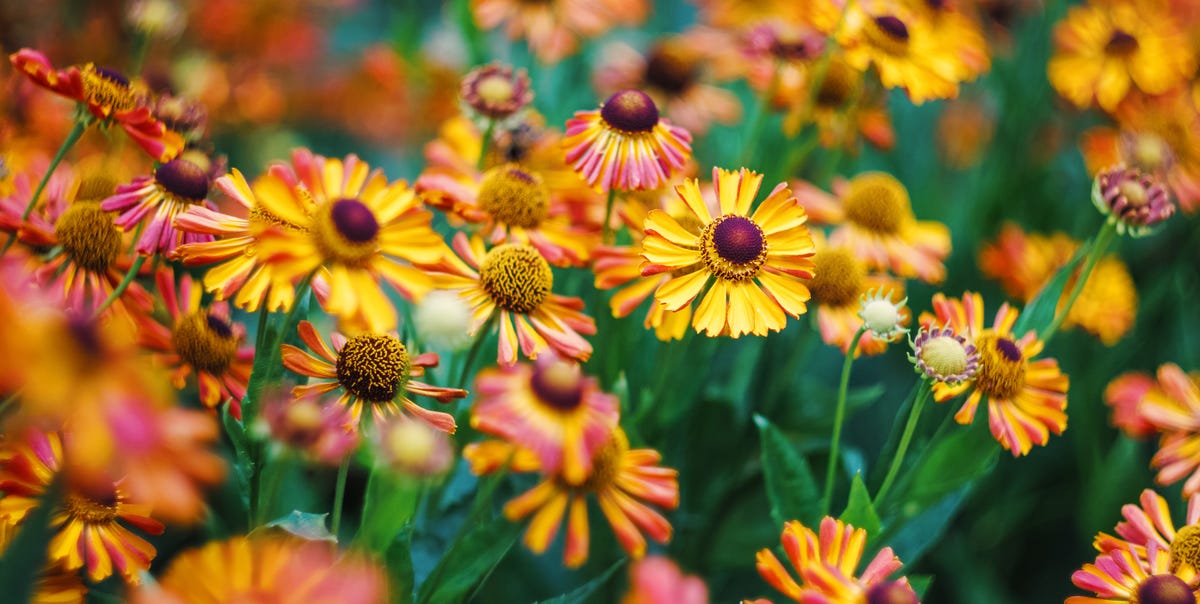
Helenium, sometimes called sneezeweed, produces daisy-like flowers in fiery yellow, orange, copper, and red. Despite its unfortunate common name, it is not the same as allergy-causing ragweed. Its warm colors make it one of the best flowers for a harvest-inspired border.
24. Goldenrod
Goldenrod creates glowing sprays of yellow flowers from late summer through fall. It is a pollinator powerhouse and works beautifully beside purple asters. Contrary to a common garden myth, goldenrod is not usually the main cause of fall allergies; ragweed is the more likely culprit.
25. Sedum
Autumn-blooming sedums, including popular stonecrop varieties, develop flower clusters in pink, rose, red, or burgundy. Their sturdy stems and succulent leaves give gardens structure, while dried flower heads remain attractive long after blooming ends.
26. Japanese Anemone
Japanese anemones produce graceful white, pink, or rose-colored flowers on tall stems from late summer into fall. They are beautiful in part shade and moist, well-drained soil. Their floating blooms add a softer, more romantic look among bolder fall plants.
27. Toad Lily
Toad lilies are a secret weapon for shade gardens. Their orchid-like flowers are often speckled in purple, pink, and white, blooming when many shade plants have gone quiet. Plant them near paths or seating areas where people can appreciate their unusual details.
28. Turtlehead
Turtlehead produces hooded flowers in pink, white, or red tones and performs well in moist soil. It is useful for rain gardens, streamside planting, and damp garden corners that make other flowers grumble. Its distinctive blooms are charming and pleasantly weird.
29. Joe-Pye Weed
Joe-Pye weed is a tall native perennial with large, fluffy pink-purple flower clusters. It works best toward the back of large borders or naturalized gardens. Butterflies love it, and it can turn an ordinary planting into a late-summer pollinator buffet.
30. Ironweed
Ironweed produces intense purple flowers on strong upright stems. It is an excellent choice for sunny native plant gardens and larger spaces. Its deep color contrasts dramatically with yellow goldenrod and orange black-eyed Susans.
31. Russian Sage
Russian sage creates airy clouds of lavender-blue flowers above silvery stems and foliage. It thrives in sun and well-drained soil, making it useful for dry borders. Its light texture helps balance heavy-looking flowers such as mums, sedum, and dahlias.
32. Bluebeard
Bluebeard, also called caryopteris, is a small shrub with blue flowers that appear in late summer and fall. It tolerates heat and dry conditions once established, making it a smart choice for sunny areas with well-drained soil.
33. Boltonia
Boltonia resembles a cloud of tiny asters, covered in white or pale pink daisy-like flowers. It is ideal for cottage gardens, meadow-style beds, and large sunny borders. Give it room, because this pretty plant does not understand the phrase “personal space.”
34. Blanket Flower
Blanket flower, or gaillardia, features warm red, yellow, orange, and bronze blooms. Many varieties continue flowering into fall, especially when deadheaded. It is drought tolerant once established and looks right at home in sunny, informal gardens.
35. Sunflowers
Sunflowers are not just summer plants. Late-sown varieties can provide spectacular fall flowers in gold, bronze, mahogany, red, and bicolor shades. Choose branching types for more blooms or giant varieties for major visual drama. Their seed heads also feed birds after flowering ends.
How to Design a Fall Flower Garden That Looks Intentional
A successful autumn garden usually combines color, height, texture, and repetition. Start with a few large anchors, such as mums, ornamental kale, asters, or sedum. Add medium-height flowers including black-eyed Susans, helenium, salvia, and marigolds. Then soften the edges with violas, pansies, alyssum, or trailing verbena.
For a classic fall color palette, combine orange mums, purple asters, yellow goldenrod, burgundy celosia, and silver dusty miller. For a softer look, use white pansies, pink Japanese anemones, lavender asters, pale ornamental cabbage, and grasses with feathery seed heads.
In containers, follow the simple “thriller, filler, spiller” formula. Use a tall centerpiece such as a mum, snapdragon, or ornamental grass as the thriller. Add pansies, violas, kale, or flowering cabbage as fillers. Finish with trailing alyssum, verbena, or million bells as spillers.
Practical Fall Gardening Experience: What Makes the Biggest Difference
The first lesson many gardeners learn about fall flowers is that timing matters more than enthusiasm. It is tempting to buy every gorgeous mum, pansy, and ornamental kale on the first cool weekend of September. Then reality arrives with an unexpected hot spell, and suddenly your fresh autumn display looks like it spent a week in a toaster. When early fall is still warm, plant in the morning or evening, water deeply, and give new flowers a little time to settle in.
Another useful experience is learning that the most impressive fall gardens are rarely made from one plant alone. A dozen identical mums lined up like orange bowling balls can look cheerful, but mixing shapes creates depth. Pair the round mounds of chrysanthemums with spiky snapdragons, fluffy asters, ruffled kale, and airy ornamental grasses. The garden starts to feel layered instead of decorated.
Containers also teach a quick lesson in responsibility. Flowers in pots dry out much faster than flowers planted in the ground, especially when sunny days return. A container that looked perfect on Friday can look deeply offended by Sunday afternoon. Check the soil with a finger rather than watering by calendar. If the top inch feels dry, water thoroughly until liquid drains from the bottom.
Fall gardening is also a reminder that cool weather does not automatically mean no maintenance. Deadheading marigolds, zinnias, petunias, and salvias can keep them producing flowers longer. Pulling a few fading leaves and spent blooms makes a huge visual difference, particularly near front doors, walkways, and patios. A five-minute cleanup can make the entire garden look intentional again.
Many gardeners become more confident once they stop treating every plant as permanent. Some fall flowers are best enjoyed as seasonal annuals, and that is completely fine. A porch pot full of pansies, kale, and mums does not need to become a lifelong family heirloom. It just needs to look wonderful through the season. Meanwhile, investing in a few strong perennialssuch as asters, sedum, goldenrod, Japanese anemone, and coneflowerbuilds a better garden every year.
One of the nicest surprises of growing fall flowers is the wildlife. Bees visit asters and sedum when nectar sources are becoming scarce. Butterflies drift through patches of goldenrod, coneflower, Joe-Pye weed, and ironweed. Birds may stop by later for seeds. The garden feels active long after summer’s peak has passed.
Finally, remember that a fall garden does not need to be perfect to be beautiful. A few weather-spotted leaves, a crooked sunflower, or a mum that leans dramatically toward the sidewalk are not failures. They are proof that the garden is alive. Plant a mix of dependable flowers, give them enough sun and water, and let autumn do what it does best: make everything look a little warmer, richer, and more memorable.
Conclusion
The best fall flowers do more than add seasonal color. They extend your gardening season, support pollinators, brighten containers, and make outdoor spaces feel welcoming when summer begins to fade. From dependable pansies and mums to native asters, goldenrod, sedum, and Japanese anemones, there are plenty of options for every garden style.
Choose plants suited to your climate, combine different heights and textures, and do not be afraid to mix bold colors. Autumn is not the season for playing it safe. It is the season for purple asters beside golden blooms, burgundy leaves beside silver foliage, and enough color to make your neighbors slow down while walking past.
Note: Bloom periods, winter survival, and planting dates vary by USDA Hardiness Zone, local frost dates, sunlight, soil drainage, and regional climate. Check local gardening guidance before planting perennial flowers or cool-season annuals.

