
Beauty Tools & Accessories
How to Hookup Water to an Outdoor Shower
Jun
An outdoor shower sounds like a luxury until you use one after mowing the lawn, rinsing sandy feet, washing the dog, or escaping the mysterious swamp feeling that happens after five minutes of gardening in July. Suddenly, it becomes less of a “nice backyard upgrade” and more of a personal hygiene hero wearing a chrome showerhead cape.
The good news: hooking up water to an outdoor shower can be as simple as connecting a garden hose or as polished as running permanent hot and cold water lines from your home’s plumbing system. The less-good-but-still-manageable news: water has opinions. It likes to leak, freeze, backflow, puddle, and generally behave like a tiny unpaid contractor unless you plan carefully.
This guide walks through the main ways to connect water to an outdoor shower, what materials you may need, how to plan the plumbing, and how to avoid common mistakes. Whether you want a quick poolside rinse station or a fully plumbed outdoor spa moment, the process starts with the same question: where will the water come from?
Before You Start: Decide What Kind of Outdoor Shower You Want
Before buying pipe, valves, adapters, or a shower fixture that looks like it belongs at a boutique resort, decide how the shower will actually be used. A simple rinse-off shower near a pool does not need the same setup as a private outdoor bathing area connected to hot and cold water.
Option 1: Garden Hose Outdoor Shower
This is the easiest and most affordable way to hook up water to an outdoor shower. The shower connects directly to an outdoor hose bib using a standard garden hose. It usually provides cold water only, although some specialty systems can mix warm water from indoor connections or solar-heated reservoirs.
A hose-fed outdoor shower is great for rinsing dirt, chlorine, salt, or sand. It is also renter-friendly and easy to remove at the end of the season. The downside is obvious: cold water can be “refreshing” in the same way jumping into a mountain stream is “character building.”
Option 2: Permanent Cold-Water Line
A permanent cold-water line gives your outdoor shower a cleaner, sturdier setup than a hose. Instead of dragging a hose across the patio like a green rubber snake, you run a dedicated water supply line from an existing cold-water pipe or exterior faucet line.
This option works well for warm climates, pool areas, and quick rinse stations. It typically requires a shutoff valve, backflow protection, weather-resistant piping, and a way to drain the line before freezing weather.
Option 3: Permanent Hot and Cold Water Lines
This is the comfort upgrade. A hot and cold outdoor shower feels like a real bathroom shower, only with birds, sunshine, and a much better view. It usually connects to the home’s existing hot and cold supply lines, often near a bathroom, laundry room, kitchen, basement, crawl space, or utility area.
This setup is the most convenient but also the most complex. It may require permits, code compliance, insulation, shutoff valves, anti-scald protection, drainage, and professional plumbing help. In other words, this is where the outdoor shower stops being a weekend whim and starts wearing a tool belt.
Step 1: Choose the Best Location for the Shower
The easiest outdoor shower location is close to existing plumbing. If you place the shower on the outside wall of a bathroom, laundry room, kitchen, or utility space, you may be able to tap into nearby hot and cold water lines with less demolition and shorter pipe runs.
Long pipe runs cost more, lose heat faster, and create more opportunities for leaks. A faraway shower tucked romantically behind the garden may look amazing, but if it requires trenching across half the yard, the romance may end when the invoice arrives.
Look for a spot that offers privacy, drainage, sun exposure, and easy access for maintenance. Avoid placing the shower where water will drain toward your foundation, patio, deck framing, neighbor’s yard, or any area that already has poor drainage. If digging is required, contact 811 a few business days before excavation so underground utilities can be marked.
Step 2: Check Local Codes and Permits
Outdoor shower plumbing rules vary by city, county, and state. Some areas allow simple outdoor rinsing stations that drain into gravel or landscaping. Others require wastewater to connect to a sanitary sewer, dry well, or approved drainage system. Rules may be stricter if soap, shampoo, or hot water will be used.
Backflow prevention is also important. Any outdoor fixture connected to a potable water supply needs protection so dirty water cannot siphon backward into the home’s drinking water. A hose bib vacuum breaker, anti-siphon faucet, or other approved backflow device may be required depending on the setup.
Before cutting into plumbing, call your local building department or ask a licensed plumber. It is much easier to adjust plans on paper than to explain to an inspector why your outdoor shower drains directly into Aunt Linda’s hydrangeas.
Step 3: Gather Tools and Materials
The materials depend on your connection method, but most outdoor shower water hookups use some combination of supply pipe, fittings, shutoff valves, adapters, a shower valve, and a showerhead. For a hose-fed shower, you may only need a shower kit, garden hose, hose washers, thread seal tape, and a stable mounting surface.
For permanent plumbing, common materials include PEX, copper, CPVC, brass fittings, pipe clamps, exterior-rated valves, vacuum breakers, and insulation. PEX is popular because it is flexible and easier to route than rigid pipe, while copper remains durable and familiar to many plumbers. The best choice depends on local code, climate, budget, and the existing plumbing in your home.
You may also need a drill, hole saw, tubing cutter, adjustable wrenches, crimping or clamp tools for PEX, pipe straps, silicone sealant, masonry anchors, gravel, drainage pipe, and a pressure gauge. For permanent hot and cold lines, a mixing valve or outdoor shower valve is essential.
Step 4: Hook Up a Simple Garden Hose Outdoor Shower
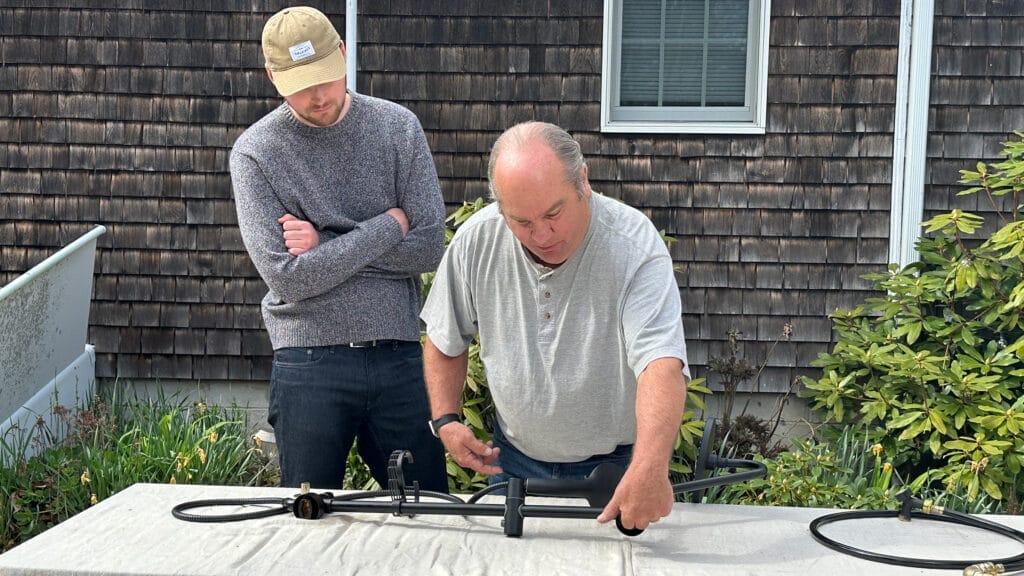
If you want the fastest route to backyard rinsing, choose a hose-compatible outdoor shower kit. These kits usually include a vertical riser, showerhead, base or mounting bracket, and a hose connection. Some are freestanding; others mount to a fence, wall, post, or deck structure.
Basic Hose Connection Process
Start by placing the shower on a level surface near an outdoor faucet. Attach a garden hose to the hose bib, then connect the other end to the shower inlet. Make sure rubber washers are seated correctly inside the hose couplings. A missing washer can create a leak that sprays sideways with the confidence of a tiny lawn sprinkler.
Turn the water on slowly and check every connection. Tighten by hand first, then use pliers only if necessary. Over-tightening can crack plastic fittings or damage threads. Once the system is pressurized, test the showerhead and valve. If the flow is weak, check for kinks in the hose, clogged screens, or a partially closed faucet.
For safety, use a hose bib with anti-siphon protection or add an approved vacuum breaker. This is especially important because hoses can lie in puddles, soil, pool water, or pet-washing zones. Nobody wants yesterday’s muddy paw rinse joining the household water supply for an encore performance.
Step 5: Install a Permanent Water Supply Line
A permanent hookup starts by identifying the nearest suitable water supply. For a cold-water-only shower, this may be an existing hose bib line, basement pipe, crawl space pipe, or utility room supply. For a hot and cold shower, you need access to both lines.
Turn off the water before cutting any pipe. Open a lower faucet to relieve pressure and drain the line. Add a tee fitting to branch off the existing water supply, then run new pipe to the outdoor shower location. Install an accessible shutoff valve inside the house or in a protected location so the outdoor shower can be isolated for repairs and winterization.
If the pipe passes through an exterior wall, seal the penetration carefully to block insects, drafts, and moisture. Use pipe sleeves or escutcheons where appropriate. Secure exposed piping with clamps so it does not rattle, sag, or become a jungle gym for ambitious squirrels.
Hot and Cold Water Hookup
For a hot and cold outdoor shower, run separate hot and cold supply lines to a mixing valve or shower valve. Many outdoor shower fixtures include a valve body designed for wall mounting or post mounting. Follow the manufacturer’s spacing requirements, especially for handles, trim plates, and shower risers.
Install the hot line on the left and cold line on the right, following standard plumbing convention. Use shutoff valves on both lines. If the shower will be used by children, guests, or anyone sensitive to temperature changes, consider an anti-scald or thermostatic mixing valve. Outdoor showers feel playful, but surprise scalding water is not part of the vacation package.
Step 6: Plan the Drainage Before the First Splash
Water supply gets most of the attention, but drainage is what keeps your outdoor shower from becoming a mosquito lounge. A quick rinse station may drain into gravel, stone, or a landscaped area if local rules allow it and if you use only biodegradable products sparingly. However, many municipalities require shower water to drain into an approved system, especially when soap or shampoo is used.
Good drainage starts with slope. Water should move away from the house, away from structures, and away from high-traffic areas. A gravel bed under a teak mat or slatted platform can work for light use, while a more permanent shower may need a drain line connected to a dry well, French drain, or sanitary plumbing system.
If the soil drains slowly, do not ignore it. Clay soil can hold water like a grudge. Test drainage by soaking the area and watching how quickly water disappears. Persistent puddles mean you need a better drainage plan before installing the shower.
Step 7: Add Backflow Protection
Backflow protection keeps outdoor water from reversing direction and contaminating your home’s potable water. This matters because outdoor fixtures can contact soil, standing water, pool chemicals, soap, fertilizer, or pet-washing runoff.
For hose-connected showers, a hose bib vacuum breaker is often the simplest solution. For permanent systems, local code may require a specific type of backflow device. The correct device depends on the risk level and plumbing design, so confirm requirements before installation.
Do not remove a vacuum breaker just because it drips briefly after use. Some devices release a little water as part of normal operation. That small drip is not a plumbing tantrum; it is the device doing its job.
Step 8: Test for Leaks and Water Pressure
Once everything is connected, turn the water on slowly. Check every joint, valve, threaded connection, wall penetration, and fitting. Use a dry paper towel to spot small leaks. If it comes away wet, something needs tightening, resealing, or reworking.
Outdoor showers do not require fire-hose pressure. In fact, too much pressure can stress valves, fittings, hoses, and showerheads. Many homes perform well around moderate residential pressure, and a WaterSense-labeled showerhead can reduce water use while still providing a satisfying spray.
If the shower sputters, let the water run briefly to clear air from the lines. If pressure remains low, check the shutoff valves, showerhead screen, hose diameter, pipe sizing, and fixture flow restrictor. Sometimes the problem is not the plumbingit is one tiny piece of grit acting like it owns the place.
Step 9: Protect the Outdoor Shower from Freezing
In any climate with freezing temperatures, winterization is not optional. Water expands when it freezes, and pipes do not appreciate the physics lesson. Outdoor shower lines should be designed so they can be shut off and drained before winter.
Install interior shutoff valves for the hot and cold lines. Add drain valves at low points if needed. Before freezing weather arrives, shut off the supply, open the outdoor shower valves, disconnect hoses, and drain remaining water. Removable showerheads, risers, and handheld sprayers should be stored indoors if the manufacturer recommends it.
Insulate exposed pipes and protect wall penetrations. In colder regions, consider frost-proof fixtures or a seasonal design that can be disconnected. A beautiful outdoor shower is wonderful; a burst pipe inside the wall is less “spa day” and more “emergency mop ballet.”
Common Mistakes to Avoid
Skipping the Shutoff Valve
Every permanent outdoor shower should have an accessible shutoff valve. Without one, a small leak outside may require shutting off water to the entire house. That is how a peaceful Saturday becomes a family meeting in the driveway.
Ignoring Drainage
If water has nowhere to go, it will choose the worst possible place. Plan drainage before installation, not after the first soggy-footed test shower.
Using Indoor-Only Materials Outside
Outdoor plumbing faces sunlight, temperature swings, moisture, and physical abuse. Use exterior-rated materials and protect vulnerable parts from UV exposure, freezing, and accidental impact.
Forgetting Privacy
A shower with perfect water pressure but no privacy is not a shower. It is a neighborhood announcement. Add fencing, slats, curtains, plantings, or a proper enclosure before anyone needs to make awkward eye contact over the hedge.
Best Practical Setup for Most Homeowners
For many homes, the best balance is a wall-mounted outdoor shower near existing bathroom or laundry plumbing. Run hot and cold lines through the exterior wall, install interior shutoff valves, add approved backflow protection, mount a durable outdoor shower valve, and direct wastewater to an approved drainage area.
This design keeps pipe runs short, makes winterization easier, and gives you comfortable water temperature. If you only need a seasonal rinse station, start with a hose-connected shower and upgrade later. Outdoor showers are forgiving that way. They let you begin with “good enough” and slowly evolve into “why does this feel nicer than my indoor bathroom?”
Experience-Based Tips for Hooking Up Water to an Outdoor Shower
After working through outdoor shower plans, one lesson becomes clear very quickly: the best installation is not always the fanciest one. It is the one that matches how people actually use the shower. A family with kids running in and out of the pool all summer may need a simple, durable rinse station with a foot wash and easy shutoff. A beach house may need hot and cold water, towel hooks, privacy walls, and drainage that can handle sandy feet several times a day. A gardener may only need a quick cold rinse near the potting bench. Match the plumbing to the lifestyle, not to the prettiest photo online.
Another practical experience: place the shutoff valves where you will actually use them. A valve hidden behind stored holiday decorations in a crawl space might technically exist, but it will not be fun to reach when the first freeze warning arrives. Put valves in an accessible basement, utility room, mechanical closet, or clearly marked panel. Label them. Future you will be grateful, and future you is already dealing with enough.
For hose-fed showers, invest in good washers, quality hose fittings, and a stable base. Many leaks come from cheap couplings, missing rubber gaskets, or a shower stand that twists every time someone turns the valve. A small amount of thread seal tape can help threaded metal connections, but it will not fix cross-threaded plastic parts. Start connections straight, tighten gently, and test before calling the project finished.
Drainage deserves more attention than most people give it. In real use, an outdoor shower produces more water than expected. A two-minute rinse with a standard showerhead can send several gallons onto the ground. Add kids, dogs, pool guests, or someone who treats the outdoor shower like a rainforest meditation chamber, and suddenly that cute gravel patch is overwhelmed. When in doubt, build more drainage capacity than you think you need.
Privacy also matters after the novelty wears off. A shower that feels charming during installation may feel exposed when someone is actually standing there covered in shampoo. Think about sightlines from second-story windows, neighboring decks, side yards, and reflective glass doors. Slatted cedar, vinyl panels, tall ornamental grasses, or outdoor curtains can create privacy without making the space feel like a tiny wet closet.
Finally, make maintenance easy. Choose a showerhead that can be removed and cleaned. Use accessible fittings. Keep the base open enough to sweep leaves and rinse mud away. If the shower is seasonal, create a winter checklist and store removable parts in one labeled bin. The best outdoor shower is not just the one that works on day oneit is the one that still works after sun, rain, wind, soap, guests, pets, and one enthusiastic child who believes the shower valve is a musical instrument.
Conclusion
Hooking up water to an outdoor shower can be simple, comfortable, or fully custom depending on your goals. A garden hose hookup is fast and affordable. A permanent cold-water line is cleaner and more convenient. A hot and cold setup delivers the best shower experience but requires more planning, code awareness, drainage design, and freeze protection.
The smartest approach is to start with location, water source, drainage, and safety. Keep the shower close to existing plumbing when possible, use approved backflow protection, install accessible shutoff valves, test for leaks, and winterize before freezing weather. Do that, and your outdoor shower will be more than a backyard novelty. It will be the place where sand, sweat, chlorine, mud, and bad landscaping decisions go to meet their watery end.

