
Beauty Unlocked
Dwight Howard: Bio And Career Highlights
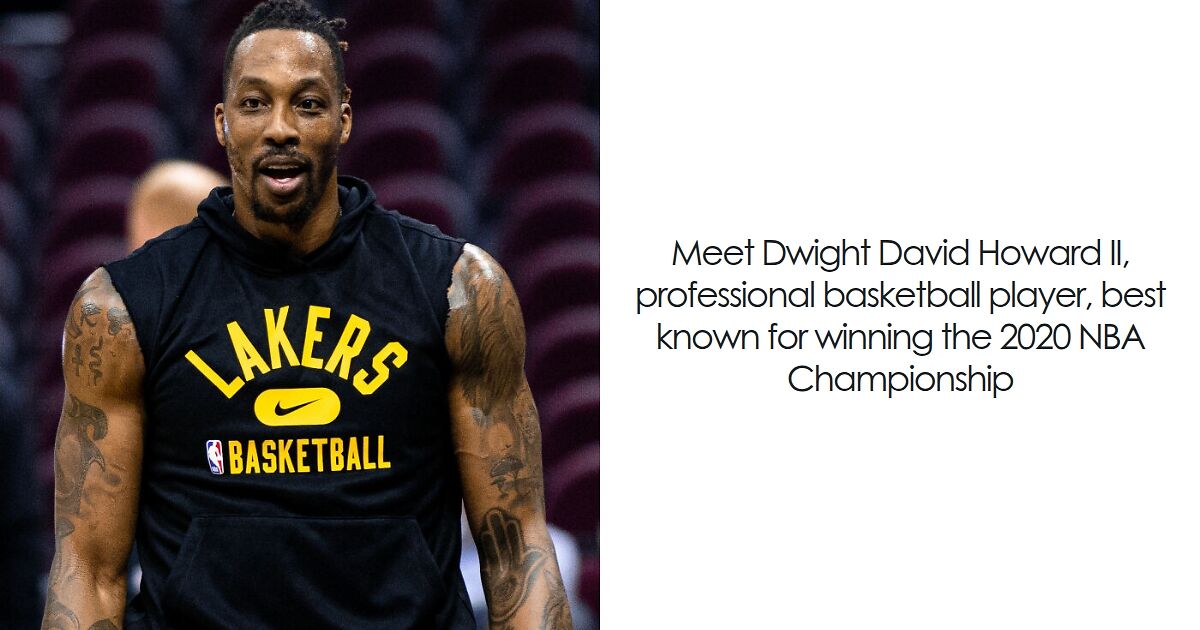
Jun
Dwight Howard did not enter the NBA quietly. He arrived like a human trampoline with shoulders, a smile, and the kind of vertical leap that made rims look nervous. For nearly two decades, Howard was one of basketball’s most recognizable big men: a defensive wall, a rebounding machine, an All-Star showman, and eventually an NBA champion and Hall of Famer.
His career was not a straight line from teenage phenom to perfect legend. It had superhero dunks, playoff dominance, injuries, team changes, criticism, reinvention, and one very shiny 2020 championship ring. That is what makes the Dwight Howard story interesting. It is not just about blocked shots and alley-oops. It is about talent, timing, perception, resilience, and learning how to win in more than one role.
Early Life: From Atlanta Prospect to National Star
Dwight David Howard II was born on December 8, 1985, in Atlanta, Georgia. Long before he became known as “Superman,” he was a standout at Southwest Atlanta Christian Academy, where his size and athleticism separated him from nearly every teenager in the gym. Calling him a “high school center” almost feels unfair. He was already built like a future NBA paint protector, while many of his opponents were still figuring out how to grow into their sneakers.
Howard became one of the most celebrated high school basketball players in the United States. He earned major national honors, dominated the prep scene, and made the bold decision to skip college and enter the 2004 NBA Draft. At the time, jumping straight from high school to the NBA was still possible, but it was not exactly a low-pressure career move. There is no “freshman orientation” when your first classroom is an NBA arena.
The Orlando Magic selected Howard with the No. 1 overall pick in the 2004 NBA Draft. That decision changed the direction of the franchise and placed enormous expectations on an 18-year-old big man. Howard did not need long to prove he belonged. His rookie season showed the foundation of what would become his signature style: elite rebounding, explosive finishing, shot-blocking instincts, and endless energy around the basket.
Orlando Magic Years: The Rise of Superman
Dwight Howard’s prime with the Orlando Magic remains the heart of his basketball legacy. From 2004 to 2012, he grew from a raw teenage prospect into the most dominant defensive center in the league. He did not need a complicated offensive menu to control games. Give him deep position, throw the ball near the rim, and clear the runway. The result was usually a dunk, a foul, or both.
Howard’s athleticism changed how teams attacked Orlando. Guards thought twice before driving into the lane. Opposing big men had to wrestle for position on every possession. Missed shots often belonged to Howard before anyone else could even jump. During his Magic peak, a rebound near him was less of a loose ball and more of a temporary rental.
The 2008 Slam Dunk Contest
Howard’s personality reached mainstream basketball culture during the 2008 NBA Slam Dunk Contest. Wearing a Superman cape, he delivered one of the most memorable dunk-contest performances of the modern era. Technically, yes, he dunked a basketball. Culturally, he created a highlight that still lives rent-free in NBA nostalgia.
The “Superman” image fit because Howard’s game was built on flight. He was not a graceful stretch big or a silky post technician. He was power, timing, elevation, and joy. Fans loved the combination. He could swat a shot into the crowd, grin like he had just discovered recess, then sprint the floor for a lob. In an era increasingly shaped by perimeter stars, Howard made the center position feel loud again.
Defensive Player of the Year Dominance
Howard won three consecutive NBA Defensive Player of the Year awards from 2009 to 2011. That achievement is the clearest proof of his peak. Defense is often harder to market than scoring, but Howard made it impossible to ignore. He led the league in rebounding multiple times, ranked among the top shot blockers, and gave Orlando a defensive identity that could survive cold shooting nights.
His defensive value was not limited to blocks. Great shot blockers can sometimes chase highlights and leave the team exposed. Howard, at his best, anchored the entire system. He erased mistakes, cleaned the glass, discouraged drives, and allowed Orlando’s perimeter players to defend more aggressively because they knew a seven-foot problem was waiting behind them.
The 2009 NBA Finals Run
The 2008-09 season was Howard’s masterpiece in Orlando. The Magic built a roster around spacing, shooting, and Howard’s interior dominance. With shooters spread around him, Howard forced defenses into uncomfortable choices. Send help, and Orlando’s three-point shooters could punish you. Stay home, and Howard could overpower single coverage.
Orlando defeated the Cleveland Cavaliers in the 2009 Eastern Conference Finals, a series remembered partly because it interrupted the widely expected LeBron James versus Kobe Bryant Finals matchup. Howard was enormous in that run, both literally and competitively. His combination of rebounding, rim pressure, and defense helped push the Magic to their second NBA Finals appearance in franchise history.
The Magic lost to Kobe Bryant and the Los Angeles Lakers in the 2009 NBA Finals, but Howard’s performance that postseason cemented him as one of the defining players of his generation. He was no longer just a spectacular athlete. He was the centerpiece of a Finals team.
Career Stats and Achievements
Dwight Howard’s resume is loaded. He finished his NBA career with 19,485 points, 14,627 rebounds, and 2,228 blocks. His career averages include 15.7 points, 11.8 rebounds, and 1.8 blocks per game, while shooting 58.7 percent from the field. Those numbers are not just “pretty good for a big man.” They are historic.
Howard became an eight-time NBA All-Star, an eight-time All-NBA selection, a five-time rebounding champion, a two-time blocks leader, a five-time All-Defensive selection, and a three-time Defensive Player of the Year. He also won the 2008 NBA Slam Dunk Contest, captured Olympic gold with Team USA in 2008, won an NBA championship with the Los Angeles Lakers in 2020, and was enshrined in the Naismith Memorial Basketball Hall of Fame in 2025.
Why His Numbers Matter
Some players have long careers. Some players have dominant peaks. Howard had both. His ranking among the all-time leaders in rebounds and blocks shows that his production was not a short burst of athletic brilliance. It lasted. Even as his role changed and his teams changed, he continued to rebound, defend, and finish efficiently.
His career also reminds fans that basketball value is not always measured by step-back jumpers and viral crossovers. Howard controlled possessions in old-school ways: secure the miss, protect the paint, finish at the rim, repeat until the other team looks emotionally tired.
Team USA and the 2008 Olympic Gold Medal
Howard was part of the 2008 United States men’s Olympic basketball team, famously known as the “Redeem Team.” That roster was loaded with superstars, including Kobe Bryant, LeBron James, Dwyane Wade, Carmelo Anthony, Chris Paul, and others. Howard provided interior size, rim protection, rebounding, and physical presence.
The team won gold in Beijing, restoring American basketball pride on the international stage. For Howard, the medal became another major piece of a career that stretched beyond NBA arenas. It also demonstrated that even on a team full of elite scorers, there was still a valuable place for a center who could protect the paint and dominate the glass.
Leaving Orlando and the Next Chapter
Howard’s exit from Orlando was complicated and heavily covered. After years as the face of the Magic, he was traded to the Los Angeles Lakers in 2012. On paper, the move looked like blockbuster magic: Howard, Kobe Bryant, Pau Gasol, and Steve Nash wearing purple and gold. In reality, injuries, chemistry issues, and massive expectations made that first Lakers stint far more difficult than expected.
After one season in Los Angeles, Howard signed with the Houston Rockets. His time in Houston had strong moments, including a trip to the 2015 Western Conference Finals, but it never fully became the championship partnership many expected. He later played for the Atlanta Hawks, Charlotte Hornets, Washington Wizards, Philadelphia 76ers, and returned to the Lakers for additional stints.
This phase of Howard’s career is often discussed through criticism, but it deserves a more balanced view. Very few players remain franchise centerpieces forever. Aging, injuries, roster fit, and league trends changed the way teams used centers. Howard had to adjust in a league that was drifting toward spacing, three-point shooting, and switch-heavy defense.
The 2020 Lakers Championship: Reinvention Pays Off
Howard’s second act reached its happiest chapter with the 2019-20 Los Angeles Lakers. This time, he was not asked to be the face of the franchise. LeBron James and Anthony Davis carried the superstar load. Howard’s job was clearer: defend, rebound, bring energy, accept limited minutes, and be ready when matchups required muscle.
That role suited him beautifully. During the Lakers’ championship run in the NBA bubble, Howard gave the team toughness and interior depth. His minutes against the Denver Nuggets in the Western Conference Finals were especially valuable, as Los Angeles needed size and physicality against Nikola Jokic. Howard did not have to be Orlando Superman anymore. He simply had to be a winning veteran.
The Lakers defeated the Miami Heat in the 2020 NBA Finals, giving Howard his first NBA championship. It was a meaningful ending to a long search. After years of being judged for not winning a title as a franchise star, Howard earned one by embracing a smaller role. That may not sound glamorous, but it is one of the hardest things for a former superstar to do.
Hall of Fame Recognition
In 2025, Dwight Howard was inducted into the Naismith Memorial Basketball Hall of Fame. The honor validated a career that had sometimes been strangely debated. For a while, some critics focused so heavily on the messy middle chapters that they seemed to forget the peak. The Hall of Fame did not forget.
Howard was one of the greatest defensive players of his era. He led a franchise to the NBA Finals, won three straight Defensive Player of the Year awards, earned eight All-Star selections, won Olympic gold, captured an NBA title, and finished among the greatest rebounders and shot blockers in league history. That is not a borderline case. That is a first-class boarding pass to Springfield.
Playing Style: Power, Timing, and Paint Control
Howard’s game was built on physical dominance. At 6-foot-10 and roughly 265 pounds during his NBA career, he combined strength with rare explosiveness. His best offensive weapon was not a delicate fadeaway. It was deep position and vertical force. When he caught the ball near the basket, defenders often needed help, prayer, or both.
On defense, Howard’s timing made him special. He could block shots, but he also changed shots. Many guards altered layups before he even jumped. That invisible impact matters. A missed layup caused by fear does not appear in the block column, but coaches notice it, teammates feel it, and opponents remember it the next time they enter the lane.
Howard’s rebounding was equally elite. He tracked the ball quickly, carved out space with strength, and jumped with second-effort explosiveness. Rebounding is part skill, part hunger, and part willingness to get bumped by enormous people for two straight hours. Howard checked all three boxes.
Legacy: How Should Fans Remember Dwight Howard?
Dwight Howard should be remembered as the best center of his prime era and one of the most impactful defensive players in NBA history. His reputation became more complicated as his career moved from superstar status to role-player status, but complexity should not erase greatness.
At his peak, Howard was a franchise-changing force. The Magic built a Finals team around him. Opponents built game plans around avoiding him. Fans built entire highlight reels around his dunks and blocks. He was fun, dominant, marketable, and occasionally misunderstood.
His career also sits at an interesting point in NBA evolution. Howard was a traditional power center at the exact moment the league began moving toward stretch bigs and perimeter spacing. If he had been born a decade earlier, he might have been viewed even more comfortably as a classic superstar center. If he had been born a decade later, he may have been developed differently. Instead, he became a bridge between eras: old-school paint dominance meeting modern basketball’s spacing revolution.
Experiences and Lessons From Dwight Howard’s Career
One of the most useful ways to understand Dwight Howard’s career is to look beyond the box score and ask what his journey teaches. The first lesson is that early success is powerful, but it can also become heavy. Howard entered the NBA as a teenager, became an All-Star, won major defensive awards, and led a team to the Finals before many players fully understand professional life. That kind of rise sounds like a dream, but it also turns every mistake into a headline. When you are labeled Superman, people get annoyed when you cannot actually fly through every problem.
The second lesson is that roles change. In Orlando, Howard was the system. In 2020 with the Lakers, he was a piece of the system. Many athletes struggle with that transition because identity and status are hard to separate. Howard’s championship season showed maturity. He accepted fewer touches, fewer minutes, and less spotlight. Instead of asking the game to treat him like it was still 2009, he found a way to help a team win in 2020. That adjustment is not small. It is professional humility in sneakers.
The third lesson is that public perception can lag behind reality. For years, debates about Howard focused on personality, free throws, post moves, and team exits. Some of those conversations were fair; some were exaggerated. Meanwhile, the facts remained stubborn: eight All-Star selections, three Defensive Player of the Year awards, five rebounding titles, Olympic gold, an NBA championship, and Hall of Fame induction. In sports, a player’s story can become noisy, but the resume eventually speaks in a calmer voice.
The fourth lesson is about specialization. Howard was never a perfect player. Free throws were an adventure, and not the relaxing vacation kind. His offensive range was limited compared with modern big men. But he mastered the areas that made him elite. He rebounded. He defended. He finished. He ran the floor. He made opponents uncomfortable. Great careers are not always built by doing everything. Sometimes they are built by doing a few important things at a historically high level.
For young athletes, Howard’s career is a reminder that talent opens doors, but adaptability keeps them open. For fans, it is a reminder to appreciate dominance while it is happening, not only after a Hall of Fame plaque confirms it. For teams, it shows the value of matching a player’s role to his strengths. And for anyone chasing a long-term goal, Howard’s story offers a simple message: your first version does not have to be your final version. Sometimes the cape comes off, the role changes, and the ending still includes a ring.
Conclusion
Dwight Howard’s basketball story is big, loud, complicated, and ultimately historic. He was a high school phenom, a No. 1 draft pick, the face of the Orlando Magic, a three-time Defensive Player of the Year, a 2009 NBA Finals centerpiece, an Olympic gold medalist, a 2020 NBA champion, and a 2025 Hall of Famer. He was also a player who had to evolve as the league changed around him.
His career highlights are easy to list, but his true legacy is bigger than a trophy shelf. Howard made defense exciting, rebounding glamorous, and dunk contests fun again. He reminded the basketball world that a dominant center could still bend games through force, timing, and energy. Whether fans remember the Superman cape, the blocks, the Finals run, or the championship redemption arc, one thing is clear: Dwight Howard left a giant footprint in NBA history. And knowing Howard, he probably jumped over someone while leaving it.
SEO Tags
Note: This article is written in original, publication-ready American English and is based on verified public basketball records available up to 2026.

