
Body Care
How to Identify a Miniature Pinscher: 9 Steps
Jun
At first glance, the Miniature Pinscher looks like someone put a Doberman Pinscher in the dryer and selected “extra tiny.” But do not be fooled. The Miniature Pinscher, often called the Min Pin, is not a mini Doberman. It is its own bold, ancient, high-stepping, furniture-supervising little breed with a personality roughly the size of a parade float.
Learning how to identify a Miniature Pinscher is useful whether you are browsing adoption listings, meeting a mystery dog at the park, checking breed traits before buying from a responsible breeder, or simply trying to understand why a ten-pound dog is acting like the CEO of your living room. This guide walks through nine practical steps to help you recognize the breed by size, body shape, coat, color, gait, head, ears, temperament, and history.
Miniature Pinschers are compact toy dogs from Germany, originally developed as lively ratters and watchdog-style companions. They are known for their sleek coat, proud posture, fearless nature, and distinctive hackney gait, a high-stepping movement that makes them look like tiny show horses with very strong opinions.
How to Identify a Miniature Pinscher: 9 Steps
1. Start With the Size: Small, But Not Delicate-Looking
The first clue is size. A true Miniature Pinscher is a small toy breed, usually standing about 10 to 12.5 inches at the shoulder and weighing around 8 to 10 pounds. Some pets may be slightly outside that range, especially if they are mixed, overweight, underweight, or still growing, but the breed should never look bulky, heavy, or long-bodied like a Dachshund.
The key is balance. A Miniature Pinscher should look small yet sturdy. Think “compact athlete,” not “fragile ornament.” The legs are relatively long for the dog’s size, giving the Min Pin a leggy, elegant outline. If the dog is tiny but low to the ground, it may have Dachshund influence. If it is taller, thicker, and much heavier, it may be a small Manchester Terrier, a mixed breed, or simply not a Min Pin at all.
2. Look for a Compact, Square Body Shape
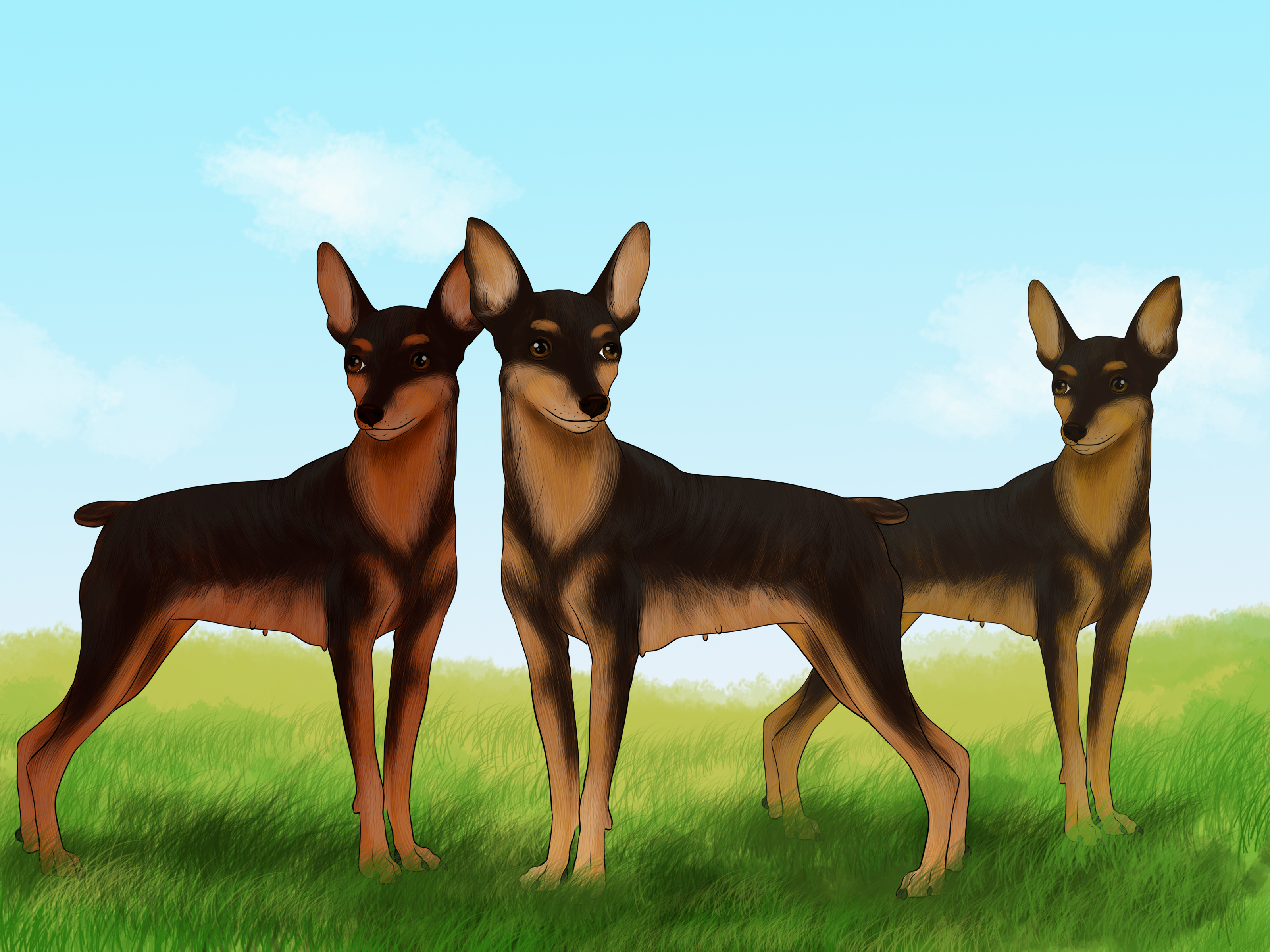
A Miniature Pinscher has a balanced, compact, almost square body. In plain English, the dog’s height and body length should appear close to equal. The chest is developed but not massive, the back is short and firm, and the overall outline is neat and athletic.
When viewed from the side, a Min Pin often looks alert and ready to move. The body should not be long like a hot dog bun, round like a meatball, or fragile like a paperclip with paws. A correct Miniature Pinscher carries itself proudly, almost as if it just won an argument with a German shepherd and would like everyone to know.
The breed’s outline is one of the easiest ways to separate it from look-alikes. A Chihuahua may be similar in weight but often has a rounder head and different body proportions. A Toy Manchester Terrier may have a similar sleek coat but typically has a different head, expression, and movement. The Min Pin’s square, compact, muscular frame is a major identification clue.
3. Examine the Coat: Short, Smooth, Glossy, and Close-Fitting
The Miniature Pinscher coat is short, smooth, straight, and shiny. It lies close to the body and requires minimal grooming. If the dog has a fluffy coat, wiry hair, feathering on the legs, or long fur around the ears and tail, it is probably not a purebred Miniature Pinscher.
A healthy Min Pin coat often looks polished with very little effort. Weekly brushing can help remove loose hair and keep the shine, but this is not a breed that needs elaborate trims. No bows, no sculpting, no dramatic salon reveal. The coat is naturally tidy, which is convenient because the dog will be busy inspecting windows, doorways, snack crumbs, and suspicious leaves.
Because the coat is so thin and close to the skin, Miniature Pinschers may get cold more easily than many heavier-coated breeds. If you see a small, smooth-coated dog proudly wearing a sweater in chilly weather and behaving like it owns the sidewalk, you may be getting closer.
4. Check the Accepted Colors and Markings
Color is another strong clue. Miniature Pinschers are commonly seen in solid red, stag red, black with rust markings, or chocolate with rust markings. Some references also describe black and tan or chocolate and tan variations, depending on registry language and marking descriptions.
The rust markings usually appear in specific places: above the eyes, on the cheeks, on the muzzle, on the chest, on the lower legs, and under the tail. These markings help create the breed’s bright, alert expression. A black-and-rust Min Pin can look like a tiny Doberman, which is why so many people assume the breeds are directly connected. They are not. The Miniature Pinscher is an older, separate breed with its own development history.
Color alone is not enough to identify the breed. Many mixed-breed dogs have similar black-and-tan markings. Always combine coat color with body shape, size, gait, head type, and temperament before making a confident guess.
5. Watch the Movement: The Famous Hackney Gait
The Miniature Pinscher’s movement is one of its signature traits. The breed is famous for a high-stepping action called the hackney gait. When trotting, the front legs lift with noticeable style, somewhat like a carriage horse. It is confident, animated, and surprisingly dramatic for a dog that can fit in a tote bag.
This gait should not look like limping, hopping, stiffness, or pain. A healthy Min Pin moves freely and proudly. The hackney action is controlled and rhythmic, not awkward. If the dog is skipping, favoring a leg, or suddenly changing movement, that is a health concern rather than a breed feature.
Because Min Pins are active dogs, movement can reveal a lot. They are quick, agile, and curious. A Miniature Pinscher often moves with the energy of a dog that has three appointments, two security checks, and a squirrel-related investigation before lunch.
6. Study the Head, Eyes, and Expression
A Miniature Pinscher’s head is narrow and tapered, with a strong muzzle and alert expression. The eyes are usually dark, clear, and slightly oval. They should look bright and interested, not dull or overly round. The breed’s expression often says, “I have noticed everything, including the treat you tried to hide.”
The skull should look flat rather than domed. This helps distinguish the Min Pin from breeds like the Chihuahua, which often has a rounder apple-shaped head. The muzzle should not be squashed or overly short. A Min Pin is a sleek, balanced dog with a confident face and a sharp, intelligent look.
The nose is usually black, though chocolate-colored dogs may have a chocolate-colored nose. Combined with the dark eyes and smooth coat, the head gives the Miniature Pinscher a polished, alert appearance.
7. Notice the Ears and Tail, But Understand Natural Variation
Miniature Pinscher ears are set high and may stand erect. Some have cropped ears, while others have natural ears that may stand, fold, or tip depending on the dog. Ear cropping is controversial and not necessary for identifying or appreciating the breed. A natural-eared Min Pin is still very much a Min Pin.
The tail is traditionally described as high-set and often docked in show-ring contexts, but many Miniature Pinschers have natural tails. A natural tail may be slender and carried up or curved. Like ear cropping, tail docking is a human choice, not proof of breed identity.
When identifying a Miniature Pinscher, do not rely only on cropped ears or a docked tail. Those features can appear in other breeds or mixes, and many Min Pins today may keep their natural ears and tails. Focus instead on the whole dog: size, body shape, coat, color, movement, and personality.
8. Observe the Personality: Fearless, Alert, and Busy
The Miniature Pinscher personality is unforgettable. These dogs are commonly described as fearless, spirited, intelligent, energetic, and confident. They are often affectionate with their families but may be reserved with strangers. Many are alert barkers, which means they will let you know when a delivery truck arrives, a neighbor sneezes, or a leaf moves in a suspicious manner.
A Min Pin is not usually a couch decoration. This breed enjoys play, short bursts of exercise, trick training, and mental stimulation. They can be independent and strong-willed, so consistent reward-based training is important. Without structure, a Miniature Pinscher may appoint itself household manager, security director, and snack auditor.
Because they were originally bred to hunt vermin, some Min Pins may chase small animals. They can also be bold with larger dogs, which is brave but not always wise. Supervision is important, especially around big dogs, young children, open doors, and unfenced yards. The breed’s confidence is charming, but it can lead to escape attempts or overenthusiastic adventures.
9. Compare the Dog With Common Look-Alikes
To identify a Miniature Pinscher accurately, compare it with similar breeds. The most common confusion is the Doberman Pinscher. Although they share a sleek appearance and similar coloring, the Miniature Pinscher is not a miniature Doberman. The Doberman is much larger and was developed later. The Min Pin has its own roots, likely connected to older German pinscher-type dogs, Dachshund influence, and Italian Greyhound-type refinement.
Chihuahuas can be similar in size but usually have different head shapes, body proportions, and movement. Toy Manchester Terriers can look sleek and black-and-tan, but their shape, expression, and breed type differ. Rat Terrier mixes may share energy and hunting instincts but often have different coats, markings, or body outlines.
If you are identifying a rescue dog, remember that many wonderful dogs are mixes. A dog can look strongly Min Pin without being purebred. DNA testing, breeder records, registration papers, or veterinary evaluation may help if exact breed ancestry matters. For most families, though, what matters most is understanding the dog’s likely needs: activity, training, supervision, warmth in cold weather, and a healthy respect for tiny-dog confidence.
Quick Identification Checklist
- Size: About 10 to 12.5 inches tall and around 8 to 10 pounds.
- Build: Compact, sturdy, square, and athletic.
- Coat: Short, smooth, shiny, and close-fitting.
- Colors: Red, stag red, black with rust, or chocolate with rust.
- Movement: High-stepping hackney gait.
- Head: Narrow, tapered, alert, with dark oval eyes.
- Ears: High-set; may be natural or cropped.
- Tail: High-set; may be natural or docked.
- Temperament: Fearless, energetic, clever, curious, and often vocal.
Miniature Pinscher vs. Doberman Pinscher: The Big Misunderstanding
One of the biggest myths about the Miniature Pinscher is that it is simply a Doberman Pinscher in travel size. The resemblance is understandable, especially with black-and-rust dogs, but the history says otherwise. The Miniature Pinscher is a distinct breed, not a shrink-ray version of the Doberman.
The Miniature Pinscher is older than the Doberman and was developed for different purposes. The Min Pin was a small German ratter and companion, while the Doberman was developed as a larger working and protection breed. So, if someone says, “Cute mini Doberman,” you can smile politely and say, “Actually, this is the King of Toys.” Then prepare for the dog to prove the title by standing on your foot and barking at a cardboard box.
Health and Care Clues That Support Identification
Breed identification is not only about looks. Care needs can also give clues. Miniature Pinschers are usually low-maintenance in grooming but high-maintenance in attention, training, and safety management. They need regular exercise, mental games, and consistent boundaries.
Common health concerns associated with the breed may include luxating patella, progressive retinal atrophy, epilepsy, hypothyroidism, and dental issues. This does not mean every Min Pin will have these problems, but responsible owners should know what to watch for. A healthy Min Pin is lively, bright-eyed, mobile, and eager to participate in life. If a small dog that looks like a Min Pin is limping, squinting, gaining weight unexpectedly, or having seizures, veterinary care is essential.
Miniature Pinschers may also gain weight easily if overfed. Because they are small, even a few extra snacks can matter. A tiny cube of cheese to a Min Pin is not a tiny cube of cheese; it is practically a banquet with dairy-based fireworks. Portion control, quality food, and regular movement help keep the breed’s athletic shape.
Real-Life Experience: What It Feels Like to Identify a Miniature Pinscher
In real life, identifying a Miniature Pinscher usually begins with a double take. You see a tiny, glossy dog trotting down the sidewalk with a proud chest, high knees, and the confidence of a celebrity arriving late to an awards show. The dog is small, but nothing about the attitude is small. That is often the first emotional clue: a Min Pin does not simply enter a space; it makes an announcement.
One common experience is meeting a black-and-rust Min Pin and immediately thinking, “Mini Doberman!” Many people do this. Then the details start correcting the assumption. The dog is much smaller, more compact, and more toy-like in size, yet not soft or fragile. The body is square and tight, the coat is smooth as polished wood, and the eyes are bright, dark, and deeply interested in every movement around them.
Another memorable clue is the movement. A Miniature Pinscher does not usually shuffle along like a sleepy lapdog. It prances. The front legs lift with a lively, high-stepping rhythm that seems almost theatrical. If a dog could walk into a room and say, “Yes, I rehearsed this,” it would be a Min Pin. That hackney-style movement is one of the most recognizable breed traits, especially when paired with the sleek body and bold expression.
Temperament is just as revealing. A Min Pin may be affectionate, funny, and loyal, but it is rarely invisible. These dogs often want to investigate everything: grocery bags, visitors, doorbells, dropped crumbs, mystery sounds, and the emotional stability of the vacuum cleaner. They can be loving with their people while still acting like tiny security professionals. The breed’s alertness is charming, but it also means owners should teach good manners early so barking and bossiness do not become the household soundtrack.
People who live with Miniature Pinschers often describe them as entertaining, stubborn, clever, and surprisingly athletic. The dog may curl up under a blanket one minute and launch into a living-room sprint the next. Because of their small size, they fit well in apartments, but they are not lazy dogs. They need play, walks, training, puzzle toys, and safe outlets for energy. A bored Min Pin may invent activities, and the activity may involve something you liked, such as a sock, a napkin, or your last peaceful thought.
When identifying one at a shelter or rescue, it helps to stay flexible. Many dogs labeled as Miniature Pinschers may be mixes. A Min Pin mix might have the same coloring and energy but a longer body, softer ears, heavier frame, or different coat texture. That does not make the dog less wonderful. It simply means visual identification has limits. If exact breed ancestry matters, a DNA test or documentation from a responsible breeder is more reliable than guessing from a photo.
The most useful experience-based rule is to look for the full pattern, not one trait. A small black-and-rust dog is not automatically a Miniature Pinscher. A cropped ear is not proof. A bold personality alone is not enough either; plenty of small dogs have the confidence of unpaid parking officers. But when you see the square body, sleek coat, alert head, high-set ears, bright dark eyes, fearless behavior, and that high-stepping movement all together, the Miniature Pinscher picture becomes much clearer.
Final Thoughts
Identifying a Miniature Pinscher is about reading the whole dog. Look for a small, sturdy, square-bodied toy breed with a short glossy coat, classic red or rust-marked coloring, a tapered head, alert expression, and animated high-stepping gait. Then watch the personality: bold, bright, energetic, curious, and just a little convinced that the world needs its supervision.
The Miniature Pinscher is not a miniature Doberman, not a fragile purse accessory, and not a quiet little background character. It is a proud, historic, athletic toy breed with a giant spirit packed into a tiny frame. Once you know the signs, the Min Pin becomes much easier to spotand much harder to ignore.
Note: This article synthesizes established breed-standard and veterinary information from reputable U.S. dog-breed, kennel, and pet-health resources, rewritten in original language for web publication.

