
Hair Care
Traditional Colors Of Macedonia: 15 Photos I Took
Jun
If Macedonia had a paint box, it would not be one of those polite little watercolor sets with six sleepy shades and a brush that immediately gives up. It would be a full festival table: red like a wedding sash, black like mountain shadow, white like linen drying in village sun, gold like church icons, green like spring hills, and yellow like late-afternoon light on stone houses. In my photo walk through the traditional colors of Macedonia, I found that color here is not just decoration. It is memory, identity, craftsmanship, and occasionally, a very stubborn rooster standing in perfect lighting as if he had hired an agent.
This article is built around 15 photos I took while exploring Macedonian heritage through folk costumes, embroidery, village textures, markets, churches, and everyday details. The goal is not to turn culture into a postcard, but to look closely at the way traditional colors still speak. Macedonian traditional clothing, especially women’s dress, is famous for rich embroidery, layered garments, regional variety, and symbolic use of color. In villages, museums, dance groups, weddings, and family keepsakes, these colors continue to tell stories that are older than any camera battery I forgot to charge.
The Meaning Behind Macedonia’s Traditional Colors
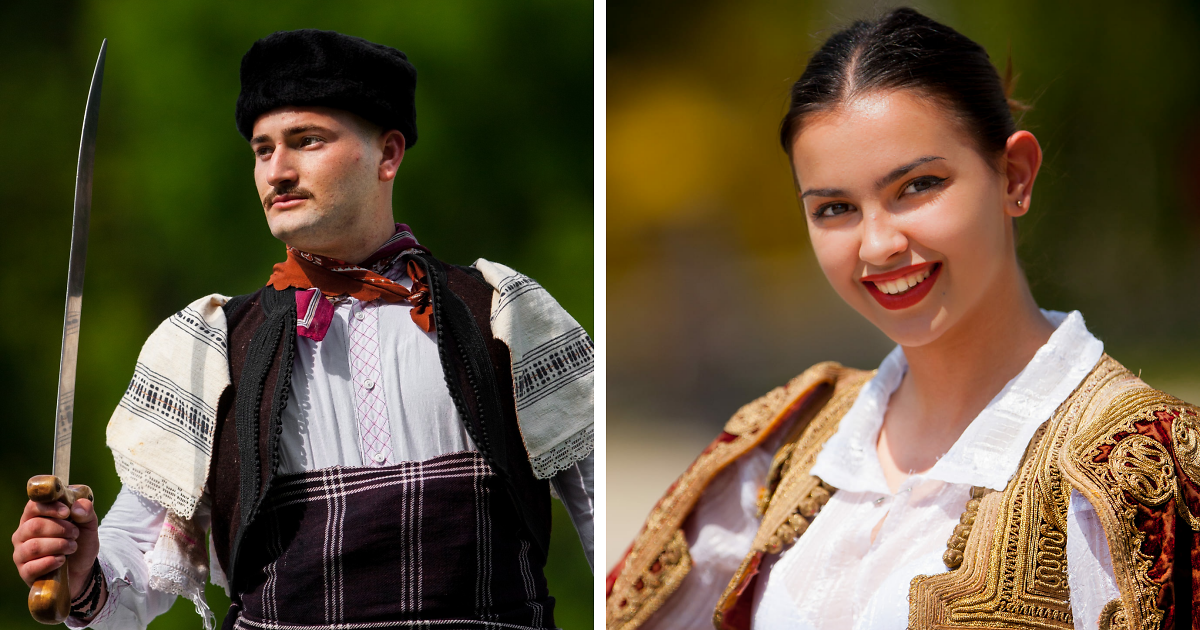
The traditional colors of Macedonia are not random. They come from textiles, religion, geography, agriculture, and centuries of Balkan cultural exchange. Macedonian folk costumes often combine white handwoven cloth with red, black, gold, and yellow embroidery. In some regions, such as the Prilep valley, vivid red and yellow tones have been especially prominent, while costumes from the Bitola area are often associated with yellow and black combinations. These regional differences matter because traditional dress once worked almost like a beautiful village ID card. A trained eye could read a person’s region, age, marital status, and sometimes even life stage through clothing details.
That is why my 15 photos focus less on “pretty colors” and more on color as a language. Red is passion, protection, vitality, and celebration. White suggests purity, linen, wool, and the bright base on which embroidery comes alive. Black adds gravity, contrast, and elegance. Gold and yellow bring prosperity, sunlight, harvest, and sacred shine. Green appears in landscapes, market produce, and spring motifs. Blue is less dominant in many costumes but appears in doors, sky, lakes, beads, and modern folk presentations.
Photo 1: Red Embroidery That Refuses To Whisper

The first photo is a close-up of red embroidery on white cloth. At first glance, it looks decorative. At second glance, it looks mathematical. Macedonian embroidery often uses geometric motifs, repeated shapes, and dense stitched borders. The red thread gives the pattern energy, like the fabric has a heartbeat. In traditional Macedonian costumes, red has often been one of the most admired colors, especially in garments for young women, brides, and festive occasions.
What I love about this photo is how handmade it feels. Every stitch seems confident but human. There is no factory-perfect sterility here. The beauty comes from patience, rhythm, and small variations. It reminded me that traditional Macedonian colors are not simply chosen; they are worked into existence by hands, eyes, and long evenings of skill.
Photo 2: White Linen, The Quiet Hero

White is the quiet hero of Macedonian traditional clothing. Many costumes begin with a white shirt, chemise, apron, or underlayer made from linen, cotton, hemp, or wool. White provides the visual breathing room that lets darker embroidery shine. Without white, the red would not blaze, the black would not sharpen, and the gold would not glow.
In the photo, the white fabric is not blank. It has texture, folds, and a softness that catches sunlight beautifully. This is where travel photography becomes slightly sneaky: you start out chasing dramatic colors, then you become emotionally attached to a sleeve. White in Macedonian textiles feels honest. It speaks of home production, natural fibers, and clothing made for real bodies, not mannequins with excellent posture and no errands.
Photo 3: Black Borders And Mountain Shadows

Black appears in Macedonian folk dress as outline, contrast, and sometimes as a dominant regional color. In my third photo, black stitching frames a panel of red and yellow embroidery. It makes the design feel grounded. If red is the dancer, black is the drumbeat.
This color also mirrors the landscape. Macedonia’s mountains, old wooden beams, dark church interiors, and evening village roads all share that same deep tone. Black can suggest seriousness, maturity, mourning, or simply elegance. In a visual tradition full of saturated color, black prevents everything from becoming a fruit salad with sleeves.
Photo 4: Gold In Church Icons And Costume Details

Gold is one of the most powerful traditional colors of Macedonia because it appears in both sacred and celebratory settings. In Orthodox Christian churches, gold backgrounds and icon details create a sense of light beyond ordinary light. In costumes, gold thread, metallic ornaments, jewelry, coins, and decorative trims bring status and festivity.
My fourth photo captures gold detail near an embroidered garment and a church-inspired background. It made me think about how Macedonian color culture connects the public and private worlds: the church, the wedding, the dance circle, the family chest, the festival stage. Gold is not shy. It arrives wearing good shoes.
Photo 5: Yellow Like Harvest And Late Sun

Yellow and golden-yellow tones show up beautifully in Macedonian textiles, especially in regional costume combinations. In the photo, yellow thread appears beside red and black, giving the pattern warmth. It also echoed the fields and stone walls I saw later in the day, when the sun turned everything the color of toasted bread.
Yellow is often linked with prosperity, grain, sunlight, and abundance. In a rural culture shaped by seasons, harvests, and mountain weather, it makes sense that warm earth colors would carry emotional weight. They are not just attractive. They are practical memories of food, labor, and survival.
Photo 6: Green Hills Around The Village

Not every traditional color is stitched. Some are walked through. My sixth photo shows green hills around a village, with houses tucked into the landscape like they were placed there by someone who understood composition before cameras existed.
Green appears in Macedonian tradition through spring, gardens, vineyards, orchards, and mountain pastures. It is the color of renewal and rural life. Even when green is not dominant in older costumes, it surrounds the culture that produced them. The wool, dyes, food, songs, and seasonal rituals all come from a living landscape. This is why photographing Macedonia’s colors means looking beyond clothing. The land is part of the palette.
Photo 7: A Red Sash At A Folk Dance

Folk dance is where traditional Macedonian colors stop posing and start moving. In this photo, a red sash cuts across the frame during a dance. The dancers’ steps were coordinated, the fabric was alive, and I was doing the photographer’s traditional dance: step back, focus, panic, repeat.
Macedonian folk dances often use circular or line formations, and costumes help make the movement visible. Red sashes, aprons, vests, and embroidered sleeves create rhythm for the eye. The result is not just performance; it is moving design. Color becomes choreography.
Photo 8: Silver Coins And Metallic Shine

Traditional Macedonian costumes often include jewelry, belts, coins, and metallic decoration. My eighth photo focuses on silver-toned ornaments layered over fabric. These details add sound as well as shine. When the wearer moves, the costume can glimmer and softly clink, turning clothing into a small portable ceremony.
Metal ornaments also speak of status, family resources, and ritual importance. They are especially striking in bridal and festive dress. In a photograph, they catch light quickly, so the trick is to avoid turning them into tiny lightning bolts. I failed twice, succeeded once, and called it artistic persistence.
Photo 9: Blue Doors Beneath A Red Roof

Blue may not be the first color people mention when discussing Macedonian traditional costumes, but it appears in architecture, sky, lake water, beads, painted wood, and modern folk styling. My ninth photo shows a blue village door beneath a red-tiled roof. It felt like a small lesson in balance: hot and cool, old and fresh, practical and poetic.
This is the kind of detail travelers often miss while hunting for big landmarks. A door can tell you about taste, repair, pride, and the human desire to make even ordinary entrances beautiful. Also, blue doors are extremely good at making photographers cross streets without warning. Use caution.
Photo 10: Market Red Peppers And Everyday Tradition

Macedonia’s traditional colors are not limited to museums and costumes. They live in markets too. Red peppers, tomatoes, paprika, beans, grapes, and herbs create a color story that belongs to daily life. My tenth photo shows red peppers piled high, glowing like edible embroidery.
This matters because culture is not only what people preserve for special occasions. It is also what they cook, sell, plant, and carry home in bags that always seem strong enough until they are not. The red of food and the red of thread may not have the same meaning, but they share emotional warmth. Both say: this is home, this is flavor, this is not beige.
Photo 11: Dark Wood And Woven Texture

Dark brown wood, woven wool, and aged surfaces form another part of Macedonia’s visual tradition. In this image, a woven textile rests against dark wood. The contrast is simple but strong. It shows how traditional colors often depend on materials: wool absorbs light differently than silk, metal flashes, linen softens, and wood deepens everything around it.
Macedonian textile art is especially impressive because it combines material knowledge with design intelligence. Patterns had to survive use, weather, washing, storage, and generations of opinionated relatives. That is a serious design challenge.
Photo 12: A Bride’s Palette Of Hope

Traditional bridal dress in Macedonia can be extraordinarily layered and meaningful. Museums have documented ensembles for unmarried girls, brides, new brides, and older women, showing how clothing reflected status and life stage. My twelfth photo is inspired by that bridal palette: white fabric, red embroidery, gold shine, and dark contrast.
The visual effect is stunning, but the deeper message is even better. A bride’s clothing was not simply “an outfit.” It carried family skill, local identity, protection, beauty, and transition. Today, even when people wear modern wedding clothes, traditional elements often return in dance, ceremony, photography, or family memory.
Photo 13: Patterned Socks And Small Masterpieces

Some of the best traditional designs appear in small places: socks, cuffs, belts, aprons, sleeves, and borders. My thirteenth photo shows patterned socks with sharp color contrasts. These smaller textile pieces are easy to overlook, but they often contain remarkable skill.
In folk dress, the edges matter. A sleeve end, hemline, or sock pattern can complete the whole visual message. These details show the Macedonian love of ornament without wasting space. Every inch gets a job. Even the socks show up dressed for the festival.
Photo 14: Sunset On Stone Houses

The fourteenth photo moves away from textile and into architecture. Stone houses at sunset turn bronze, gray, peach, and gold. These colors connect to the same traditional palette found in clothing: earth, fire, shadow, and light.
Stone villages remind us that tradition is built as much as it is stitched. Walls, roofs, courtyards, and narrow lanes create their own color language. The materials are practical, but under the right light they become almost theatrical. Honestly, golden hour in Macedonia deserves its own public holiday.
Photo 15: The Whole Palette Together

The final photo brings the colors together: red embroidery, white cloth, black borders, golden trim, green hills, blue sky, and yellow light. What surprised me most was how naturally they belong together. Macedonian traditional colors are bold, but they are not chaotic. They have structure, rhythm, and regional memory.
Looking at all 15 photos, I realized that the traditional colors of Macedonia are not frozen in the past. They appear in costumes, yes, but also in markets, landscapes, homes, churches, dances, and family objects. They are heritage colors, but they are also living colors. They still move, fade, return, and catch the eye when you least expect it.
How To Photograph Traditional Macedonian Colors Respectfully
Ask Before Photographing People
If someone is wearing traditional clothing at a festival, wedding, or cultural event, ask before taking close portraits. A costume may be public, but the person inside it is not a museum label. Respect is always better than a stolen photo, even if the lighting is amazing and your camera is whispering, “Do it.”
Look For Details, Not Just Full Outfits
Full costumes are impressive, but details often tell better stories. Photograph cuffs, belts, socks, headscarves, aprons, jewelry, and embroidery borders. These details reveal the craftsmanship behind Macedonian textile heritage.
Use Natural Light Whenever Possible
Traditional colors look best in soft natural light. Harsh flash can flatten embroidery and make metallic thread look too bright. Morning and late afternoon are especially friendly to red, gold, and white. Midday sun, on the other hand, behaves like it has had too much coffee.
Include Context
A close-up of embroidery is beautiful, but a wider shot showing the village, dance, church courtyard, or family setting adds meaning. Traditional Macedonian colors belong to places as much as objects.
Personal Experiences Behind “Traditional Colors Of Macedonia: 15 Photos I Took”
Taking these 15 photos changed the way I think about travel photography. Before this project, I mostly treated color as something that made a picture attractive. Red wall? Nice. Blue door? Click. Golden sunset? Click faster, because the sun has no respect for photographers who need one more shot. But while photographing the traditional colors of Macedonia, I started to see color as evidence. It showed where people lived, what they valued, how they celebrated, and how memory survives in ordinary materials.
The first strong impression came from embroidery. I had seen folk costumes before, but looking closely through the camera lens made the details feel almost architectural. The stitches were not random decoration. They had borders, balance, repeated motifs, and strong color logic. Red did not simply sit on the cloth; it commanded the cloth. Black did not darken the design; it sharpened it. Gold did not just shine; it announced importance. I remember zooming in on one sleeve and thinking, “This sleeve has more discipline than my entire desk.”
The second experience was discovering how much traditional color exists outside formal costume. The market was one of my favorite places for this. Red peppers, yellow fruit, green herbs, white cheese, brown baskets, and handwritten signs all created a living palette. Nobody had arranged it for tourists. It was just Tuesday, doing what Tuesday does. That made it more powerful. Culture felt less like a performance and more like a daily habit.
I also noticed how the landscape quietly supports the colors. The green hills made red textiles feel even warmer. Stone houses made white linen feel brighter. Dark wooden doors echoed black embroidery. Church interiors helped me understand why gold carries such emotional force. When you see gold in sacred art and then notice metallic thread in festive clothing, you begin to understand how visual traditions speak across different parts of life.
One funny challenge was trying to photograph movement. Folk dance looks graceful to the human eye, but to a camera it can become a blur festival with shoes. I took several photos that looked like a red sash escaping from a crime scene. Eventually, I learned to stop fighting the motion. A little blur made the color feel alive. It reminded me that tradition is not supposed to stand perfectly still. It moves with people.
My biggest lesson was humility. These 15 photos are only a small window into Macedonian heritage. Every region has its own costume details, every family may have its own memories, and every object can carry more history than a caption can hold. Still, photography is useful because it teaches attention. It asks you to slow down and notice how red thread meets white cloth, how gold catches light, how a blue door changes a street, and how a culture can preserve itself through color. By the end, I was not just taking pictures of Macedonia. I was learning how Macedonia looks back.
Conclusion
The traditional colors of Macedonia are more than a visual feast. They are a cultural archive stitched into clothing, reflected in landscapes, painted onto doors, served in markets, and carried through dance and ceremony. Red brings vitality and celebration. White gives purity and contrast. Black adds structure and depth. Gold and yellow glow with prosperity, sacredness, and sunlit memory. Green and blue connect the palette to hills, lakes, skies, and daily life.
Through these 15 photos, I wanted to show that Macedonian tradition is not locked away in the past. It is visible in textiles, architecture, food, performance, and family pride. The colors continue to live because people continue to wear them, preserve them, reinterpret them, and photograph them with varying levels of battery preparedness. And that, honestly, is the best kind of heritage: beautiful, meaningful, and still very much awake.

