
Beauty Unlocked
C-130 Returns in Nuclear Doomsday Role
Jun
Note: This article is synthesized from public U.S. defense announcements, official military information, government contract notices, watchdog reporting, and reputable American defense journalism. It avoids operationally sensitive details and focuses on publicly available context.
The Hercules Is Back, and This Time It Has a Very Serious Job
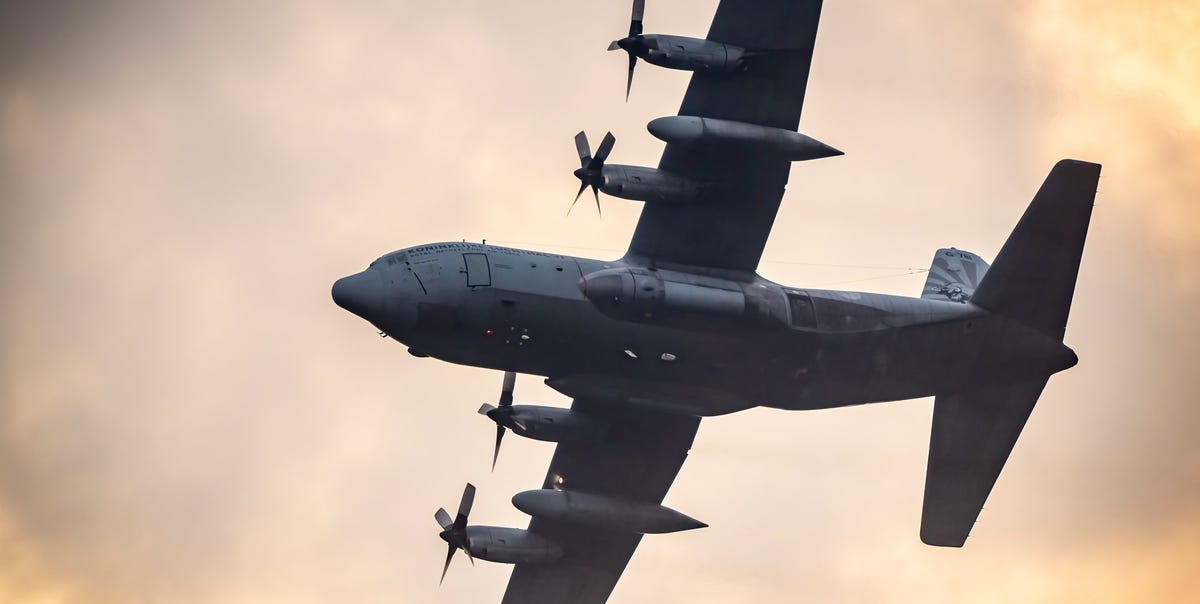
The C-130 Hercules has done just about everything a military airplane can do without asking for a cape. It has hauled cargo, dropped paratroopers, landed on rough strips, supported special operations, refueled aircraft, fought fires, hunted storms, and generally acted like the pickup truck of the skies. Now, in a twist that sounds like a Cold War sequel with better avionics, the C-130 is returning to one of the most sensitive missions in the U.S. military: nuclear command, control, and communications.
The aircraft at the center of this comeback is the E-130J Phoenix II, a future U.S. Navy aircraft based on the C-130J-30 Super Hercules. It is designed to replace the aging E-6B Mercury fleet in the Navy’s TACAMO mission, short for Take Charge and Move Out. That phrase sounds like something shouted by a gym coach with a whistle, but in military terms it refers to a survivable airborne communications link between America’s national leadership and strategic nuclear forces, especially ballistic missile submarines hidden beneath the ocean.
In plain English, if the worst day in history ever tried to happen, the E-130J would help ensure that U.S. leaders could still communicate with the nuclear deterrent force. It is not glamorous in the fighter-jet sense. It does not barrel-roll into movie trailers or wear shark teeth on its nose. Its job is quieter, stranger, and arguably more important: keep the chain of command connected when normal communication systems may be damaged, jammed, or destroyed.
What Is the E-130J Phoenix II?
The E-130J Phoenix II is the Navy’s next-generation airborne strategic communications aircraft. It began life publicly as the E-XX TACAMO program, a placeholder name that sounded like a password generated by a nervous intern. In October 2024, the aircraft was officially designated E-130J. In 2025, the Navy announced its popular name: Phoenix II.
The name is not just dramatic branding, although defense programs do enjoy a mythological flourish. The phoenix is a symbol of rebirth, which fits because the Navy once used C-130 variants for the TACAMO mission before moving to the Boeing 707-based E-6 Mercury. Now the service is returning to the Hercules family, this time using the modern C-130J-30 as the foundation.
The E-130J will be built around a militarized Lockheed Martin C-130J-30 Super Hercules airframe. Northrop Grumman is leading the mission-systems integration effort, with industry partners involved in the aircraft, communications, training, and specialized mission equipment. The aircraft’s core mission is to provide survivable, reliable, and enduring airborne nuclear command, control, and communications, often shortened to NC3.
Why the Navy Needs a New Nuclear Communications Aircraft
The current E-6B Mercury fleet has performed the TACAMO mission for more than three decades. Based on the Boeing 707 airliner, the E-6B has been a workhorse of strategic deterrence. It can act as a communications relay and, in its current configuration, has also supported the airborne command post mission. But even legendary aircraft grow old. Parts get harder to source, maintenance becomes more demanding, and modernization becomes less like upgrading your laptop and more like teaching a fax machine to stream 4K video.
The Navy’s solution is recapitalization: replacing the aging platform before it becomes a readiness problem. The E-130J is intended to transition the TACAMO mission to a newer airframe without breaking operational coverage. That last phrase matters. Nuclear command and control is not a service where the country can hang up a “back in 15 minutes” sign.
The C-130J-30 offers a proven military platform with global logistics support, modern avionics, turboprop efficiency, and a long history of adaptation. The Super Hercules is not the fastest aircraft in the sky, but speed is not the main requirement here. For TACAMO, endurance, reliability, maintainability, power, payload, and room for mission systems matter more than winning a drag race against a business jet.
What TACAMO Actually Does
TACAMO stands for Take Charge and Move Out. The mission began during the Cold War as the United States looked for ways to maintain communications with ballistic missile submarines. These submarines are designed to stay hidden, which is excellent for deterrence but inconvenient if you need to send them authenticated orders. Submerged submarines cannot simply check their inbox, and “Have you tried turning it off and on again?” is not an acceptable nuclear command strategy.
To solve that problem, TACAMO aircraft use specialized communications systems, including very low frequency communications, to relay messages over long distances and into the maritime environment. The aircraft serve as airborne nodes in a larger nuclear command-and-control network. Their job is not to launch weapons themselves in the cinematic sense; their job is to keep legitimate national command authority connected to strategic forces.
The National Command Authority includes the president and secretary of defense, with U.S. Strategic Command playing a central role in strategic deterrence. TACAMO aircraft help ensure that, even in an extreme crisis, orders can be received, verified, and retransmitted to the forces that make up the nuclear triad: submarines, land-based intercontinental ballistic missiles, and strategic bombers.
Why Returning to the C-130 Makes Sense
The decision to base the E-130J on the C-130J-30 is both nostalgic and practical. The Navy previously operated EC-130 variants in the TACAMO role from the 1960s until the early 1990s. Those aircraft were eventually replaced by the E-6 Mercury, which brought greater speed and jet-powered range. Now the pendulum is swinging back toward the Hercules family, but with a much more modern platform.
The C-130J-30 is the stretched version of the Super Hercules, giving it more interior volume for equipment and crew. That extra space matters because TACAMO is not a simple “bolt a radio to the floor and call it a day” mission. The aircraft needs specialized antennas, secure communication systems, mission consoles, cooling, power generation, training systems, and classified architecture that must all work together under demanding conditions.
The Hercules also has a reputation for durability. It can operate from more austere airfields than many larger jets, has a broad maintenance ecosystem, and has been adapted into many specialized variants. In defense procurement, “proven airframe” is a phrase that makes budget planners sleep slightly better at night, which is no small achievement.
The Contract and the Industry Team
The Navy awarded Northrop Grumman a multibillion-dollar contract for E-130J engineering and manufacturing development. The work includes designing, developing, and integrating mature subsystems into government-furnished C-130J-30 aircraft. The mission package includes very low frequency communications capability, which is central to the TACAMO role.
Lockheed Martin, as the C-130J manufacturer, plays a major role through the airframe and training environment. Other defense firms are part of the broader industry team, bringing expertise in sensors, communications, software, integration, and support. This is less like building a plane and more like building a flying, hardened, secure communications network that happens to have wings, propellers, and a coffee pot that everyone hopes works during long missions.
Training is also a major part of the program. Crews must master both aircraft operations and highly specialized mission systems. Simulators and training devices will allow Navy personnel to practice complex scenarios before the aircraft fully enters service. For a mission this sensitive, muscle memory matters. The goal is for crews to know the platform so well that the aircraft feels less like a machine and more like a very expensive extension of their nervous system.
Why the E-130J Is Called a “Doomsday Plane”
The phrase doomsday plane is catchy, dramatic, and slightly unfair. It makes the aircraft sound like it spends all day circling volcanoes while dramatic violins play. In reality, the E-130J is part of deterrence, not apocalypse management for fun. Its purpose is to reduce the chance of nuclear war by making sure no adversary can believe a first strike would cut off U.S. command and control.
Strategic deterrence depends on survivability and credibility. If an adversary knows the United States can still communicate with its nuclear forces after an attack, then the logic of launching such an attack becomes much less attractive. That is the grim but stabilizing logic behind NC3. The E-130J is not designed to make nuclear war easier. It is designed to make nuclear war less thinkable.
Still, “doomsday plane” remains popular because it captures the aircraft’s extreme contingency role. This is an airplane built for the unthinkable. It supports communication when other systems may be under attack. It is not a weapon in the way a missile is a weapon, but it is part of the architecture that makes deterrence credible.
How the E-130J Differs From the E-6B Mercury
The E-6B Mercury is a jet-powered aircraft based on the Boeing 707, while the E-130J is a turboprop based on the C-130J-30. That change is visually obvious. The E-6B looks like a classic airliner with military modifications. The E-130J will look more like a rugged transport aircraft that joined a classified book club.
The mission difference is also important. The E-6B has supported both TACAMO and airborne command post functions. The future architecture is expected to divide roles more clearly, with the Navy’s E-130J focused on TACAMO and the Air Force pursuing its own Survivable Airborne Operations Center program to replace other national command post capabilities. In short, the E-130J is not merely “the old plane, but with propellers.” It is part of a broader modernization of America’s nuclear command-and-control ecosystem.
The E-130J’s C-130J-30 foundation may offer maintenance and support advantages, but integrating sophisticated nuclear communications systems into a smaller turboprop aircraft is not simple. Power, cooling, electromagnetic compatibility, antenna placement, cybersecurity, crew workflow, and survivability all become engineering puzzles. And unlike assembling furniture, there is no acceptable leftover bag of screws at the end.
Watchdog Concerns: The Hard Part Is Integration
Government watchdog reporting has raised questions about whether the C-130J platform will meet all operational availability requirements once loaded with the E-130J mission package. That does not mean the aircraft is a bad choice. It means the program carries real technical risk, especially around integrating complex systems into a platform originally designed as a transport aircraft.
This is the classic challenge of military modernization. The Pentagon often wants proven platforms, mature subsystems, fast delivery, low risk, and affordability. That is a wonderful wish list, much like wanting a sports car that hauls lumber, gets 70 miles per gallon, and makes lasagna. The E-130J program must balance schedule, cost, technical complexity, and the absolute requirement that the mission work when needed.
The Navy and its contractors appear to be addressing risk through early integration work, mission-system development, training devices, and support planning. The real test will come as prototypes move through development, testing, and eventual operational evaluation. For defense programs, the first artist rendering is the easy part. The hard part is getting every box, cable, antenna, screen, and software build to behave at altitude, under stress, and with no room for failure.
Why This Matters Beyond Military Aviation Fans
The E-130J Phoenix II may sound like niche aviation news, but it touches a much bigger issue: the modernization of the U.S. nuclear deterrent. The United States is replacing or updating major parts of the nuclear triad, including submarines, bombers, missiles, command systems, and supporting infrastructure. Communication is the connective tissue of that entire enterprise.
Without reliable communications, deterrence weakens. A submarine hidden at sea is only useful if legitimate authorities can reach it when necessary. A command structure is only credible if it can survive attack, confusion, cyber disruption, and degraded infrastructure. The E-130J is one answer to that problem.
For taxpayers, the program is also a reminder that nuclear deterrence is not just missiles in silos or submarines under the waves. It is aircraft, radios, satellites, ground stations, training pipelines, maintenance crews, software updates, spare parts, and human beings sitting at consoles during long, uneventful hours. In this business, uneventful is the desired outcome. Boring is victory. Quiet skies mean the system is doing its job.
The Symbolism of Phoenix II
The Phoenix II name works because the story is genuinely circular. The Navy used C-130-based aircraft for TACAMO, moved to the E-6 Mercury, and is now returning to the C-130 family. The aircraft is being reborn into a mission it once helped define. That is unusually poetic for military procurement, a field more famous for acronyms that look like somebody dropped a keyboard.
But the symbolism goes deeper. A phoenix is associated with endurance, renewal, and survival after destruction. Those themes align closely with nuclear command and control. The E-130J is built around the idea that communication must survive under the worst conditions imaginable. Its very existence is a statement: even if the ground is damaged, even if networks are contested, even if an adversary tries to blind or silence the United States, the command link must endure.
Experiences and Reflections: What the C-130’s Return Teaches Us
For anyone who has followed military aviation over the years, the C-130 has always had a strange kind of charm. It is not sleek like a stealth bomber or glamorous like a fighter. It looks practical, square-shouldered, and stubborn, like it was designed by people who owned socket wrenches and did not trust delicate furniture. Yet that practicality is exactly why the Hercules keeps finding new work.
The return of a C-130 variant to the nuclear doomsday communications role offers a useful lesson about technology: newer does not always mean flashier. Sometimes the smartest move is to take a dependable platform and adapt it carefully for a modern mission. The C-130J-30 is not being chosen because it looks futuristic. It is being chosen because the mission demands endurance, supportability, space, electrical capacity, and confidence. In high-stakes defense planning, confidence is not a luxury feature. It is the product.
There is also something revealing about the human side of this mission. The people who fly, maintain, and operate TACAMO aircraft are not doing a job that comes with daily applause. Their best work is invisible. The ideal mission ends with nothing dramatic happening at all. No breaking news banner. No emergency broadcast. No mushroom cloud on the horizon. Just a crew returning from another long flight, another successful exercise, another day when deterrence remained boring. That kind of service does not fit neatly into action-movie storytelling, but it is central to national security.
For readers, the E-130J story can feel unsettling because it forces us to think about systems designed for catastrophic scenarios. Yet it can also be oddly reassuring. Modern deterrence depends on redundancy. It depends on layers. Satellites, ground stations, submarines, aircraft, command centers, and trained crews all reinforce one another. The E-130J is one of those layers, a flying backup plan for moments when backup plans are the only plans that matter.
The aircraft also reflects a broader truth about American military planning: old missions rarely disappear; they evolve. The Cold War ended, but nuclear deterrence did not. The communications challenge changed with cyber threats, anti-satellite weapons, electronic warfare, aging platforms, and great-power competition. The Navy’s answer is not to invent an entirely exotic aircraft from scratch, but to return to a trusted airframe with modern systems. That is less glamorous than a sci-fi wonder plane, but probably more realistic. Reality, inconveniently, has a maintenance schedule.
In a way, the E-130J Phoenix II is a flying metaphor for continuity. The propellers are new, the avionics are modern, the mission systems are updated, and the name is fresh. But the underlying purpose remains the same: preserve command, preserve communication, preserve deterrence, and prevent a crisis from becoming irreversible. The Hercules has always been the aircraft that shows up when the job is hard, awkward, remote, or heavy. Now it is showing up again for one of the heaviest responsibilities imaginable.
Conclusion: A Familiar Aircraft for an Unthinkable Mission
The story of the C-130 returning in a nuclear doomsday role is not just about an airplane. It is about how the United States is modernizing the hidden systems that support strategic deterrence. The E-130J Phoenix II brings the Hercules family back to the TACAMO mission, replacing the aging E-6B Mercury with a modern C-130J-30-based aircraft designed to keep national leadership connected to nuclear forces during the most extreme circumstances.
There are real challenges ahead. Integrating specialized communications equipment into a new platform is difficult. Meeting availability requirements will matter. Testing will be demanding. Costs will be watched closely. But the logic behind the program is clear: deterrence depends on communication, and communication must survive.
The C-130 has always been the military’s dependable problem-solver. With the E-130J Phoenix II, it is stepping into a role where dependability is not merely useful; it is existential. Not bad for an aircraft family that still looks like it could help you move apartments on Saturday.

