
Hair Care
Swimming After a Torn Meniscus: Helpful or Harmful?
Jun
A torn meniscus can turn an ordinary staircase into Mount Everest, a grocery run into a tactical mission, and a simple squat into a dramatic reminder that knees have opinions. If you enjoy swimming, one of the first questions that may bubble up is: Can I swim after a torn meniscus, or will I make it worse?
The honest answer is: swimming after a torn meniscus can be helpful for many people, but only when done at the right time, in the right way, and with the right medical guidance. Water can reduce pressure on the knee, help maintain cardiovascular fitness, and support gentle movement. But certain strokes, kicks, turns, and “I feel fine, let me prove it” moments can irritate the injury or slow recovery.
This guide explains when swimming may help, when it may hurt, which pool exercises are usually safest, and how to return to the water without treating your knee like a poorly maintained pool noodle.
What Is a Torn Meniscus?
The meniscus is a C-shaped piece of cartilage in the knee. Each knee has two menisci: the medial meniscus on the inner side and the lateral meniscus on the outer side. These structures help absorb shock, distribute weight, improve stability, and keep the thighbone and shinbone from having a very unpleasant meeting.
A meniscus tear can happen suddenly during sports, especially with twisting, pivoting, squatting, or landing awkwardly. It can also develop gradually from age-related wear. That means a torn meniscus is not reserved for athletes. It can happen during basketball, tennis, gardening, getting out of a car, or performing the extremely dangerous activity known as “turning around too fast in the kitchen.”
Common symptoms of a torn meniscus
- Pain along the inside or outside of the knee
- Swelling or stiffness
- A catching, clicking, or locking feeling
- Pain when twisting, squatting, or climbing stairs
- Difficulty fully straightening or bending the knee
- A feeling that the knee may give way
Some small tears improve with rest, physical therapy, and activity modification. Other tears, especially those that cause locking or major mechanical symptoms, may require surgery. This is why the first rule of swimming after a torn meniscus is simple: know what kind of tear you have and follow your clinician’s plan.
Is Swimming Good for a Torn Meniscus?
Swimming is often considered a knee-friendly exercise because water reduces body-weight load. When you are chest-deep in water, your knee does not have to absorb the same impact it would during running, jumping, or fast walking on pavement. That makes swimming and aquatic therapy attractive options during meniscus tear recovery.
For many people, swimming can help maintain fitness while the knee heals. It may also support gentle range of motion, reduce stiffness, and allow controlled strengthening without heavy impact. In other words, the pool can be a useful recovery toolnot a magic healing lagoon, but definitely more forgiving than a treadmill with attitude.
Potential benefits of swimming after a torn meniscus
- Lower impact: Water decreases stress on the knee joint compared with running or jumping.
- Better mobility: Gentle movement in water may help reduce stiffness and improve comfort.
- Cardio maintenance: Swimming helps you stay active when land workouts are limited.
- Muscle support: Aquatic exercises can target the hips, thighs, and core, which help support the knee.
- Confidence building: Moving with less pain can help people feel less afraid of using the injured leg.
Still, “low impact” does not mean “zero risk.” A torn meniscus can be sensitive to rotation, deep bending, and forceful kicking. Some swimming movements are smooth and friendly. Others are basically your knee’s villain origin story.
When Swimming May Be Harmful
Swimming may be harmful after a torn meniscus if it creates pain, swelling, twisting, or forceful knee motion. The biggest concern is not usually floating or gentle movement. The troublemakers are aggressive kicks, sudden push-offs, flip turns, deep knee bending, and strokes that rotate the knee.
Avoid swimming if you have these symptoms
- Significant swelling that worsens after activity
- Knee locking or inability to fully straighten the leg
- Sharp pain during kicking
- A sensation that the knee is catching or giving way
- Recent surgery with unhealed incisions
- Your doctor or physical therapist has not cleared you for pool activity
If your knee swells after swimming, that is not your body applauding your effort. It is a message. Back off, reassess, and talk with your healthcare provider.
Best Swimming Strokes After a Torn Meniscus
The safest stroke depends on the tear, symptoms, treatment plan, and stage of recovery. In general, strokes that use a gentle flutter kick are usually easier on the knee than strokes requiring a wide, forceful whip kick.
Freestyle may be a good option
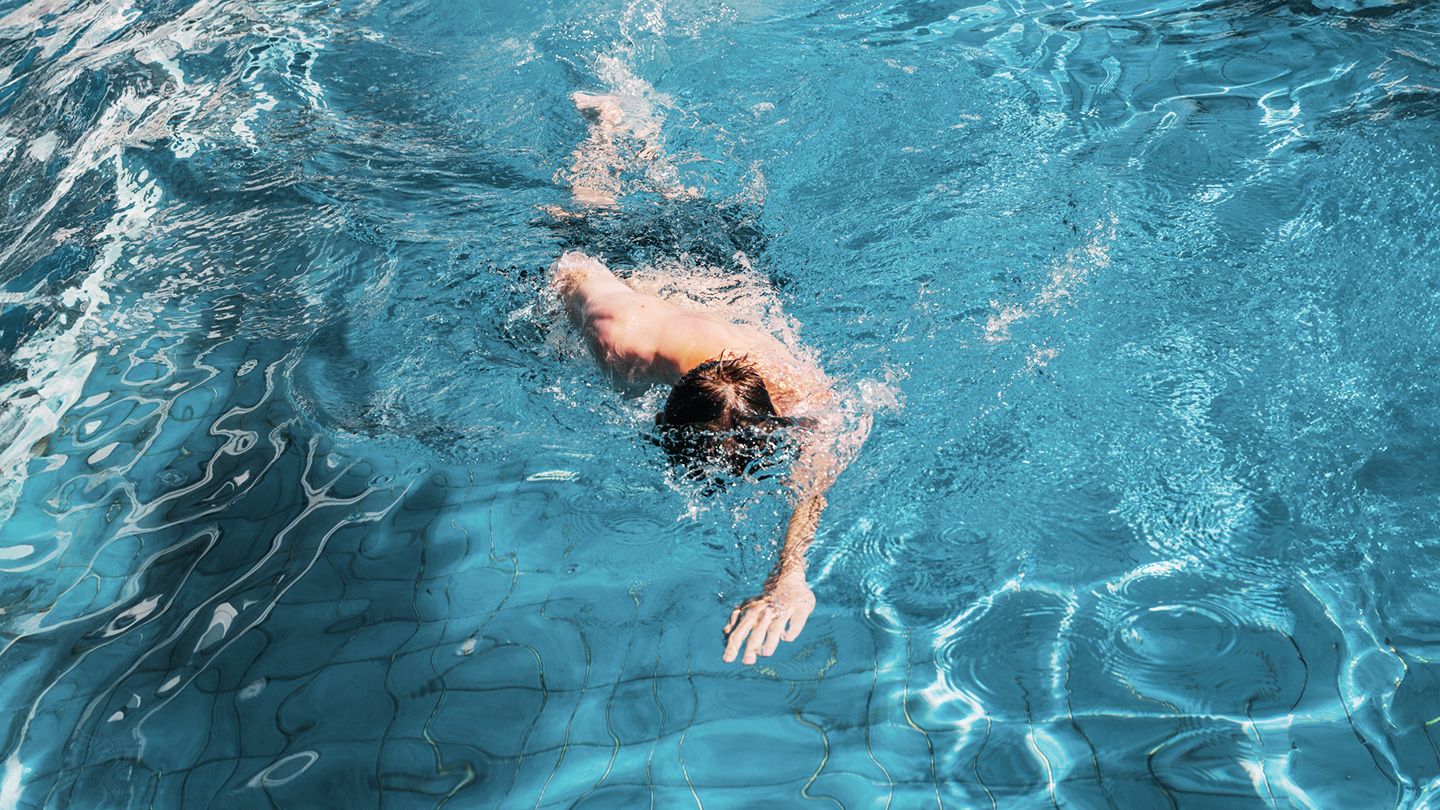
Freestyle with a relaxed flutter kick is often one of the better choices once you are cleared to swim. The movement is relatively straight and does not require the knee to rotate aggressively. However, the keyword is relaxed. This is not the time to pretend you are racing for Olympic gold while your meniscus is still filing complaints.
Try short distances first. Keep the kick small. Focus on smooth movement. If kicking bothers the knee, use a pull buoy so your arms do most of the work.
Backstroke may be comfortable for some people
Backstroke also uses a flutter kick and may feel comfortable for some swimmers. It can be useful if freestyle breathing mechanics feel awkward or if you want variety. As with freestyle, avoid hard kicking and aggressive wall push-offs.
Breaststroke is usually the risky one
Breaststroke can be problematic because the whip kick places rotational stress on the knee. The movement involves bending, turning outward, and snapping the legs together. For a sensitive meniscus, that can feel less like rehab and more like betrayal.
Many clinicians recommend avoiding breaststroke during meniscus recovery, especially in the early stages or after meniscus repair surgery. Even later, it should only be reintroduced if it is pain-free and approved by your physical therapist or doctor.
Butterfly is not usually the first comeback stroke
Butterfly is demanding. It involves powerful body motion, forceful kicking, and significant coordination. For most people recovering from a torn meniscus, butterfly belongs in the “not yet, my aquatic superhero” category.
Safe Pool Exercises for Meniscus Tear Recovery
You do not have to swim laps to benefit from the water. In fact, many people recovering from a torn meniscus begin with aquatic exercises before returning to full swimming. These movements can be easier to control and modify.
Water walking
Water walking is one of the simplest ways to begin. Walk forward in waist- to chest-deep water at a slow pace. Keep your steps smooth and avoid twisting. As comfort improves, you can add backward walking or side steps, but only if your knee tolerates them.
Gentle flutter kicking
Hold the pool wall or use a kickboard and perform small flutter kicks. Keep the knees soft but not deeply bent. Stop if you feel sharp pain, catching, or swelling later in the day.
Pool jogging
Deep-water jogging with a flotation belt can provide a cardiovascular workout with less joint loading. The goal is controlled movement, not splashing like a panicked blender.
Straight-leg raises in water
Stand near the wall for balance. Slowly lift one leg forward, then lower it. You can also lift the leg slightly to the side to engage hip muscles. Strong hips help control knee alignment, which matters during meniscus recovery.
Mini squats in shallow water
If cleared by your therapist, mini squats in water may help rebuild strength. Keep the movement shallow. Avoid deep squats because deep knee flexion can increase meniscus stress.
Swimming After Meniscus Surgery
Swimming after meniscus surgery depends on the procedure. A partial meniscectomy, where the damaged portion is trimmed, often has a faster recovery than a meniscus repair, where the tissue is stitched and needs time to heal. Meniscus repair usually requires more protection because the goal is to let the repaired tissue knit back together.
After surgery, you should not enter a pool until your surgeon confirms that the incisions are healed and infection risk is low. Pool water may look clean, but your fresh incision does not care about appearances. It wants protection.
General post-surgery pool guidelines
- Wait for medical clearance before swimming.
- Do not swim with open, draining, or irritated incisions.
- Start with water walking or gentle pool exercises before lap swimming.
- Avoid breaststroke, forceful kicks, flip turns, and hard wall push-offs early on.
- Follow your physical therapy protocol, especially after meniscus repair.
Rehab after meniscus surgery is often based on both time and milestones. Your provider may look at swelling, pain, range of motion, walking pattern, strength, balance, and control before increasing activity. That means two people with the “same” surgery may return to swimming at different times.
How to Return to Swimming Safely
The safest return is gradual. The knee should feel calm during the activity and remain calm afterward. A good rule: judge the workout not only by how you feel in the pool, but also by how your knee feels later that day and the next morning.
Step 1: Get cleared
Before swimming, ask your doctor or physical therapist whether pool exercise fits your specific injury. This is especially important if you have a root tear, complex tear, major swelling, locking, or recent surgery.
Step 2: Begin with short sessions
Start with 10 to 15 minutes of gentle pool activity. That may include water walking, light flutter kicking, or arm-focused swimming with a pull buoy. Do not test your entire fitness identity on day one.
Step 3: Choose knee-friendly movements
Use freestyle or backstroke with a gentle flutter kick if approved. Avoid breaststroke until you are clearly ready. Skip flip turns and push off the wall softly.
Step 4: Watch the 24-hour response
If your knee becomes more painful, swollen, stiff, or unstable within 24 hours, reduce intensity or stop and speak with your provider. Recovery is not a contest in stubbornness.
Step 5: Progress slowly
Add time, distance, or intensity one variable at a time. For example, increase from 10 minutes to 15 minutes before adding harder kicking. The knee appreciates simple instructions.
Helpful or Harmful? The Practical Verdict
Swimming after a torn meniscus is often helpful when it is gentle, pain-free, and approved by a healthcare professional. It can support mobility, fitness, and confidence while reducing the impact that comes with land-based exercise.
However, swimming can become harmful if you return too soon, use painful strokes, kick aggressively, twist the knee, or ignore swelling. Breaststroke is the stroke most likely to irritate a meniscus tear because of the rotational whip kick. Freestyle, backstroke, water walking, and deep-water jogging are often better starting points.
The key is to treat swimming as part of rehabilitation, not as an escape from it. The pool is helpful when it supports your recovery plan. It is harmful when it becomes a watery excuse to skip the boring-but-important strengthening work your physical therapist gave you.
When to Call a Doctor
Contact a healthcare professional if your knee locks, gives way, swells significantly, or causes sharp pain during or after swimming. You should also seek care if you cannot bear weight comfortably, cannot fully straighten the knee, or feel that your symptoms are getting worse instead of better.
A torn meniscus is not always an emergency, but ignoring mechanical symptoms can delay proper treatment. Getting the right diagnosis helps you choose the right activity. Guessing is great for trivia night, not for knee cartilage.
Real-World Experiences: What Swimming After a Torn Meniscus Often Feels Like
People recovering from a torn meniscus often describe the pool as both a relief and a reality check. On land, every step may feel like a negotiation. In the water, the knee may feel lighter, looser, and less guarded. That first comfortable walk across the shallow end can feel surprisingly emotional, especially for someone who has spent weeks avoiding stairs, curbs, and enthusiastic dogs on leashes.
One common experience is the “I feel great in the pool” trap. A person starts with gentle water walking, notices less pain, and decides to add laps, harder kicks, and a few strong push-offs. During the swim, everything seems fine. Later that evening, the knee becomes puffy and stiff. The lesson is simple: water reduces load, but it does not erase the injury. A meniscus can still be irritated by too much volume or the wrong movement.
Another common scenario involves swimmers who miss their routine. For someone used to swimming several times a week, being told to rest can feel like being grounded by their own knee. In these cases, using a pull buoy may help maintain upper-body conditioning while limiting kicking. Some people find that arm-focused swimming gives them the mental boost of being back in the pool without asking the injured knee to do too much too soon.
Beginners often have a different experience. They may not be trying to return to lap swimming at all. Instead, they use the pool for controlled movement. Water walking, gentle side steps, and light range-of-motion exercises can feel less intimidating than gym machines. The water provides support, and the slower pace makes it easier to notice what the knee likes and dislikes. For many, this builds confidence before returning to land-based strengthening.
There are also people who discover that not all “easy” swimming is easy on the knee. Breaststroke is the classic surprise. It looks calm from above the water, but the whip kick can place awkward rotational stress on the knee. Someone may swim freestyle with no issue, then try breaststroke and immediately feel a pinch along the joint line. That pinch is useful information. It means the knee is not ready for that motion.
After surgery, the experience can be more structured. Many patients are eager to get back in the pool, but incision healing comes first. Once cleared, the first sessions are usually modest: walking, gentle movement, maybe short flutter-kick drills. The progress may feel slow, but slow is often exactly what a healing meniscus needs. A repaired meniscus is not just “sore tissue.” It is tissue that needs protection while it heals.
The most successful experiences tend to share a pattern: people start small, avoid painful strokes, respect swelling, and combine pool work with physical therapy. They do not use swimming as the only rehab tool. They still strengthen the quadriceps, hamstrings, glutes, and hips. They still practice balance and controlled movement. Swimming becomes one piece of the recovery puzzle, not the whole puzzle dumped into the deep end.
In short, the pool can be a wonderful place to rebuild movement after a torn meniscus. It can also expose overconfidence quickly. Listen to the knee, progress gradually, and remember: a good recovery swim should leave you feeling better, not like your knee wants to unsubscribe from your body.
Conclusion
Swimming after a torn meniscus can be helpful, but it is not automatically safe for everyone. The best approach depends on the tear type, symptoms, treatment plan, and recovery stage. Gentle swimming, water walking, and aquatic therapy may reduce joint stress while helping you stay active. But breaststroke, forceful kicking, flip turns, and swimming too soon after surgery can make symptoms worse.
If your knee feels stable, your provider has cleared you, and you choose controlled movements, the pool may become one of your best recovery allies. Just remember: healing is not about proving how tough you are. It is about giving your knee the right amount of challenge at the right time. Be patient, stay consistent, and let your comeback be smoothnot splashy in the wrong way.

