
Beauty Tools & Accessories
Top Ingredients That Help Brighten Body Skin
Jun
Many people focus on brightening their facial skin while overlooking the rest of the body. However, concerns such as uneven skin tone, dark spots, rough patches, sun damage, and dullness can affect areas like the arms, legs, elbows, knees, and underarms. This often leads to the question: Which ingredients help brighten body skin?
The answer lies in choosing body care products formulated with proven brightening ingredients. Certain skincare actives can help reduce discoloration, promote healthy skin renewal, and reveal a smoother, more radiant complexion over time.
In this guide, we’ll explore the most effective ingredients for brightening body skin and how to incorporate them into your daily body care routine.
Why Does Body Skin Become Dull or Uneven?
Before selecting brightening products, it’s helpful to understand what causes skin discoloration and dullness.
Common factors include:
- Sun exposure
- Dead skin cell buildup
- Friction from clothing
- Dry skin
- Post-inflammatory hyperpigmentation
- Acne scars
- Hormonal changes
- Aging
- Environmental pollutants
These factors can make the skin appear:
- Darker in certain areas
- Rough and textured
- Less radiant
- Uneven in tone
Fortunately, the right ingredients can help improve these concerns gradually.
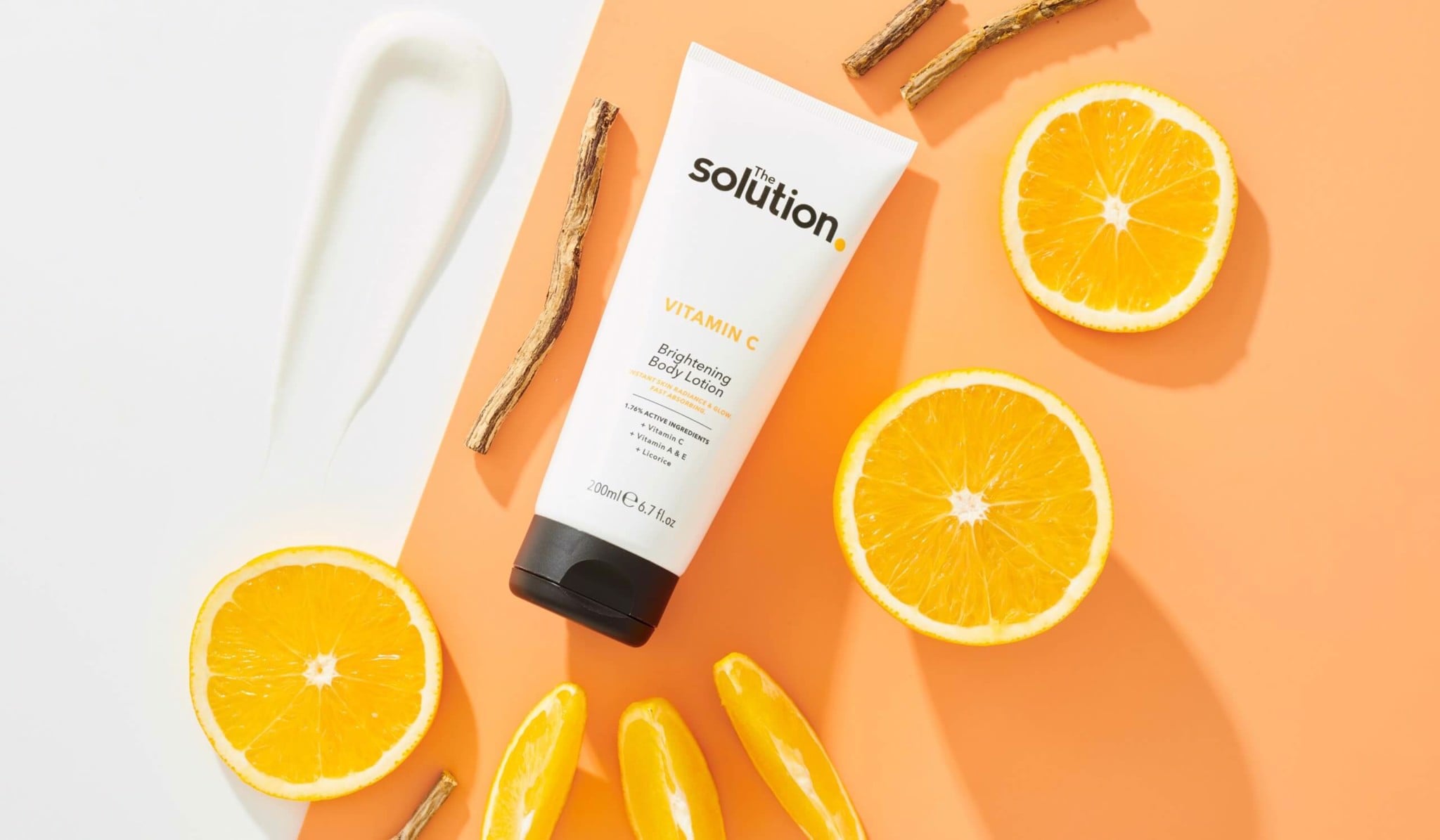
1. Vitamin C: The Gold Standard for Brighter Skin
Vitamin C is one of the most popular and well-known brightening ingredients in skincare.
Benefits of Vitamin C
Vitamin C helps:
- Brighten dull skin
- Reduce the appearance of dark spots
- Promote collagen production
- Protect against environmental damage
- Improve overall skin radiance
As a powerful antioxidant, vitamin C also helps defend the skin from free radicals generated by UV exposure and pollution.
Best For
- Sun-damaged skin
- Uneven skin tone
- Dullness
- Dark marks
Body lotions and serums containing vitamin C can help restore a healthy glow when used consistently.
2. Niacinamide: A Multi-Tasking Brightening Ingredient
Niacinamide, also known as vitamin B3, is a versatile ingredient suitable for most skin types.
Benefits of Niacinamide
Niacinamide may help:
- Improve uneven skin tone
- Reduce hyperpigmentation
- Strengthen the skin barrier
- Calm redness
- Improve skin texture
Because it is generally well tolerated, niacinamide is an excellent option for sensitive skin.
Best For
- Dark underarms
- Uneven body pigmentation
- Sensitive skin
- Dry skin
3. Alpha Arbutin: A Targeted Solution for Dark Spots
Alpha arbutin is widely used in brightening skincare products because it targets excess pigmentation.
Benefits of Alpha Arbutin
It may help:
- Fade dark spots
- Improve uneven skin tone
- Brighten discolored areas
- Promote a more uniform complexion
Alpha arbutin works gradually and is often combined with other brightening ingredients for enhanced results.
Best For
- Post-acne marks
- Sun spots
- Body discoloration
4. Glycolic Acid: Exfoliation for Brighter Skin
Glycolic acid belongs to the Alpha Hydroxy Acid (AHA) family and is known for its ability to promote skin renewal.
Benefits of Glycolic Acid
Glycolic acid helps:
- Remove dead skin cells
- Smooth rough texture
- Improve skin tone
- Brighten dull skin
- Support collagen production
Regular exfoliation with glycolic acid can reveal fresher, healthier-looking skin.
Best For
- Rough elbows and knees
- Dull skin
- Uneven texture
- Keratosis pilaris
5. Lactic Acid: Gentle Brightening and Hydration
Lactic acid is another AHA that provides both exfoliation and hydration.
Benefits of Lactic Acid
Lactic acid may help:
- Improve skin brightness
- Smooth rough patches
- Increase moisture retention
- Support skin renewal
Because it is gentler than glycolic acid, lactic acid is often recommended for dry or sensitive skin.
Best For
- Dry skin
- Sensitive skin
- Rough body texture
6. Kojic Acid: A Popular Brightening Ingredient
Kojic acid is commonly used in products designed to address pigmentation concerns.
Benefits of Kojic Acid
It may help:
- Reduce dark spots
- Improve skin clarity
- Brighten uneven areas
- Support a more radiant complexion
Kojic acid is frequently included in brightening soaps, creams, and body lotions.
Best For
- Hyperpigmentation
- Sun-induced discoloration
- Dark patches
7. Licorice Root Extract: Natural Skin Brightening Support
Licorice root extract is a plant-derived ingredient often found in brightening skincare formulations.
Benefits of Licorice Root Extract
It may help:
- Improve skin tone
- Calm irritation
- Reduce visible discoloration
- Enhance radiance
Its soothing properties make it suitable for people with sensitive skin.
Best For
- Redness
- Sensitive skin
- Mild hyperpigmentation
8. Azelaic Acid: Brightening and Clarifying
Azelaic acid is a multifunctional ingredient that addresses both acne and pigmentation concerns.
Benefits of Azelaic Acid
Azelaic acid may help:
- Fade post-inflammatory marks
- Brighten skin tone
- Reduce redness
- Improve overall skin clarity
Best For
- Body acne scars
- Uneven pigmentation
- Sensitive skin
9. Retinol: Promoting Skin Renewal
Retinol is known for accelerating skin cell turnover and improving overall skin appearance.
Benefits of Retinol
Retinol may help:
- Fade dark spots
- Improve skin texture
- Smooth rough patches
- Encourage collagen production
- Promote a more even complexion
Best For
- Mature skin
- Sun damage
- Persistent discoloration
Because retinol can increase sun sensitivity, sunscreen use is essential.
10. Tranexamic Acid: An Emerging Brightening Ingredient
Tranexamic acid has gained popularity for its ability to target stubborn pigmentation.
Benefits of Tranexamic Acid
It may help:
- Improve uneven skin tone
- Reduce dark patches
- Support brighter skin
- Enhance overall complexion clarity
Best For
- Stubborn hyperpigmentation
- Sun spots
- Hormonal discoloration
The Importance of Moisturizing While Brightening
Brightening treatments work best when the skin barrier remains healthy and hydrated.
Look for moisturizers containing:
- Ceramides
- Hyaluronic acid
- Glycerin
- Shea butter
- Squalane
Hydrated skin appears naturally smoother and more radiant.
Don’t Forget Sunscreen
Brightening ingredients can only do so much if your skin continues to receive unprotected sun exposure.
Daily sunscreen helps:
- Prevent new pigmentation
- Protect brightening results
- Reduce UV damage
- Maintain an even skin tone
Choose:
- Broad-spectrum SPF 30 or higher
for daily protection.
A Simple Body Brightening Routine
Morning
- Gentle body cleanser
- Brightening body lotion containing vitamin C or niacinamide
- SPF 30+ sunscreen on exposed areas
Evening
- Cleanse
- Apply glycolic acid or lactic acid treatment (2–3 times weekly)
- Use a moisturizer with brightening ingredients
Weekly
- Gentle exfoliation
- Deep moisturizing treatment
Consistency is key for long-term results.
How Long Does It Take to See Results?
Most brightening ingredients require time to work.
Many people begin noticing visible improvements within:
- 4–8 weeks
More significant pigmentation concerns may require:
- 2–6 months of consistent use
Patience and regular sun protection are essential.
If you’re wondering which ingredients help brighten body skin, some of the most effective options include vitamin C, niacinamide, alpha arbutin, glycolic acid, lactic acid, kojic acid, azelaic acid, retinol, licorice root extract, and tranexamic acid. These ingredients work in different ways to reduce discoloration, encourage skin renewal, and improve overall radiance.
The best results come from combining targeted brightening products with daily moisturization, gentle exfoliation, and consistent sunscreen use. With time and a well-planned body care routine, you can achieve smoother, brighter, and more even-toned skin from head to toe.

